Today is World Environment Day. The construction of an ecological civilization concerns the future of the nation. General Secretary Xi Jinping has repeatedly emphasized: “Lucid waters and lush mountains are invaluable assets.” Since the 18th National Congress of the Communist Party of China, General Secretary Xi Jinping, from the perspective of the sustainable development of the Chinese nation, has personally planned, deployed, and promoted the building of a Beautiful China, incorporating the construction of an ecological civilization into the “Five-in-One” overall layout of the cause of socialism with Chinese characteristics for a new era.
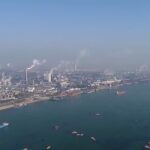
Looking back, China has delivered remarkable results. The battle against pollution has achieved significant success. During the “14th Five-Year Plan” period, nearly 20 million high-emission vehicles were phased out. In 2024, the concentration of fine particulate matter (PM2.5) in the Beijing-Tianjin-Hebei region, the Yangtze River Delta, and the Fenwei Plain decreased by 18%, 10%, and 20% respectively compared to 2020. Water environment quality has continuously improved, with the remediation completion rates for the seven major river basins and key bays reaching 90% and 93.3% respectively. Over 3,000 heavily polluted water bodies in cities at the prefecture level and above have been basically eliminated, and the elimination rate in county-level cities has also exceeded 90%. In terms of ecological protection and restoration, the integrated protection and systematic management of mountains, rivers, forests, farmlands, lakes, grasslands, and deserts have been solidly advanced. Major ecological projects such as the Three-North Shelterbelt Forest Program, natural forest protection, and returning farmland to forest and grassland have been continuously implemented. In November 2024, the 3,046-kilometer-long ecological barrier surrounding the Taklamakan Desert was fully closed, with China’s ecological and environmental governance creating one miracle after another.
General Secretary Xi Jinping pointed out that protecting the ecological environment is protecting productivity, and improving the ecological environment is developing productivity. As the process of building an ecological civilization gradually advances, the green and low-carbon transformation is also reshaping the foundation of China’s economy. Since 2012, China’s energy intensity has cumulatively decreased by over 26%, equivalent to saving 1.4 billion tons of standard coal and reducing carbon dioxide emissions by about 3 billion tons, making it one of the countries with the fastest decline in energy intensity globally. During the “14th Five-Year Plan” period, the number of environmental impact assessment approvals for “high energy consumption and high emission” projects nationwide has continuously decreased; meanwhile, the number of assessments for wind power and new energy vehicle projects has been increasing, with year-on-year growth of 44.4% and 31.3% respectively in the first half of 2025. China’s industrial structure has been continuously optimized, and the “gold content” and “green content” of economic growth have improved simultaneously.
More gratifyingly, under the guidance of Xi Jinping’s thought on ecological civilization, the concepts of respecting, conforming to, and protecting nature have taken deep root in people’s hearts. A simple, moderate, green, and low-carbon lifestyle has become a widespread trend. More and more cities are promoting ecological construction, more families are choosing green travel, and more enterprises are voluntarily taking on carbon reduction responsibilities. Building a Beautiful China has become the goal that the Chinese people aspire to.
On the international stage, China actively participates in global environmental governance, demonstrating the responsibility of a major country. As the country with the fastest and largest increase in global greening, China has contributed a quarter of the world’s new green area. By the end of 2025, China’s total installed renewable energy capacity reached 2.34 billion kilowatts, building the world’s largest renewable energy system. In addition, China has deeply engaged in South-South cooperation on climate change, signing 56 cooperation documents with 43 developing countries, holding over 300 training sessions on South-South climate change cooperation, and providing support to other developing countries, especially small island states, least developed countries, and African countries, in addressing climate change. Chinese wisdom and Chinese solutions have injected strong impetus into building a shared future for all life on Earth.
The construction of an ecological civilization has no end point, only continuous new starting points. We must deeply understand the green development philosophy contained in “lucid waters and lush mountains are invaluable assets,” promote the implementation of various measures with the spirit of driving nails, and ensure that blue skies remain forever, green mountains stand forever, and clear waters flow forever.
Mountains and rivers are lush and clear. On the journey of the great rejuvenation of the Chinese nation, a magnificent picture of harmonious coexistence between humans and nature is slowly unfolding. This is the call of the times, the expectation of the people, and our