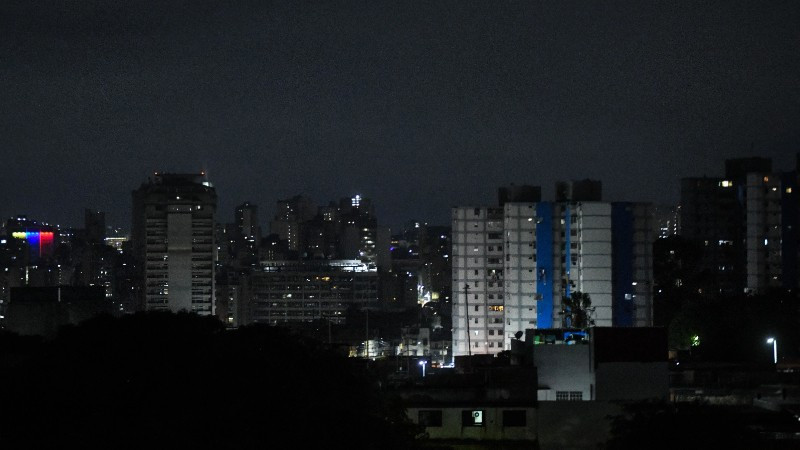
In a statement, Iran’s Foreign Ministry stated that the country “strongly condemns the US military attack on residential areas in Venezuela, as well as the blatant violation of Venezuela’s national sovereignty and territorial integrity.”
Cuban President Miguel Diaz-Canel condemned the attack, which he called illegal, by the US against Venezuela, and called for the international community to react immediately to this action.
The attack is reportedly sparking a wave of strong opposition from the majority of public opinion.
Caracas
Caracas is the capital and largest city of Venezuela, founded in 1567 by Spanish conquistador Diego de Losada. Historically a major colonial hub, it became the birthplace of Simón Bolívar and a central stage for the South American independence movement in the early 19th century. Today, it is a bustling, densely populated metropolis situated in a valley of the Venezuelan coastal mountain range.
Venezuela
Venezuela is a South American country known for its diverse landscapes, ranging from the Andes Mountains and Caribbean coastline to the Amazon rainforest. Historically, it was a Spanish colony until achieving independence in the early 19th century under leaders like Simón Bolívar, becoming a key player in the liberation of northern South America. Its cultural heritage is a blend of Indigenous, African, and Spanish influences, reflected in its music, art, and traditions like the annual Carnival celebrations.
Iran
Iran, historically known as Persia, is a country in Western Asia with one of the world’s oldest continuous civilizations, dating back to the Elamite kingdoms of the 4th millennium BCE. It is home to numerous UNESCO World Heritage sites, including the ancient ruins of Persepolis, the capital of the Achaemenid Empire, and the magnificent Islamic architecture of Isfahan’s Naqsh-e Jahan Square. Its rich cultural heritage reflects the influence of successive empires, from the Achaemenids and Sassanids to the later Islamic dynasties, shaping its unique art, literature, and traditions.
US
The United States is a relatively young nation, founded in 1776 after declaring independence from Great Britain. Its history spans from indigenous civilizations and European colonization to becoming a global superpower, shaped by immigration, territorial expansion, and ideals of democracy and liberty. Culturally, it is a vast and diverse mosaic, known for its significant global influence in areas like technology, entertainment, and popular culture.
Cuban
Cuba is an island nation in the Caribbean with a rich cultural history shaped by Spanish colonization, the transatlantic slave trade, and its 1959 socialist revolution. Its culture is a vibrant fusion of Spanish, African, and Caribbean influences, famously expressed through music like son and salsa, as well as its historic architecture in cities like Havana. Key cultural sites include Old Havana (Habana Vieja), a UNESCO World Heritage site with colonial-era plazas and fortresses that date back to the 16th century.
Miguel Diaz-Canel
“Miguel Díaz-Canel” is not a place or cultural site, but a person—the current President of Cuba, who assumed office in 2018. His leadership represents a generational shift in the Cuban government, following the era of Fidel and Raúl Castro, and he has focused on continuing the country’s socialist system while addressing economic challenges.