A high-rise building is planned for Tokyo’s Aoyama area, set for completion in 2030, with green spaces to preserve the “downtown” atmosphere.
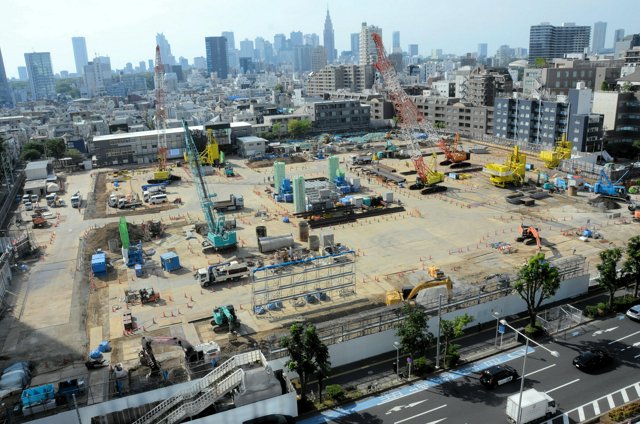
Apparel stores line the streets, and along Aoyama Avenue, known as a fashion-forward area, redevelopment is underway to build a 180-meter high-rise building on a site of approximately 2.9 hectares, including former plots. The plan also includes the development of extensive green spaces, with local residents deeply involved in efforts to preserve the “downtown character.”
Construction work has begun. The redevelopment target area is Kita-Aoyama 3-chome, between the subway stations, and most of the existing buildings have already been demolished.
The high-rise building will have two basement floors and 38 above-ground floors, housing offices, hotels, commercial facilities, and a “town lobby” for local residents to gather. Including low-rise buildings that will house a ward facility and a supermarket, the total floor area will be approximately 180,000 square meters. The total project cost is 175.5 billion yen, with completion targeted for 2030.
Background on Aoyama Avenue
The background of the redevelopment includes the metropolitan government’s plan for Aoyama…
Aoyama Avenue
Aoyama Avenue is a tree-lined boulevard in Tokyo, Japan, known for its upscale boutiques, art galleries, and international brand stores. Historically, it was part of the old Aoyama Road that connected Edo (modern-day Tokyo) to the city of Hachioji during the Edo period. Today, it serves as a cultural and fashion hub, blending modern luxury with traces of its historic past.
Aoyama Avenue
Aoyama Avenue is a famous tree-lined street in Tokyo, Japan, known for its upscale fashion boutiques, art galleries, and cafes. Historically, it was originally part of a road connecting Edo (now Tokyo) to the Aoyama area, and it later became a cultural hub after the Meiji Restoration. Today, it is celebrated for its blend of modern sophistication and traditional charm, especially during cherry blossom season.
Aoyama Road
Aoyama Road is a historic route in Tokyo, Japan, originally developed as part of an ancient highway connecting Edo (modern-day Tokyo) to the western provinces during the Edo period. Today, it is a major, tree-lined avenue in the upscale Aoyama district, known for its blend of high-end fashion boutiques, art galleries, and cultural landmarks. The area has evolved from a feudal-era thoroughfare into a symbol of modern Tokyo’s elegance and cosmopolitan culture.
Edo
Edo, the former name of modern-day Tokyo, was a small fishing village that grew into the world’s largest city during the Edo period (1603–1868) under the Tokugawa shogunate. It served as the political and cultural center of Japan, with a strict social hierarchy and isolationist foreign policy that fostered unique urban culture, including kabuki theater and ukiyo-e art. After the Meiji Restoration in 1868, the city was renamed Tokyo and became the imperial capital, marking the end of its samurai-era identity.
Hachioji
Hachioji is a city located in western Tokyo, Japan, historically known as a key post town on the Koshu Kaido road during the Edo period. Its most famous landmark is the ruins of Hachioji
Aoyama Avenue
Aoyama Avenue is a tree-lined boulevard in Tokyo, Japan, connecting the Aoyama district to Shibuya and Roppongi. Historically, it was part of a highway built during the Edo period to connect Edo Castle with the Kōshū Kaidō road, and it later became a fashionable area known for its upscale boutiques, art galleries, and cafes. Today, it is a cultural hub, hosting the Aoyama Cemetery and serving as a venue for design and fashion events.
Aoyama Road
Aoyama Road is a historic and scenic route in Japan, originally part of the old Kamakura Kaido, a major highway connecting Kamakura to Edo (modern-day Tokyo) during the feudal era. Today, it refers to a stretch in Tokyo’s Minato ward, lined with upscale shops, cafes, and cultural landmarks like the Aoyama Cemetery. The area blends its historical significance with modern sophistication, making it a popular destination for both history enthusiasts and contemporary visitors.
Edo
Edo, the former name of modern-day Tokyo, was a major political and cultural hub during the Tokugawa shogunate (1603–1868). It grew from a small fishing village into one of the world’s largest cities, serving as the seat of shogun power while the emperor resided in Kyoto. After the Meiji Restoration in 1868, the city was renamed Tokyo and became the official capital of Japan.
Hachioji
Hachioji is a city in western Tokyo, Japan, historically known as a key post town on the Koshu Kaido road during the Edo period. It was once home to Hachioji Castle, a hilltop fortress built in the 16th century, though the castle was destroyed after the Tokugawa shogunate fell. Today, the area is famous for its natural beauty, including Mount Takao, and retains a blend of historical landmarks and modern urban life.
Koshu Kaido road
The Koshu Kaido was one of the five major routes (Gokaido) established by the Tokugawa shogunate during the Edo period, connecting Edo (modern-day Tokyo) to the Kofu basin in present-day Yamanashi Prefecture. This historic road served as a vital transportation and trade artery, particularly for the shipment of goods and the travel of daimyo (feudal lords) under the sankin-kotai system. Today, sections of the Koshu Kaido preserve old post towns, stone-paved paths, and scenic landscapes that offer a glimpse into Japan’s feudal-era travel culture.
Hachioji Castle
Hachioji Castle was a mountaintop fortress built in the late 16th century by the Hojo clan in present-day Tokyo, Japan. It was famously destroyed in 1590 by Toyotomi Hideyoshi’s forces during his campaign to unify the country, leading to the castle’s abandonment. Today, the site is a popular historical park with ruins, stone walls, and scenic views, offering a glimpse into Japan’s Sengoku period.