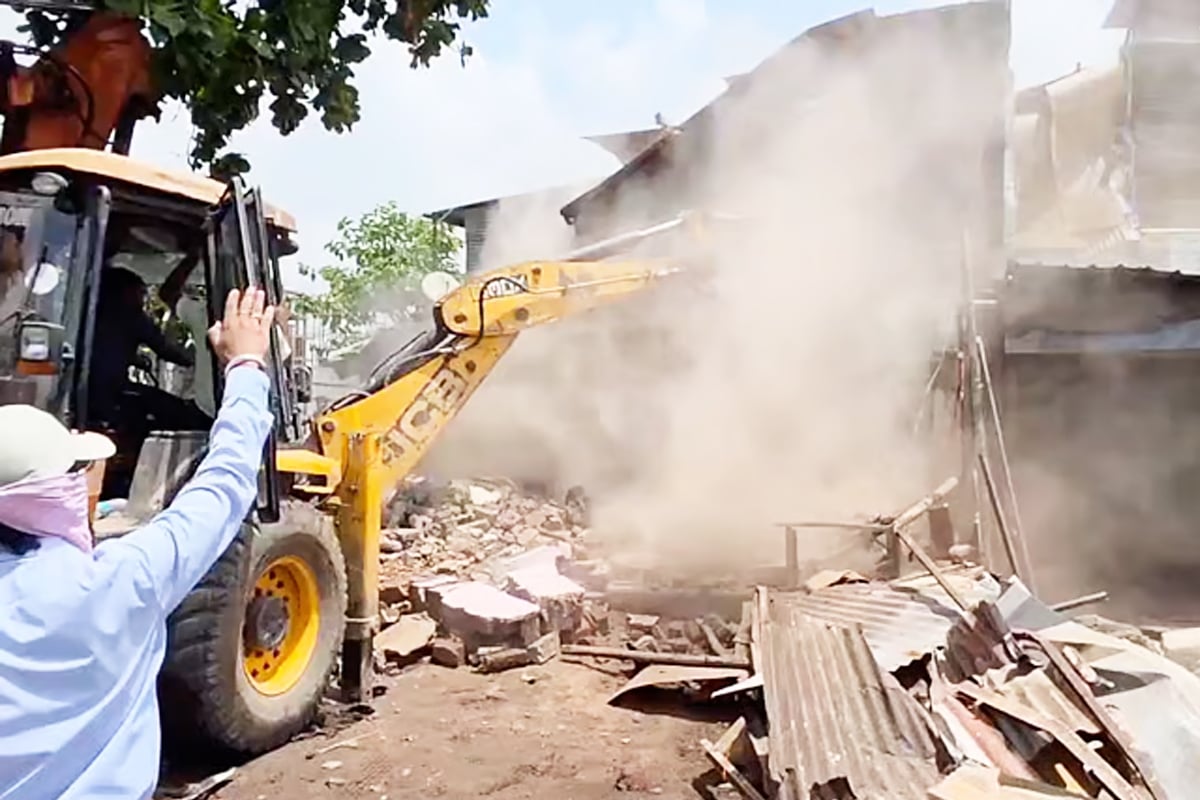
A bulldozer operated in Surat, Gujarat. In an instant, 100 houses were demolished. But the sensational aspect is that a mystery has arisen over whose orders this ‘operation’ was carried out. Meanwhile, the Surat Municipal Corporation has clearly stated that it did not give any orders to demolish the houses.
According to a national media report, an eviction drive was carried out on June 3 in the Nasirnagar slum of the Katargam area. Houses were demolished one after another. Local residents claim that Surat Municipal Corporation officials were present during the ‘operation’. Additionally, allegations have been raised that around 100 houses were demolished in the presence of the municipal administration and police. However, the Surat Municipal Corporation has denied the entire allegation. They have stated that they did not give any orders for such an eviction drive. Following this, questions have begun to arise: then on whose orders were so many houses demolished?
Read more:
A controversy has already started surrounding the entire incident. Families rendered homeless have broken down in tears. In this regard, Katargam MLA Binu Moradia said, “Municipal officials went to take road measurements. They did not go to break houses. There was no government order. There is no record of any such operation in the municipal documents either.”
Surat
Surat is a historic port city in the Indian state of Gujarat, known for its significant role in trade and commerce during the Mughal era. It was a major hub for the diamond and textile industries, and was visited by European traders including the British, Dutch, and Portuguese. Today, it remains a key economic center, famous for its diamond cutting and polishing industry.
Gujarat
Gujarat, located in western India, is a state rich in history and culture, known for being the birthplace of Mahatma Gandhi and the site of the ancient Indus Valley civilization city of Lothal. Its history includes rule by the Maurya, Gupta, and Solanki dynasties, as well as a significant period under the Mughal Empire and later British colonial influence. Today, Gujarat is celebrated for its vibrant festivals, intricate textiles, and the UNESCO World Heritage site of the Rani ki Vav stepwell.
Nasirnagar slum
Nasirnagar slum is a densely populated informal settlement located in Dhaka, Bangladesh, known for its overcrowded living conditions and lack of basic infrastructure. It emerged in the late 20th century as rural migrants moved to the city in search of work, leading to rapid, unplanned urbanization. Despite its challenges, the community is vibrant, with residents often working in nearby garment factories or informal sectors.
Katargam area
Katargam is a suburban area in Surat, Gujarat, India, with a history dating back to the medieval period as a fortified settlement. It was historically part of the Surat district and has evolved from a village into a bustling residential and commercial hub. Today, it is known for its mix of traditional and modern development, including local markets and temples.
<div class
Surat
Surat is a historic port city in the Indian state of Gujarat, renowned for its significant role in maritime trade from the 16th to 18th centuries. It was a major hub for the Mughal Empire and later the British East India Company, facilitating the export of textiles, diamonds, and spices. Today, Surat is a thriving economic center, famous for its diamond cutting and polishing industry, as well as its textile manufacturing.
Gujarat
Gujarat, located in western India, is a state rich in history and culture, known for being the birthplace of Mahatma Gandhi and the site of the ancient Indus Valley Civilization city of Lothal. Its history includes rule by various dynasties, such as the Solankis and the Mughals, and it was a major center for maritime trade with regions like Africa and the Middle East. Today, Gujarat is renowned for its vibrant festivals, intricate handicrafts, and iconic landmarks like the Somnath Temple and the Rann of Kutch.
Nasirnagar slum
Nasirnagar slum is a densely populated informal settlement located in Dhaka, Bangladesh, characterized by extreme poverty and inadequate infrastructure. It emerged during the rapid urbanization of Dhaka in the late 20th century, as rural migrants moved to the city seeking work but lacked access to affordable housing. The slum has a history of community resilience, with residents organizing to demand basic services like water and sanitation, though it remains one of the city’s most marginalized areas.
Katargam area
Katargam is a suburban area in Surat, Gujarat, India, with a history dating back to the Mughal era. It was originally a separate village that grew around the ancient Katargam Gate, a historical gateway of Surat built in the 17th century. Today, it is a densely populated residential and commercial locality, known for its textile and diamond industries.