Recently, Hanoi has been implementing a series of infrastructure projects, from ring roads to a range of bridges crossing the Red River…
During the process of clearing residential areas, thousands of tons of construction waste (bricks, sand, stone, concrete) have been generated daily.
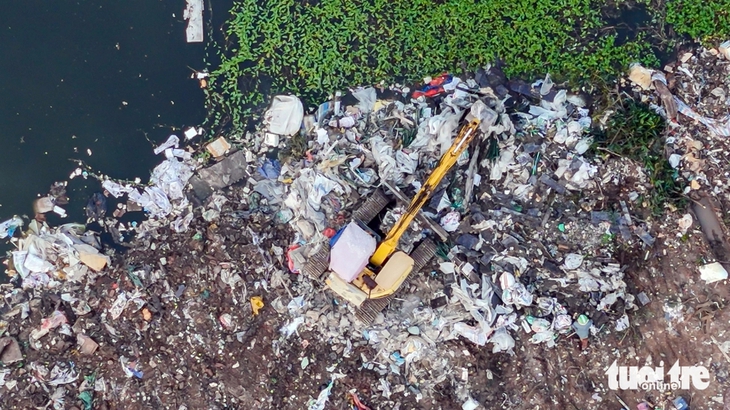
In some areas, waste piled up high has significantly impacted the environment, putting pressure on urban infrastructure as well as the transportation and treatment processes.
Previously, Hanoi generated only about 2,100 tons of waste per day, but now, depending on the timing of land clearance, this amount has increased several times over.
In the coming time, if source separation is not promoted and policies to attract more businesses to join the recycling chain are not implemented, it could lead to many negative consequences.
For instance, the illegal dumping of waste into agricultural land, public land, riverbanks, and riverbeds has become a pressing issue, harming the environment and incurring additional treatment costs for the state later on.
Not only waste from demolishing structures, but also waste from construction activities of apartment buildings and high-rise projects is becoming a hot spot that requires stricter sorting at the construction site.
The 2020 Environmental Protection Law clearly stipulates that ministries, sectors, and localities must integrate circular economy principles into their planning, plans, and development strategies.
Therefore, Hanoi needs to continue promoting recycling after demolishing structures and residential areas to protect the environment and utilize this highly potential resource. The goal is to sort and reuse materials on-site as land clearance progresses.
International experience shows that countries set up mobile crushing stations at demolition sites instead of transporting waste to central plants, which causes overload and high transportation costs.
Waste is crushed, and steel is screened on-site, with the recovered materials used for foundation leveling. This reduces truck traffic, dust, and pressure on centralized treatment infrastructure.
In Germany, the UK, and many European countries, failing to sort waste and dumping it illegally results in heavy fines. These penalties directly impact finances to encourage individuals and organizations to be more conscious about collection and recycling.
Perhaps for the construction waste recycling industry to thrive, the key issue is to create an output market for recycled materials and encourage their use. A construction waste crushing plant can only operate sustainably if it can sell its recycled products.
In Japan and Singapore, public investment projects such as roads, sidewalks, and parks are required to use 30-50% recycled materials to create a market for businesses.
Once the output is stable, the state needs to implement mechanisms to increase the value of recycled material products so that businesses can shorten the payback period for investments in sorting lines, crushing systems, and transportation.
Additionally, the state must create mechanisms to attract businesses to actively participate in the recycling chain through preferential policies such as long-term loans with low interest rates, aiming for sustainable development.
The land clearance process for urgent project construction has led to a sharp increase in construction waste and sludge. Hanoi is seeking various solutions for recycling and turning waste into filling materials.