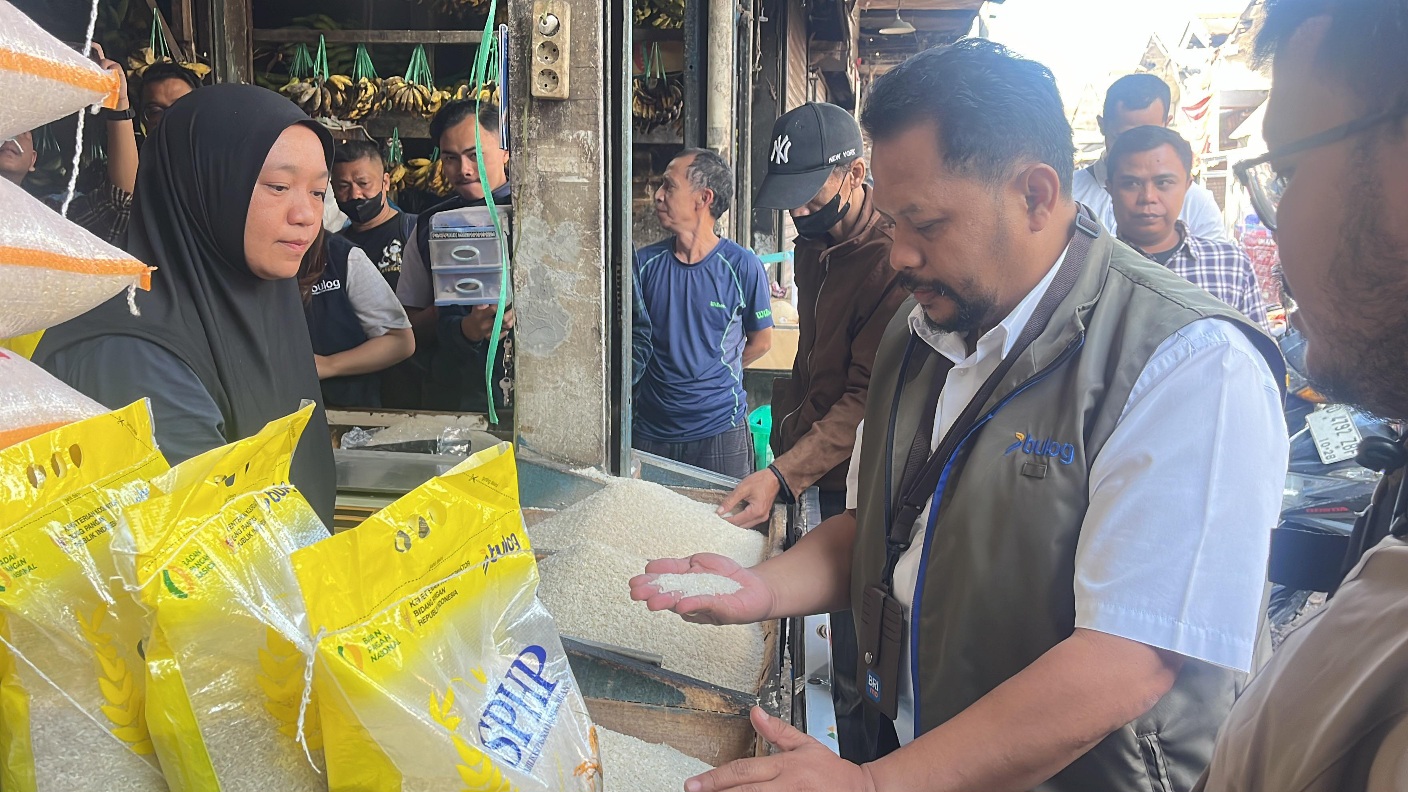
Perum Bulog Regional Office of West Java, together with the Food Task Force and the Trade Office, found that the majority of prices for essential staple goods remained relatively stable during a surprise inspection at Astana Anyar Market in Bandung City on Sunday (7/6/2026).
Only a few commodities, such as beef, remained at high price levels.
The Regional Head of Perum Bulog West Java Regional Office stated that monitoring results from several stalls and shops showed that prices for rice, onions, red chilies, and other food commodities were under control and had not experienced significant increases.
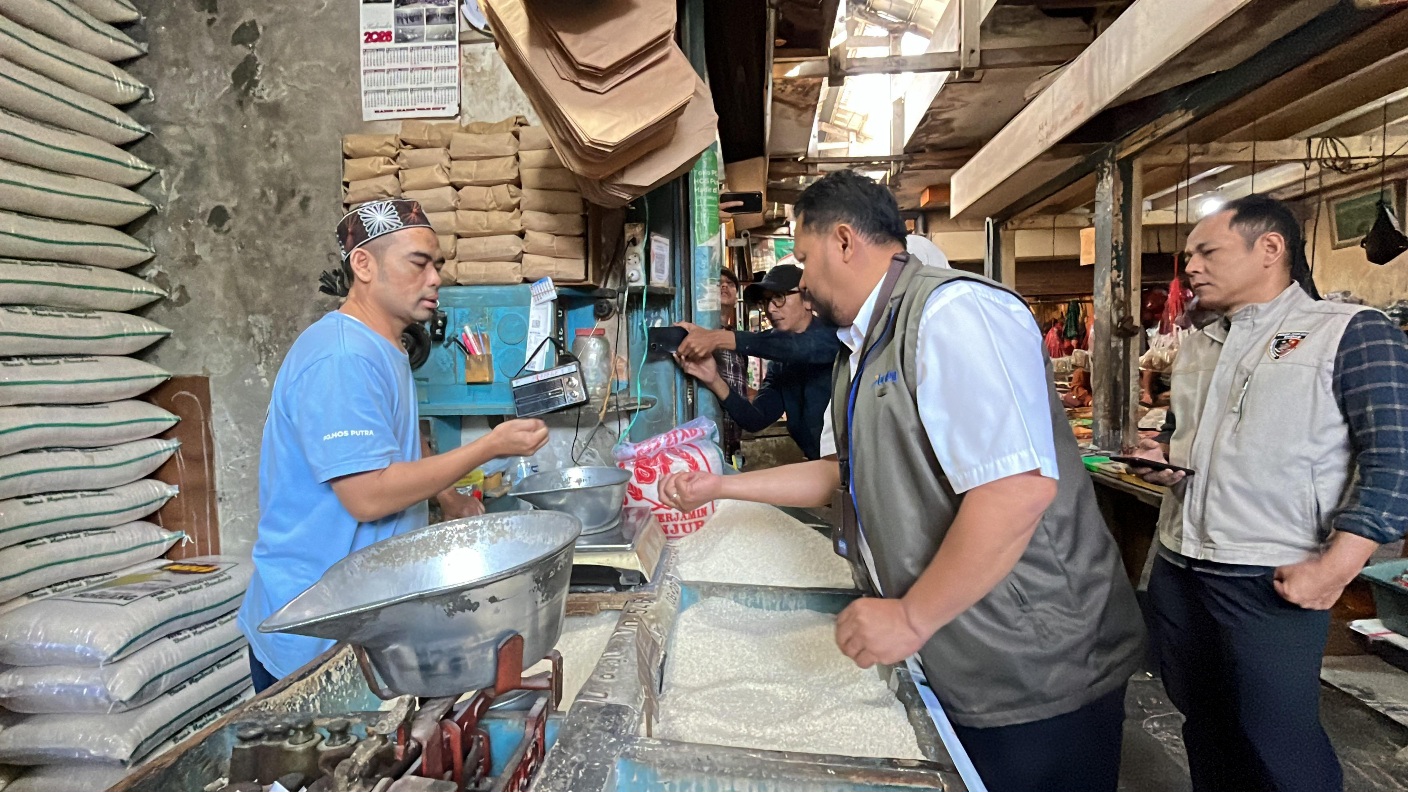
“After we walked around to several shops, for some commodities, thank God, prices are still relatively stable, with no increases,” he said after leading the inspection.
Nevertheless, Bulog noted that beef prices were still in the range of Rp140,000 to Rp150,000 per kilogram. This situation will be further evaluated by tracing prices at the upstream level to determine the necessary intervention steps.
“For beef commodities, the price is still quite high. We will check the price at the upstream level again. We will propose a price intervention so that it can drop a little,” he said.
Meanwhile, prices for chicken meat and eggs were actually below the government’s Reference Purchase Price. The price of chicken eggs was recorded at around Rp26,000 per kilogram, and chicken meat at Rp36,000 per kilogram.
In an effort to maintain price stability, Bulog continues to distribute food assistance in the form of rice and cooking oil to beneficiary communities. This program is considered capable of reducing direct demand in the market, thereby helping to maintain price balance.
“With the distribution of this food assistance, beneficiary communities have already received rice and cooking oil directly. The hope is that demand in the market will decrease so that prices remain stable,” he said.
Additionally, Bulog has distributed Minyakita cooking oil to several traditional markets. Minyakita distributed through official channels is sold according to the government-set Highest Retail Price.
According to him, if Minyakita is found to be sold above the Highest Retail Price, it is likely that the product did not come from the official retail network or is not supply distributed by Bulog.
Regarding the availability of rice, he assured that the people of West Java need not worry. As of early June 2026, the realization of rice procurement has reached approximately 590,000 tons, or about 70 percent of the annual target of 700,000 tons.
Currently, the rice stock held by Bulog reaches 850,000 tons. This amount is considered more than sufficient to meet the needs of the community until next year, and some is even distributed to assist the needs of several other provinces such as North Sumatra, Riau, Jambi, Bengkulu, and West Kalimantan.
“The public does not need to worry. The rice stock controlled by Bulog Jabar currently reaches 850,000 tons. This is very sufficient and even safe until next year,” he said.
To strengthen food security, West Java has also received an allocation of six new Bulog warehouses from the national program to build 100 warehouses. These warehouses will be built in Karawang with two units, Cirebon with two units, Bandung with one unit, and Subang with one unit.
“Currently, all are in the construction process. Hopefully, next year this infrastructure can operate optimally to strengthen food security,” he said.
He emphasized that Bulog, together with the Food Task Force and the Regional Inflation Control Team of West Java, will continue to monitor the food distribution chain to anticipate price spikes or supply disruptions.
“If indications of distribution bottlenecks or unilateral price spikes are found at the distributor or trader level, the government will seek alternative supply routes so that food prices in West Java remain stable,” he concluded.