Tehran receives a message from Pakistan, and the US military shoots down two Iranian drones.
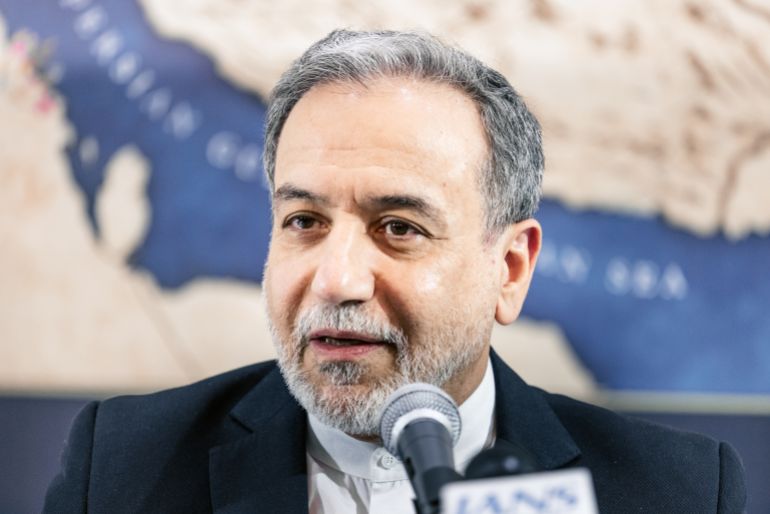
Iranian Interior Minister Eskandar Momeni met with his Pakistani counterpart on Saturday, after the latter arrived in the Iranian capital as part of efforts to revive stalled negotiation tracks, while it was announced that two Iranian drones were shot down.
The Iranian Student News Agency confirmed the meeting took place but did not elaborate on the discussions.
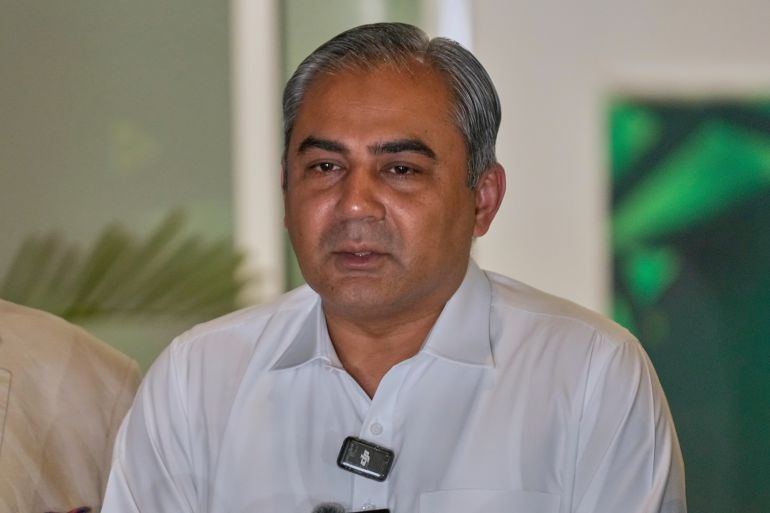
Iran’s official news agency (IRNA) quoted the Pakistani interior minister as saying he was visiting Tehran to deliver a message from the Pakistani army chief and prime minister to Iran’s supreme leader.
Naqvi stated that the message he carries for the Iranian supreme leader is of great importance, expressing hope that matters would proceed well and reach a conclusion, as reported by IRNA.
ISNA also reported that the Iranian interior minister received a message from the Pakistani army chief for the Iranian supreme leader from his Pakistani counterpart.
IRNA reported that the Pakistani interior minister is scheduled to meet with the Iranian foreign minister in Tehran on Sunday.
Earlier on Saturday, the interior minister of Pakistan, which acts as a mediator in the diplomatic track between Iran and the United States, arrived in the Iranian capital.
Before his visit to Tehran, Naqvi had met with the Pakistani prime minister and received instructions regarding the negotiation path between Iran and the United States.
Naqvi met his Iranian counterpart twice on the sidelines of the meeting of interior and public security ministers of the Shanghai Cooperation Organization member states, held on June 4 and 5 in Kazakhstan.
“Dead End”
In this context, the military advisor to the Iranian supreme leader, Mohsen Rezaei, said in an interview broadcast on Friday that negotiations between the United States and Tehran have reached a dead end, stressing that any potential agreement is contingent on the release of Iranian assets frozen abroad worth $24 billion.
Rezaei, a former commander of the Revolutionary Guard, described this step as a “test of trust” that the US president must pass, adding that this money is Tehran’s right and not the property of the United States.
Iran has faced a package of severe US sanctions for decades, including the freezing of Iranian assets abroad, a path that began after the Islamic Revolution in 1979 and remains a central focus of tensions between Tehran and Washington.
Military Developments
On the military side, US Central Command (CENTCOM) announced that its forces shot down two Iranian drones, which it said were threatening international navigation in the Strait of Hormuz.
It added that “US forces remain on standby to continue countering Iranian aggression.”
Early Saturday, US Central Command reported that it had attacked Iranian coastal radar sites after shooting down drones launched by Tehran towards the Strait of Hormuz.
This was followed by an announcement from Iran’s Revolutionary Guard attacking Kuwait and Bahrain, saying its forces targeted “American bases” in response to the attack on coastal sites in southern Iran.
These developments come at a time when the fragile ceasefire, reached by the two sides with Pakistani mediation on April 8, remains vulnerable to collapse due to ongoing violations, following a war that began on February 28, which led Iran to impose restrictions on navigation in the vital Strait of Hormuz.
Strait of Hormuz
The Strait of Hormuz is a narrow, strategically vital waterway connecting the Persian Gulf to the Gulf of Oman and the Arabian Sea. Historically, it has been a key chokepoint for global oil shipments, with its importance rising dramatically in the 20th century as a major transit route for petroleum from the Middle East. Its control has been contested for centuries, from the Portuguese in the 16th century to modern-day tensions between Iran and other nations.
Tehran
Tehran, the capital of Iran, is a sprawling metropolis with a history dating back to the 13th century, though it rose to prominence in the late 18th century when it became the capital of the Qajar dynasty. The city is a blend of ancient heritage and modern development, featuring landmarks like the Golestan Palace, a UNESCO World Heritage site, and the Azadi Tower, a symbol of modern Iran. Today, Tehran serves as the country’s political, economic, and cultural hub, reflecting a rich tapestry of Persian history and contemporary life.
Iran
Iran, known historically as Persia, is a country in West Asia with a rich cultural heritage spanning over 2,500 years. It was the center of the powerful Achaemenid Empire, which established one of the earliest systems of governance and infrastructure, and later became a major hub for art, science, and literature during the Islamic Golden Age. Today, Iran is home to numerous UNESCO World Heritage sites, including Persepolis and the ancient city of Isfahan, reflecting its deep historical and cultural significance.
Pakistan
Pakistan is a South Asian country with a rich history, having been home to ancient civilizations like the Indus Valley and later influenced by Persian, Turkic, and British colonial rule. It gained independence from British India in 1947 as a homeland for Muslims, led by Muhammad Ali Jinnah. Today, it is known for its diverse culture, stunning landscapes like the Karakoram mountains, and historic cities such as Lahore and Islamabad.
Kazakhstan
Kazakhstan is the world’s largest landlocked country, located in Central Asia, with a rich history shaped by nomadic cultures and the Silk Road. It was part of the Mongol Empire, later the Russian Empire, and became a Soviet republic before gaining independence in 1991. Today, it is known for its modern capital, Astana (now Nur-Sultan), vast steppes, and a blend of traditional and contemporary influences.
Kuwait
Kuwait is a small, oil-rich country located in the Arabian Gulf, known for its modern skyline and deep cultural heritage. Historically, it was a thriving pearling and trading hub before the discovery of oil in the 1930s transformed its economy. The country suffered a devastating invasion by Iraq in 1990, but was liberated in 1991 and has since rebuilt into a prosperous nation with landmarks like the iconic Kuwait Towers.
Bahrain
Bahrain, an island nation in the Persian Gulf, has a rich history as a major trading hub dating back to the ancient Dilmun civilization, around 3000 BCE. It was later a key part of the pearl trade before the discovery of oil in the 20th century transformed its economy. Today, Bahrain is known for its modern capital, Manama, and cultural sites like the Bahrain Fort, a UNESCO World Heritage site.
New Delhi
New Delhi, the capital of India, was designed by British architects Edwin Lutyens and Herbert Baker and officially inaugurated in 1931, replacing Calcutta as the center of British rule. It was built to the south of the historic walled city of Old Delhi, which had served as the Mughal capital for centuries. Today, New Delhi stands as a vibrant metropolis that blends colonial-era landmarks, such as the India Gate and Rashtrapati Bhavan, with India’s modern political and cultural identity.