HCMC – HCMC will hold fireworks displays at three locations and a live television program linking Hanoi and HCMC as part of a plan for celebrating 50 years since Saigon-Gia Dinh was officially named after President Ho Chi Minh on July 2, 1976.
The commemorative activities will begin with a flower-offering ceremony at 7:30 a.m. on July 2 at the President Ho Chi Minh Statue Park and Nguyen Hue pedestrian street in Saigon Ward.
An official ceremony marking the anniversary is scheduled for 8:15 a.m. the same day at the Reunification Hall.
In the evening, the city will organize a special live television broadcast connecting the Reunification Hall in HCMC and Ba Dinh Square in Hanoi City, along with additional broadcast locations across wards, communes and special administrative zones in the city.
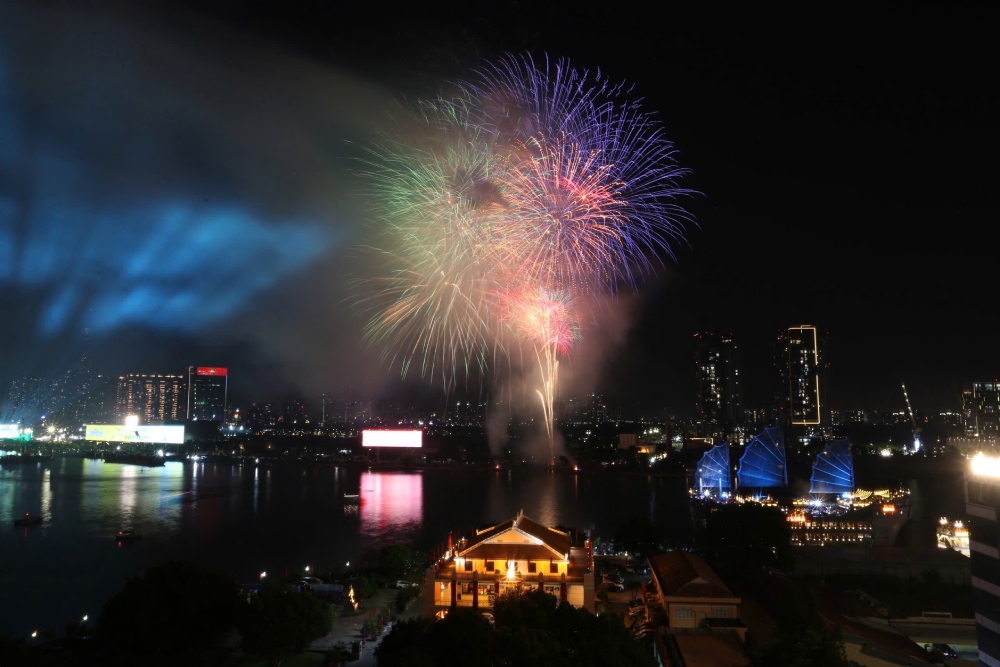
A 15-minute fireworks display from 9 p.m. to 9:15 p.m. will be one of the main highlights of the celebrations. High-altitude fireworks are planned at the Saigon River Tunnel area, the center of the new Binh Duong urban area, and Tam Thang Tower Square in Vung Tau Ward. Additional low-altitude fireworks displays are also expected at other locations.
The city will also organize a series of cultural, artistic and sports activities, including a music recording program themed “HCMC Shines with the name of President Ho Chi Minh,” community walking events, and circus and puppet performances at the Phu Tho Circus and multi-purpose performing center.
From July 1 to July 5, international 3D mapping projection shows combined with cultural exchange programs will take place in front of the HCMC People’s Committee headquarters from 7:30 p.m. to 9 p.m. daily.
The celebrations will also feature exhibitions, book fairs and children’s cultural programs, including the sixth HCMC Children’s Book Fair.
A photo exhibition commemorating the anniversary will be held on Dong Khoi Street, at Nguyen Du Park, and at the Revolutionary Tradition House in Vung Tau.
Cultural spaces dedicated to President Ho Chi Minh, residential areas, industrial parks and community venues across the city will also host related activities.
Separately, the HCMC Department of Culture and Sports is coordinating events marking the 115th anniversary of President Ho Chi Minh’s departure from Vietnam in search of a path for national liberation on June 5, 1911. Activities include incense and flower-offering ceremonies, recognition programs for outstanding organizations and individuals, and themed art performances.
HCMC – Vietnam Railways Corporation (VNR) on May 29 launched a trial run of its new QT3/4 multifunctional train equipped with digital technologies on the Hanoi–Thai Nguyen route in the northern region.
The train’s key features include continuous 5G connectivity and the pilot deployment of an AI-powered service robot, marking a major step in the railway sector’s digital transformation efforts. The new train is designed not only for passenger transport but also as a mobile workspace and operations hub during travel.
Following the debut run, the command carriage and integrated service cars will be gradually deployed for commercial operations across Vietnam’s railway network.
The train consists of six specialized carriages: a command carriage, a 34-seat VIP coach, a luxury sleeper coach with six VIP berths, a 24-seat coach, a 56-seat rotating-chair coach, and a dining car.
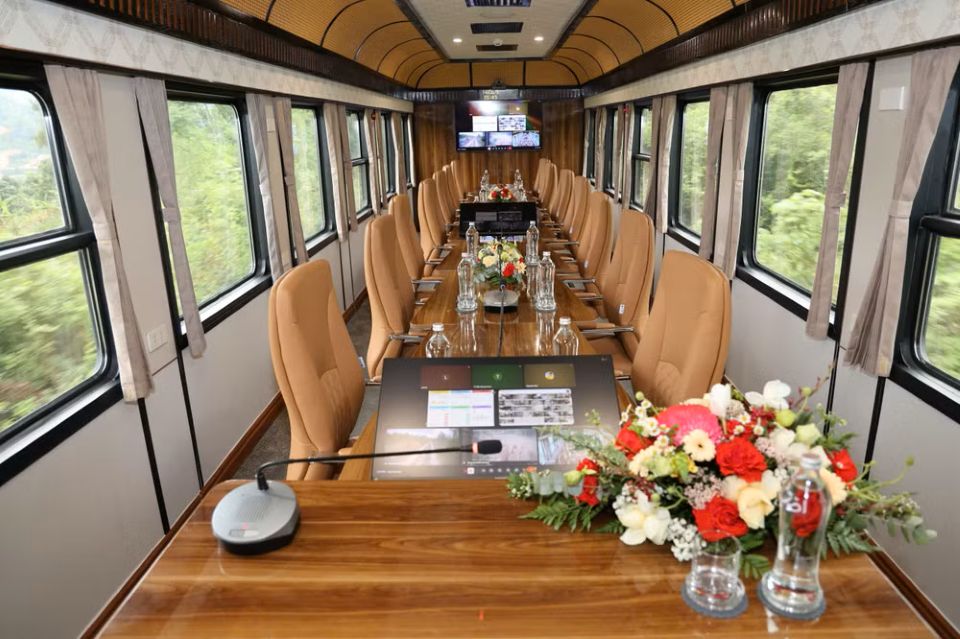
The command carriage is equipped with advanced communication systems and meeting facilities capable of accommodating up to 20 delegates.
In emergency situations such as natural disasters, floods, or infrastructure incidents, the carriage can operate as a mobile field command center thanks to next-generation 5G connectivity, allowing uninterrupted communications and data transmission across mountainous terrain and remote areas, including international connections.
The meeting room’s worktables were inspired by the design of the historic Dalat–Trai Mat cog railway line, with the interior layout optimized for multifunctional use.
Notably, the railway sector has for the first time introduced the KettyBot Pro robot on a trial basis in the 34-seat VIP carriage. Integrated with AI technology and a