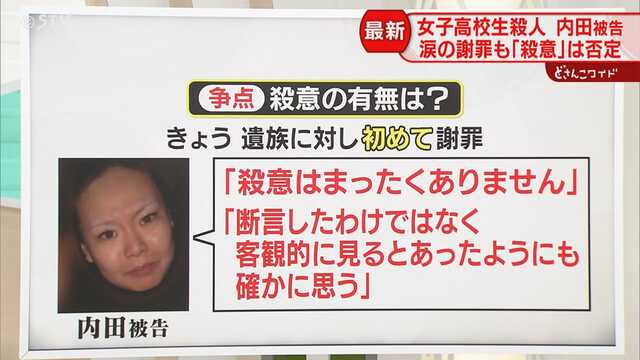
A trial is underway for a woman accused of causing a high school girl to fall from a bridge in Asahikawa, Hokkaido, resulting in her death. On June 4, during questioning of the defendant, she apologized for the first time, saying, “I am truly sorry for taking away a life.”
(Defendant Uchida) “Through my selfish and unreasonable actions, I hurt and tormented the victim, and took away her future life. I am truly sorry.”
The defendant, Riko Uchida, is charged with murder and other crimes.
During the defendant questioning on the 4th, she offered her first apology to the bereaved family.
(Defendant Uchida) “I will continue to face my crime… First, I will find ways to atone that I can manage, and I will sincerely serve my prison sentence. I am truly sorry.”
After repeating her apology, she bowed deeply toward the public gallery for over 30 seconds while crying.
Uchida is accused of stripping a high school girl living in Rumoi City and forcing her to sit on the railing of the Kamui Ohashi Bridge in Asahikawa in April 2024, then saying things like “Fall” and “Die,” causing her to fall into the river, resulting in her death.
The key issues in the trial are whether the act of killing occurred and whether there was intent to kill. Uchida has denied the murder charges.
After the defense’s questioning, the prosecution asked about her intention behind the apology.
(Defendant Uchida) “I didn’t directly push her off the bridge, but there is no doubt that our actions led to the victim being cornered and dying.”
The prosecution continued with tough questions.
(Prosecution) “Doesn’t this constitute murder?”
(Defendant Uchida) “I can’t know if it qualifies as murder until a verdict is given.”
(Prosecution) “Don’t you intend to change your opinion?”
(Defendant Uchida) “No.”
She once again denied having “intent to kill.”
During the defense’s questioning, Uchida testified while crying, but when questioned by the prosecution, she occasionally spoke with a stronger tone.
The trial will conclude on the 8th, and a verdict is scheduled to be handed down on June 22.