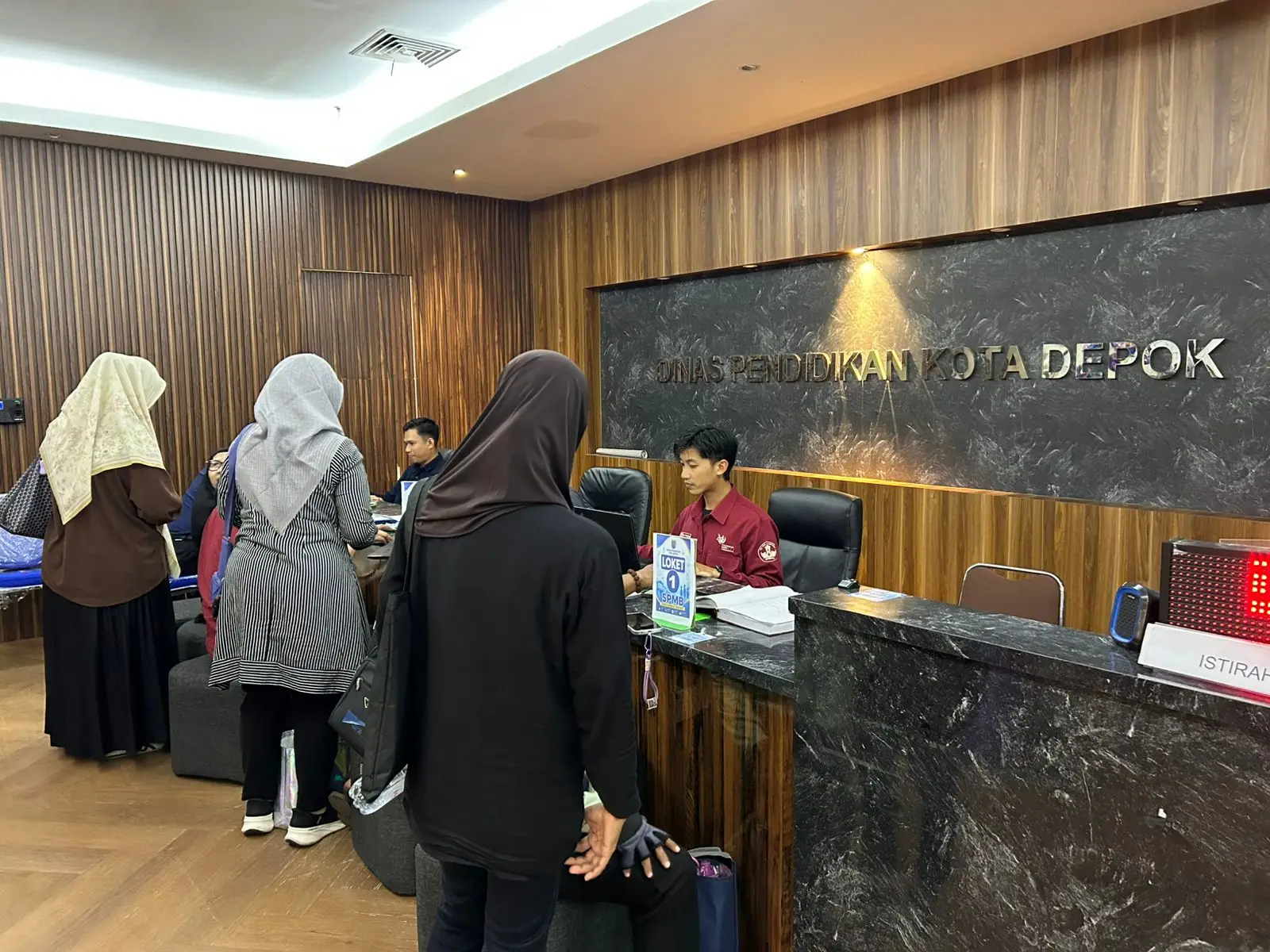
DEPOK (02/06/2026) – The Depok City Education Office is preparing to activate the academic selection gateway. The New Student Admission System (SPMB) for the Junior High School (SMP) level through the Achievement Track for the 2026/2027 Academic Year is officially open for two days, from June 4 to June 5, 2026. All registration mechanisms are managed online via the official portal at spmbkota.depok.go.id.
The SPMB 2026/2027 committee confirmed that the data entry operations on the day of document submission will be limited from 07:00 to 17:00 WIB. This special track is designed to recruit prospective students who have an excellent track record in academic achievement clusters (cumulative report card scores and possession of certificates) as well as non-academic achievements at the city, provincial, national, and international levels.
Work Schedule and Selection Validation Timeline
To mitigate delays in document submission, the committee has released a precise work timeline for the implementation of the SPMB Achievement Track:
-
Online Registration: June 4–5, 2026 (07:00 – 17:00 WIB).
-
Special Non-Academic Validation: June 6, 2026 (Starting at 07:00 WIB).
-
Document Appeal Period: June 8, 2026 (Via the official SPMB website).
-
Announcement of Results: June 9, 2026 (At 07:00 WIB).
-
Registration / Re-registration: July 9–10, 2026.
-
Start of New Academic Year: July 13, 2026.
-
School Environment Introduction Period (MPLS): July 13–18, 2026.
Standardization of Administrative Requirements by Track Cluster
The committee applies strict verification of documents uploaded by prospective students. These documents are divided based on two targeted achievement sub-tracks:
1. Report Card Achievement Cluster
-
Submit an Exam Participant Card or official Graduation Certificate (SKL).
-
Upload a Depok City Family Card (KK) with an active barcode. A domicile certificate is only tolerated for residents affected by natural or social disasters, provided it was issued no later than July 1, 2025.
-
Have a cumulative report card score for grades IV and V (semesters 1 & 2) and grade VI (semester 1) with a minimum average score of 85.
-
Include a statement letter regarding the validity of the achievements from the original school principal, affixed with a Rp10,000 stamp duty.
-
Be willing to undergo a series of standardized tests.
2. Non-Academic Achievement Cluster
-
Generally meet the same basic administrative requirements as the report card cluster.
-
Must attach physical evidence in the form of certificates or awards for the highest achievement ever attained in academic or non-academic fields.
-
Required to take standardized exams/tests according to the specific expertise or type of achievement submitted.
Scoring Weight Formulation:
The final graduation determination for prospective students in this achievement track scheme is not solely dependent on physical documents. The committee applies a combined calculation formula, with a weight portion of 70 percent for Report Card Scores and 30 percent for Academic Ability Test (TKA) results.