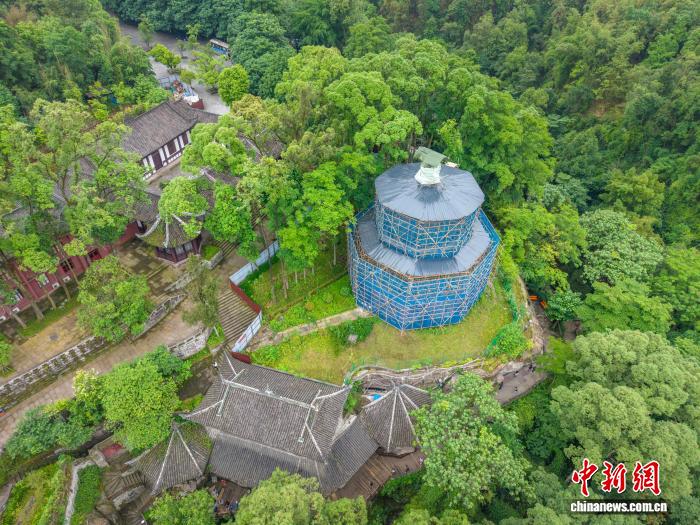
A restoration project for the Wansui Tower, a key part of the Baodingshan Rock Carvings, has reached a milestone. The exterior renovation of the tower is nearly complete, and work has shifted to interior painting and varnishing. The entire restoration is expected to be finished by September 2026.
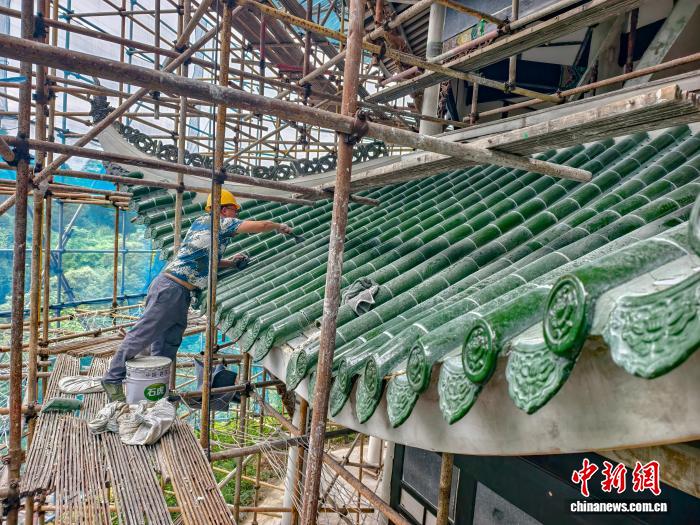
At the construction site, the ancient building, originally built during the Ming Dynasty, remains wrapped in scaffolding, but its exterior has been fully renewed. Workers are now making final checks and repairs on the eaves and brackets. All broken tiles on each floor have been replaced according to the original design.
According to the management center, the restoration began in September 2025 and is planned to last one year. To address issues like wood decay and roof damage caused by long-term natural erosion, the project follows a “minimal intervention” principle, ensuring structural safety while preserving as much historical information as possible. The exterior work is almost done, and the team is now focusing on repainting interior murals and applying oil finishes to wooden components.
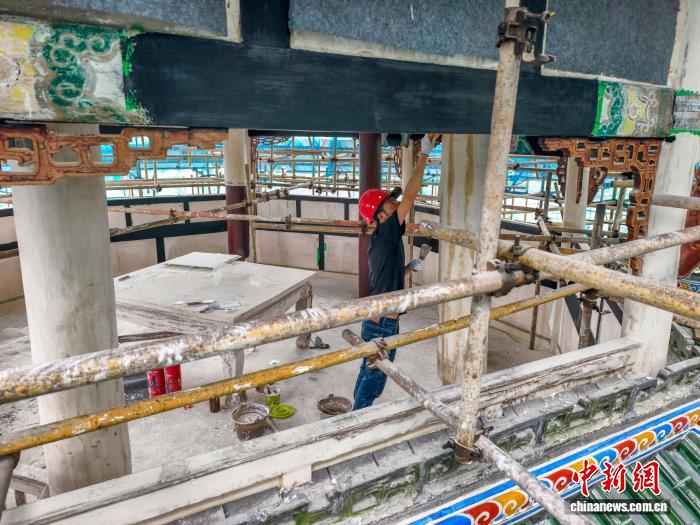
The Wansui Tower, built in the early Ming Dynasty, is an octagonal, pointed-roof wooden structure with four levels and four eaves, standing 21.2 meters tall. Its architecture is delicate and refined, with skilled wood carving and murals that reflect strong local customs, showcasing the construction features of traditional wooden buildings in the Sichuan-Chongqing region. It is one of the few surviving Ming Dynasty wooden structures in the area.
Historically, the tower has undergone several partial repairs. This systematic restoration is one of the largest and most comprehensive in recent years.
Notably, this project not only repairs the tower’s physical structure but also preserves and protects cultural heritage. By replacing decayed components, repairing damaged parts, and improving the preservation environment, the tower’s historical appearance will be effectively restored. The Ming Dynasty building techniques and Sichuan-Chongqing cultural features it embodies will be preserved, laying a solid foundation for future heritage protection and cultural display.
The Dazu Rock Carvings, a UNESCO World Heritage site, consist of cliffside carvings in Chongqing’s Dazu District. The Baodingshan Rock Carvings, an important part of this site, attract many tourists from home and abroad each year.