The Bhagwant Mann government has provided major relief to parents by imposing a cap on arbitrary fee increases in private schools in Punjab. Click for more details.
Bhagwant Mann government imposes a 5 percent limit on fee increases in private schools
The Bhagwant Mann government has taken a historic decision, providing major relief to millions of families in Punjab. Strict rules have been announced to prevent arbitrary fee increases by private schools. According to official sources, no private school will now be able to increase fees by more than 5 percent annually.
Punjab government to soon introduce the strictest ordinance in the country
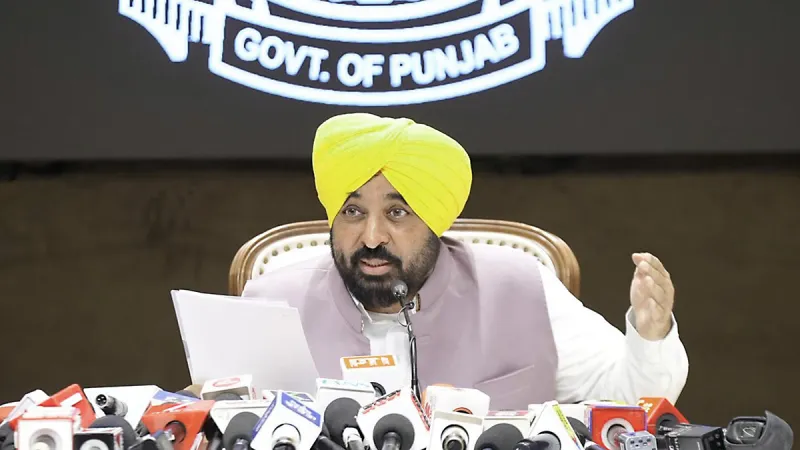
Chief Minister Bhagwant Mann has described this rule as the strictest law in the country. According to reports, this new rule will apply equally to all private schools in Punjab. The 5 percent limit will apply not only to tuition fees but also to all types of mandatory funds.
Schools that have violated the rules and increased fees by more than 15 percent in the last three years will have to refund the money to parents. According to sources, schools that violate the rules may also have their recognition revoked. This strict step has been taken based on parents’ complaints following a tragic incident in Amritsar. The Chief Minister stated that amendments to the 2019 law of the former Congress government had made schools unbridled.
This development comes at a time when parents in Punjab are under heavy financial burden at the start of the academic session. The original 2016 law set a fee increase limit of 8 percent. The Punjab government is now replacing these old rules to create a more transparent system.
Strict punitive action will be taken against private schools that violate the rules
Additionally, the government has prepared a graded penalty system for institutions that violate the rules. According to sources, a primary school violating the rule for the first time will be fined 30,000 rupees, and a secondary school will be fined 100,000 rupees. If the school repeats the violation a second time, the fine will increase to 200,000 rupees.
If the rules are broken a third time, the school’s recognition will be directly revoked. The Bhagwant Mann government has made it clear that exploitation of parents in the name of education will no longer be tolerated. This law will ensure equal educational rights for children from economically weaker families and end the arbitrariness of intermediaries.
District-level regulatory body given civil court powers for fee regulation
Specifically, the regulatory body led by the District Collector will investigate all complaints from parents. According to information, this committee will start reviewing any complaint within 15 days of receiving it and will make a final decision within 60 days. In the coming time, chartered accountants will also be appointed to audit the last five years of private schools.
After this strict decision by the Bhagwant Mann government, will the administrators of private schools in Punjab adopt a path of strike or legal challenge in the coming days? This step taken by the government to secure the future of millions of students in the state is sure to bring about a major change in the education sector.