Ebola outbreak in the Democratic Republic of Congo with 65 deaths recorded.
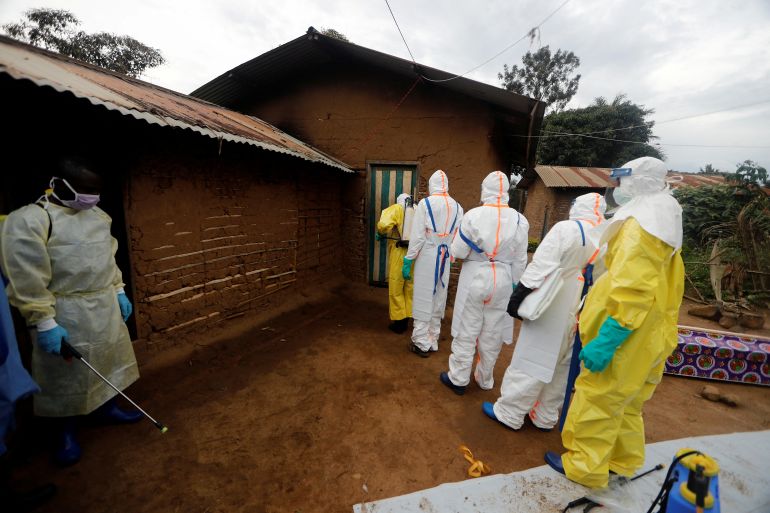
Sixty-five deaths from the virus have been recorded in Ituri province in the Democratic Republic of Congo, out of 246 suspected cases in the outbreak in the region, according to the African Centers for Disease Control and Prevention on Friday.
A statement from the centers—the highest public health body in Africa—said they would hold an emergency meeting with the Congo and global partners to strengthen cross-border surveillance, preparedness, and response efforts.
It added that the deaths and suspected cases were mainly reported in the Mungwalu and Rwampara areas, while four deaths were reported among lab-confirmed cases. Suspected cases were also reported in Bunia, the provincial capital.
The centers said preliminary results indicate the presence of another strain of the virus other than the „Zaire strain.“
They expressed concern about „the risk of further spread of the virus due to the urban context of Bunia and Rwampara, as well as intense population movement and mining-related mobility in affected areas near Uganda.“
Zaire Strain
Jean-Jacques Muyembe, a Congolese virologist who helped discover the Ebola virus and heads the National Institute for Biomedical Research, said all 16 previous outbreaks in the Congo were caused by the „Zaire strain“ except for one case.
He added that identifying a different strain would complicate response efforts, as current treatments and vaccines are developed to combat the „Zaire strain.“
The director general of the centers, Jean Kaseya, said in the statement that rapid regional coordination is essential given the intense population movement between affected areas and neighboring countries.
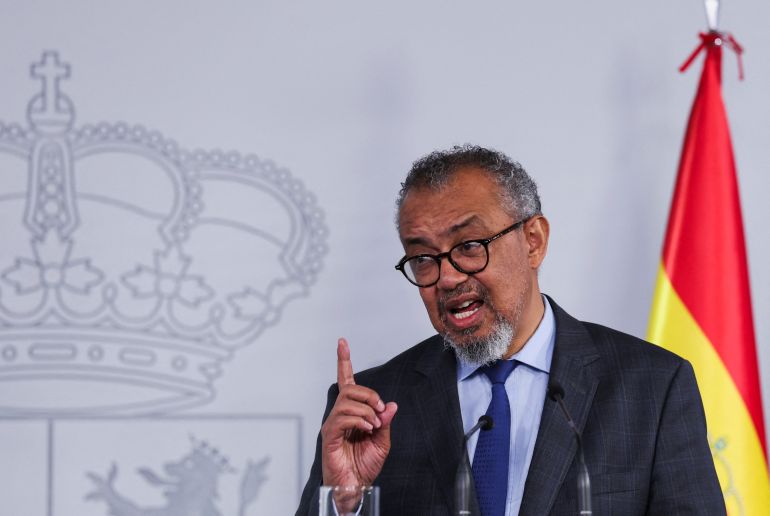
The director general, Tedros Adhanom Ghebreyesus, said in a press conference on Friday that the organization learned of suspected cases on May 5 and sent a team to Ituri to assist in the investigation, while samples collected from the field initially tested negative.
Ghebreyesus added that a lab in Kinshasa confirmed positive cases last Thursday, bringing the total number of confirmed cases to 13.
He continued that the World Health Organization has allocated $500,000 from its emergency fund to support the response, including surveillance, contact tracing, testing, and care.
Ituri province
Ituri Province, located in northeastern Democratic Republic of the Congo, is historically known as part of the dense Ituri Rainforest, which has been home to indigenous Mbuti (Pygmy) peoples for thousands of years. The region gained international attention in the early 2000s due to the brutal Ituri conflict, a complex ethnic war involving militias like the Union of Congolese Patriots (UPC) over land and resources. Today, it remains a culturally rich but volatile area, with ongoing efforts toward peace and conservation amidst its unique biodiversity.
Mungwalu
Mungwalu is a remote Aboriginal community located in the Northern Territory of Australia, situated on the traditional lands of the Yolngu people. It was established as a mission settlement in the mid-20th century and later became a self-governing community, known for its rich Indigenous cultural heritage and strong connection to the surrounding Arnhem Land landscape. Today, Mungwalu remains a significant site for preserving Yolngu traditions, art, and language.
Rwampara
Rwampara is a traditional kingdom located in southwestern Uganda, historically part of the larger Ankole region. It was established as a semi-autonomous chiefdom under the Omugabe (king) of Ankole, with its own local rulers known as the „Abakama“ or chiefs. Today, Rwampara is recognized as a cultural institution that preserves the heritage, customs, and governance traditions of the Banyankole people.
Bunia
Bunia is a city in the northeastern Democratic Republic of the Congo, serving as the capital of the Ituri Province. Its history has been significantly shaped by ethnic conflict, particularly during the Second Congo War (1998–2003) and the subsequent Ituri conflict, which involved violent clashes between the Hema and Lendu communities. Despite its turbulent past, Bunia remains an important commercial and administrative hub in the region.
Moncloa Palace
Moncloa Palace, located in Madrid, Spain, is the official residence and workplace of the Prime Minister of Spain. Originally built in the 17th century as a farmhouse, it was later expanded and became a royal estate before being declared a National Monument. Since 1977, it has served as the seat of the Spanish government, hosting key political meetings and state events.
Madrid
Madrid is the capital and largest city of Spain, known for its rich cultural heritage and vibrant arts scene. Its history dates back to the 9th century when it was founded as a Moorish fortress, before becoming the royal capital in 1561 under King Philip II. Today, Madrid is famous for landmarks like the Royal Palace, Prado Museum, and lively plazas such as Puerta del Sol.
Kinshasa
Kinshasa is the capital and largest city of the Democratic Republic of the Congo, situated along the Congo River. Originally a fishing village, it grew rapidly during the colonial era under Belgian rule, becoming a major commercial and administrative hub. Today, it is one of Africa’s fastest-growing megacities, known for its vibrant music, art, and cultural scene.
People line up to fill the tanks of their vehicles...
Wir verwenden Cookies, um die Benutzerfreundlichkeit zu verbessern und den Datenverkehr zu analysieren. Durch die weitere Nutzung der Website stimmen Sie unserer
[Cookie-Richtlinie] zu. 🍪