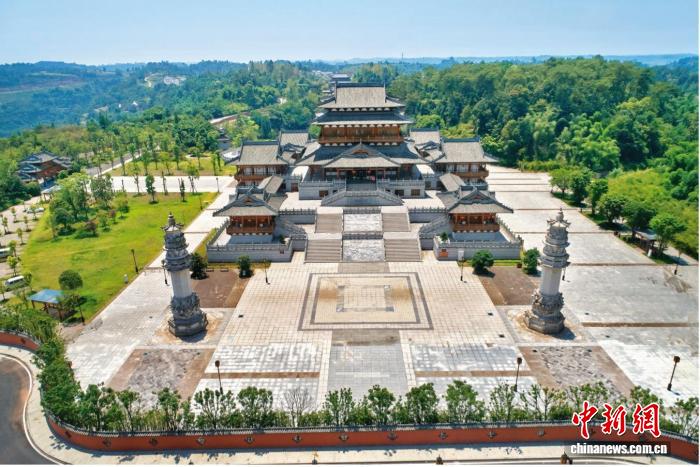
As « 5·18 International Museum Day » approaches, it was learned on the 16th that the city has a total of 152 registered museums, achieving 100% coverage across all districts and counties. There is one museum for every 209,900 people, basically reaching the national average.
The city has built a museum system centered around Bayu culture, Three Gorges culture, revolutionary culture, wartime resistance culture, united front culture, and immigrant culture, forming « five major museum clusters » covering history, revolution, wartime resistance, industry, and nature. This creates a museum system that covers urban and rural areas, has distinct characteristics, and is open and inclusive.
Among the 152 museums, by type, there are 34 comprehensive local history museums, 39 revolutionary memorial museums, 37 historical and cultural museums, 8 archaeological site museums, 8 art museums, 11 natural science and technology museums, and 15 other types. By region, the main urban area has 108 museums, the Northeast Three Gorges Reservoir area has 30, and the Southeast Wuling Mountain area has 14.
Data shows that museums have become an important cultural landmark and a key engine for cultural and tourism integration. In 2025, all museums in the city completely abolished visit reservations, implementing a « walk-in » free reservation system, which greatly improved visitor convenience and exhibition enthusiasm. In 2025, the city’s museums held a total of 1,062 exhibitions, a year-on-year increase of 14.32%; conducted 16,977 social education activities, a year-on-year increase of 19.88%; and received 45.0579 million visitors, a year-on-year increase of 7.22%.
Other data indicates that during the « 14th Five-Year Plan » period, the museum sector achieved leapfrog development, with the cultural and museum service system continuously improving and the quality and efficiency of public services steadily rising. For example, the number of national-level museums in the city increased from 24 at the end of the « 13th Five-Year Plan » period to 39, accounting for 27.66% of the city’s total museums. There are now 7 first-level museums, 23 second-level museums, and 9 third-level museums, with the proportion of graded museums jumping from 18% to 28%, significantly enhancing the overall capacity.
During the « 14th Five-Year Plan » period, the city held an average of over 10,000 social education activities annually, attracting more than 6 million participants each year; and launched an average of over 500 exhibitions annually, including more than 240 original exhibitions.
In terms of cultural and creative industries, during the « 14th Five-Year Plan » period, the city’s museums developed a cumulative total of 8,093 types of cultural and creative products, with brands such as « Good Gift, » « Three Gorges Cultural Creative, » and « Natural Gifts » forming brand effects. The Red Plum series and Little Radish series cultural and creative products were awarded « National Excellent Red Tourism Cultural and Creative Products, » achieving significant results in revitalization and utilization.
Dazu Rock Carvings Museum
The Dazu Rock Carvings Museum is located in Chongqing, China, and serves as a dedicated facility to preserve and interpret the nearby Dazu Rock Carvings, a UNESCO World Heritage site. These carvings date back to the 7th century, with the most significant works created during the Tang and Song dynasties, showcasing intricate Buddhist, Confucian, and Taoist sculptures. The museum provides historical context and displays artifacts that help visitors understand the cultural and religious significance of this remarkable rock art complex.
Three Gorges culture
The Three Gorges culture refers to the rich historical and cultural heritage of the Yangtze River’s Three Gorges region in China, an area known for its dramatic landscapes and ancient settlements. Its history spans thousands of years, including Neolithic sites like the D
Dazu Rock Carvings Museum
The Dazu Rock Carvings Museum is located in Chongqing, China, and serves as a dedicated site for preserving and exhibiting the renowned Dazu Rock Carvings, a UNESCO World Heritage site. These intricate carvings, dating from the 7th to 13th centuries, depict Buddhist, Taoist, and Confucian themes, showcasing the artistic and religious integration of ancient Chinese culture. The museum provides valuable context and protection for these masterpieces, allowing visitors to explore their historical and spiritual significance.
Three Gorges culture
The Three Gorges culture refers to the distinct traditions, art, and way of life that developed along the Yangtze River’s Three Gorges region in China. This area has a history spanning thousands of years, including ancient Ba and Chu civilizations, and was profoundly shaped by the river’s geography as a vital trade and travel route. The culture is also known for its folk songs, legends, and the dramatic changes brought by the construction of the Three Gorges Dam in the late 20th century.
Bayu culture
Bayu culture refers to the ancient and distinctive regional culture of the Chongqing area in southwestern China, centered along the Yangtze and Jialing rivers. Its history traces back over 3,000 years to the Ba Kingdom, a Bronze Age state known for its unique art, music, and warrior traditions, which later blended with Han Chinese culture after the Qin conquest. Today, Bayu culture is celebrated for its spicy cuisine, folk songs, and the resilient, spirited character of its people.
Three Gorges Museum cluster
The Three Gorges Museum cluster in Chongqing, China, is a group of museums dedicated to preserving and showcasing the history, culture, and ecology of the Three Gorges region. Its centerpiece, the Chongqing China Three Gorges Museum, was established in 2005 and houses over 170,000 artifacts, including relics salvaged during the construction of the Three Gorges Dam. The cluster also includes specialized branches, such as the Baidicheng Museum, which explore the area’s ancient civilizations, folk traditions, and the impact of the massive dam project.
Wartime resistance culture
The term « wartime resistance culture » refers to the artistic, literary, and social expressions that emerge during conflicts as acts of defiance against occupying or oppressive forces. Historically, it includes underground newspapers, clandestine music performances, and coded art that preserved national identity and boosted morale, as seen during World War II in occupied Europe. This culture served both as a form of psychological warfare and as a means to document the realities of war for future generations.
United front culture
« United front culture » refers to the historical and political tradition in China of forming broad alliances under the leadership of the Chinese Communist Party to achieve common goals, such as national unity and development. Its roots trace back to the First United Front in the 1920s, when the CCP collaborated with the Kuomintang against warlords, and later evolved through the War of Resistance against Japan and the establishment of the People’s Republic of China. Today, it emphasizes inclusive cooperation among diverse social groups, political parties, and overseas Chinese to support socialist modernization and national rejuvenation.
Immigrant culture
Immigrant culture refers to the traditions, customs, and social practices brought by people who move to a new country, blending their heritage with the host society. Historically, waves of immigration—such as those to the United States through Ellis Island in the late 19th and early 20th centuries—shaped multicultural identities, as newcomers contributed language, food, art, and values while adapting to new environments. This ongoing exchange creates vibrant, evolving communities that enrich national cultures worldwide.
Red Plum series
The « Red Plum series » refers to a classic Chinese comic book series created by the artist Wang Shuhui in the 1980s. Set during the tumultuous Cultural Revolution, it tells the story of a young boy named Red Plum who struggles against oppressive forces while embodying themes of resilience and justice. The series became highly influential in Chinese popular culture, reflecting the era’s social changes and the enduring spirit of its people.