
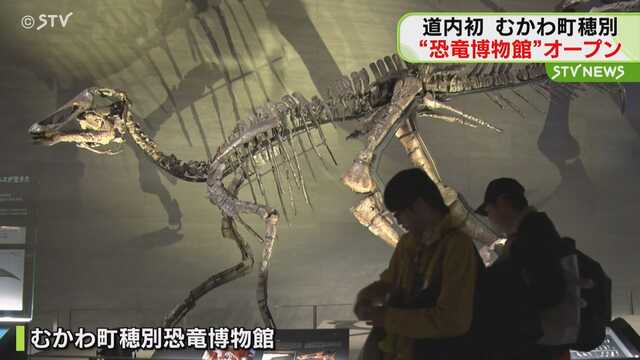
Hokkaido’s first dinosaur museum has opened in Mukawa Town, with an opening ceremony held.
The Mukawa Town Hobeetsu Dinosaur Museum opened today in Hobeetsu, Mukawa Town.
In addition to exhibiting the full-body fossil of the “Kamuysaurus” discovered in Mukawa Town, the museum also features a hot spring and a cafe.
“It’s very impressive, and I think it’s a source of pride for Hobeetsu.”
This is the first dinosaur museum to be established in Hokkaido.
Mukawa Town Hobeetsu Dinosaur Museum
The Mukawa Town Hobeetsu Dinosaur Museum, located in Hokkaido, Japan, is a paleontological museum dedicated to the region’s rich fossil history, particularly the discovery of the Kamuysaurus japonicus, a hadrosaurid dinosaur uncovered nearby in 2013. The museum features life-sized reconstructions, interactive exhibits, and a large collection of fossils, including the nearly complete skeleton of the “Mukawaryu” dinosaur. It opened in 2021 to showcase this significant find and promote scientific education about the area’s Cretaceous-era ecosystems.
Hokkaido
Hokkaido, Japan’s northernmost main island, was originally inhabited by the Ainu people before large-scale Japanese settlement began in the late 19th century during the Meiji era. Unlike the rest of Japan, it developed as a frontier region focused on agriculture, mining, and later tourism, with its capital Sapporo hosting the 1972 Winter Olympics. Today, Hokkaido is known for its stunning natural landscapes, national parks, ski resorts, and unique cuisine like fresh seafood and dairy products.
Mukawa Town Hobeetsu Dinosaur Museum
The Mukawa Town Hobeetsu Dinosaur Museum, located in Hokkaido, Japan, is a renowned paleontological site where the nearly complete skeleton of the *Kamuysaurus japonicus*—the largest dinosaur skeleton ever found in Japan—was discovered in 2013. The museum showcases this remarkable fossil, along with other local finds, and provides interactive exhibits about the region’s Cretaceous-era history. Opened in 2019, it serves as both a research facility and an educational attraction, highlighting the area’s rich prehistoric past.
Hokkaido
Hokkaido, Japan’s northernmost island, was historically known as Ezochi and inhabited by the indigenous Ainu people before large-scale Japanese settlement began in the late 19th century during the Meiji era. Today, it is famous for its stunning natural landscapes, including national parks, hot springs, and ski resorts, as well as its unique culture and cuisine like fresh seafood and dairy products. The island’s history of development and its distinct climate have shaped a region that blends frontier spirit with modern tourism.
Mukawa Town Hobeetsu Dinosaur Museum
The Mukawa Town Hobeetsu Dinosaur Museum, located in Hokkaido, Japan, is a paleontological museum built near the site where the nearly complete skeleton of *Kamuysaurus japonicus*, a new species of hadrosaurid dinosaur, was discovered in 2013. The museum opened in 2019 to showcase this significant find, known as “Mukawaryu,” along with other local fossils and exhibits on dinosaur
Mukawa Town Hobeetsu Dinosaur Museum
The Mukawa Town Hobeetsu Dinosaur Museum in Hokkaido, Japan, is a paleontological facility built around the discovery of the *Kamuysaurus japonicus*, or “Mukawaryu,” one of the largest complete dinosaur skeletons ever found in Japan. The museum opened in 2019 to showcase this 72-million-year-old hadrosaurid fossil, along with other local Cretaceous-period specimens. Its exhibits highlight the region’s prehistoric environment and the history of the dinosaur’s excavation, which began in 2003.
Hokkaido
Hokkaido, Japan’s northernmost island, has a rich history as the homeland of the indigenous Ainu people before large-scale Japanese settlement began in the late 19th century during the Meiji era. Formerly known as Ezo, the region was developed for agriculture, industry, and tourism, transforming into a major hub for natural beauty and winter sports. Today, Hokkaido is renowned for its stunning landscapes, national parks, and cultural sites that blend Ainu heritage with modern Japanese influences.
Sapporo
Sapporo is the capital city of Hokkaido, Japan’s northernmost island, and is renowned for its annual Sapporo Snow Festival, featuring massive ice and snow sculptures. Originally a small settlement, the city was developed in the late 19th century under the guidance of American agricultural advisors, which shaped its grid-like layout and Western-influenced architecture. Today, it is famous for its beer, ramen, and as a gateway to Hokkaido’s natural attractions.
Похожие новости

لماذا رفعت شركة لوجينت اليابانية الراتب المبدئي للخريجين الجامعيين إلى 350 ألف ين؟
مناقشة رئيس شركة لوجينيت اليابان حول هدف زيادة الر...
لازل تبدأ بشراء 800 ألف كيلوواط ساعة سنوياً من الكهرباء المتجددة لمتاجرها.
أعلنت سلسلة متاجر "لالز" (سابورو) في العشرين من ال...

مهرجان الثلج القادم سيقام من 4 إلى 11 فبراير بمنحوتات ثلجية ضخمة.
أعلنت "اللجنة التنفيذية لمهرجان سابورو للثلج"، الت...

Wind power faces local opposition as transmission lines cross town—renewable energy development questioned in wine town Yoichi
A wind power construction plan has emerged in the ...

“أربعة فنّانين يحوّلون مبنى مدرسيّاً قديماً في سابورو إلى لوحات زيتية وعروض فضائية في معرض ‘ماكومارو’.”
موسم فنون حي مينامي الربيعي
يُقام حدث "موسم فنون ح...