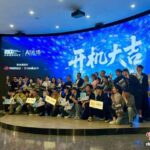
An international symposium commemorating the 80th anniversary of the Tokyo Trials opened in Shanghai on May 28. The honorary director of the Center for Tokyo Trials Studies at Shanghai Jiao Tong University, who is also the son of the Chinese prosecutor at the Tokyo Trials, said in an interview that Japanese right-wing forces’ denial of the Tokyo Trials to pave the way for a “new type of militarism” is worthy of vigilance. He recalled that in the 1980s, when the Japanese Ministry of Education revised history textbooks, his father, already in his 90s, attended a forum in a wheelchair. At that time, his father said that if Japanese imperialism were to make a comeback, all those who had witnessed the Tokyo Trials would testify, and he believed that Japanese militarists would face an even greater defeat. “If he were alive today, he would surely hold the same view,” he said.

He also expressed confidence that with the joint efforts of people worldwide, including the Japanese people, attempts to deny the Tokyo Trials will not succeed.

Tokyo Trials

The Tokyo Trials, officially known as the International Military Tribunal for the Far East, were held from 1946 to 1948 to prosecute Japanese leaders for war crimes committed during World War II. Modeled after the Nuremberg Trials, the tribunal tried 28 high-ranking military and political officials, resulting in seven death sentences and numerous prison terms. The trials established important precedents for international law, though they remain controversial for issues such as the exclusion of Emperor Hirohito from prosecution.

Shanghai

Shanghai is a major global financial hub and a vibrant port city on China’s eastern coast. Its history as a key trading center began in the 19th century, particularly after the Treaty of Nanking (1842) opened it to foreign powers, leading to the establishment of international concessions that shaped its unique architectural and cultural landscape. Today, it is known for its striking blend of historic landmarks like the Bund and futuristic skyscrapers in Pudong.

Center for Tokyo Trials Studies

The Center for Tokyo Trials Studies is a research institution dedicated to the study of the International Military Tribunal for the Far East, commonly known as the Tokyo Trials, which were held from 1946 to 1948 to prosecute Japanese war criminals after World War II. Based in Japan, the center focuses on preserving historical records, analyzing the legal and political implications of the trials, and promoting understanding of their legacy in modern international justice. Its work highlights the trials’ role in shaping post-war East Asian relations and the development of international humanitarian law.

Shanghai Jiao Tong University

Shanghai Jiao Tong University, founded in 1896, is one of China’s oldest and most prestigious universities, originally established as Nanyang Public School. It played a pivotal role in modernizing Chinese education and technology, and over the decades, it has evolved into a leading research institution. Today, it is renowned for its strong programs in engineering, medicine, and business, contributing significantly to global science and innovation.

Japanese Ministry of Education

The Japanese Ministry of Education, formally known as the Ministry of Education, Culture, Sports, Science and Technology (MEXT), was established in 1871 during the Meiji era to modernize Japan’s education system. It played a key role in implementing compulsory education and shaping national curriculum. Today, it oversees all levels of education, from elementary schools to universities,

Tokyo Trials

The Tokyo Trials (1946–1948) were a series of military tribunals held by the Allied powers to prosecute Japanese leaders for war crimes committed during World War II, including crimes against peace, conventional war crimes, and crimes against humanity. The trials resulted in the conviction of 25 defendants, with seven sentenced to death, and established important precedents in international law, particularly regarding the responsibility of leaders for aggressive war. Though controversial for their perceived victor’s justice and exclusion of Emperor Hirohito from prosecution, the trials remain a significant effort to hold wartime atrocities accountable.

Shanghai

Shanghai is a major global financial hub and one of China’s largest cities, with a history as a key port opened to foreign trade after the Treaty of Nanking in 1842. Its development was heavily shaped by international concessions, which left a lasting architectural and cultural legacy visible in areas like the Bund and the French Concession. Today, Shanghai is known for its dynamic blend of historic neighborhoods and futuristic skylines, symbolizing modern China’s rapid economic growth.

Center for Tokyo Trials Studies

The Center for Tokyo Trials Studies is a research institution dedicated to the study of the International Military Tribunal for the Far East (1946–1948), commonly known as the Tokyo Trials. Located in Tokyo, Japan, it preserves and analyzes historical records related to the tribunal’s prosecution of Japanese war criminals after World War II. The center serves as a vital resource for scholars examining post-war justice, international law, and the historical memory of the Asia-Pacific conflict.

Shanghai Jiao Tong University

Shanghai Jiao Tong University, founded in 1896 in Shanghai, is one of China’s oldest and most prestigious universities, originally established as the Nanyang Public School. It played a key role in modernizing China’s education and technology sectors, particularly in engineering and science. Today, it is a leading research university known for its innovation and global partnerships.

Japanese Ministry of Education

The Japanese Ministry of Education, formally known as the Ministry of Education, Culture, Sports, Science and Technology (MEXT), was established in 1871 during the Meiji Restoration to modernize Japan’s education system. It played a key role in creating a centralized, compulsory education model that helped transform Japan into an industrialized nation. Today, it oversees all levels of education, cultural preservation, and scientific research, continuing to shape national policy.