-
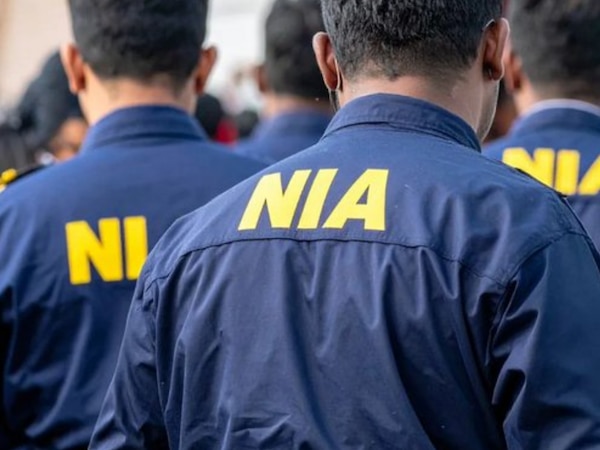
NIA Raids: The National Investigation Agency (NIA) conducted a major operation on Thursday in a cross-border arms smuggling case, carrying out simultaneous raids across four states in the country. This action was taken under case RC-08/2026/NIA/DLI, which involves illegal arms trafficking and a network.
NIA teams conducted search operations at a total of 12 locations in Uttar Pradesh, Rajasthan, Bihar, and Maharashtra. Among these, the highest number of five locations were in Uttar Pradesh, three in Maharashtra, while two each in Rajasthan and Bihar.
According to sources, the investigation agency has recovered important documents, digital devices, and other suspicious material linked to the arms smuggling network from these locations. The agency is now examining the seized items and questioning several suspects.
It is reported that this network was active in smuggling illegal arms into India from across the border and supplying them to various states. The NIA suspects that this gang may have connections to an international network.
Uttar Pradesh
Uttar Pradesh, located in northern India, is a historically and culturally rich state known as the heartland of the ancient Indus Valley and Vedic civilizations. It is home to the iconic Taj Mahal in Agra, a 17th-century Mughal mausoleum, as well as the sacred cities of Varanasi and Ayodhya, which are central to Hinduism. The region has been a crossroads for empires, including the Maurya, Gupta, and Mughal dynasties, shaping its diverse heritage as a major center for religion, art, and politics in India.Rajasthan
Rajasthan, a state in northwestern India, is renowned for its vibrant culture, majestic forts, and palaces that reflect its royal history. It was historically home to several powerful Rajput kingdoms, which resisted Mughal expansion and maintained their independence through strategic alliances. Today, Rajasthan is a major tourist destination, offering desert landscapes, traditional music, and colorful festivals that preserve its rich heritage.Bihar
Bihar, located in eastern India, is one of the country’s oldest inhabited regions with a rich history dating back to ancient times. It was the center of the powerful Maurya and Gupta empires, and is famously the birthplace of Buddhism, as Gautama Buddha attained enlightenment in Bodh Gaya there. Today, the state is known for its historical sites like Nalanda University ruins and vibrant cultural traditions.Maharashtra
Maharashtra is a state in western India, known for its rich history as the heart of the Maratha Empire under leaders like Shivaji Maharaj. It is home to iconic cultural sites such as the Ajanta and Ellora caves, ancient rock-cut Buddhist, Hindu, and Jain monuments dating back to the 2nd century BCE. Today, Maharashtra is a major economic and cultural hub, with its capital Mumbai serving as India’s financial and entertainment center.Taj Mahal
<div class
Taj Mahal
The Taj Mahal is a white marble mausoleum located in Agra, India, built between 1632 and 1653 by Mughal Emperor Shah Jahan in memory of his beloved wife, Mumtaz Mahal. It is renowned as a masterpiece of Mughal architecture, blending Persian, Islamic, and Indian styles, and was designated a UNESCO World Heritage Site in 1983. Today, it stands as an iconic symbol of love and one of the most visited cultural monuments in the world.Varanasi
Varanasi, also known as Kashi or Banaras, is one of the world’s oldest continuously inhabited cities, located on the banks of the Ganges River in India. It is a major spiritual hub for Hindus, who believe that dying here brings liberation from the cycle of rebirth, and its ghats have been the site of ritual bathing and cremations for millennia. The city’s history dates back over 3,000 years, and it has been a center of learning, culture, and religion, associated with figures like Buddha and the development of classical music and philosophy.Ayodhya
Ayodhya is a historic city in Uttar Pradesh, India, considered one of the seven most sacred pilgrimage sites in Hinduism. It is traditionally believed to be the birthplace of Lord Rama, a central deity in the epic Ramayana, and served as the capital of the ancient Kosala kingdom. In modern times, the city gained global attention due to a long-standing religious and legal dispute over the Babri Masjid site, which was resolved in 2019 with the construction of a new Ram temple.Bodh Gaya
Bodh Gaya is a significant Buddhist pilgrimage site located in Bihar, India, where Siddhartha Gautama is said to have attained enlightenment and became the Buddha around 500 BCE. The site’s centerpiece is the Mahabodhi Temple, a UNESCO World Heritage Site, which houses the sacred Bodhi Tree under which the Buddha meditated. For centuries, it has been a major destination for Buddhists worldwide, attracting pilgrims and tourists who come to honor the origins of their faith.Nalanda University ruins
The ruins of Nalanda University, located in Bihar, India, are the remains of one of the world’s oldest and most renowned residential universities, established around the 5th century CE. For over 700 years, it was a major center of Buddhist learning, attracting scholars from across Asia, until it was sacked and destroyed by Turkic invaders in the late 12th century. Today, the extensive archaeological site, a UNESCO World Heritage Site, reveals a vast complex of monasteries, temples, and lecture halls that testify to its ancient grandeur.Ajanta caves
The Ajanta Caves are a series of 30 rock-cut Buddhist cave monuments in Maharashtra, India, dating from the 2nd century BCE to about 480 CE. They are renowned for their exquisite paintings and sculptures that depict the life of the Buddha and Jataka tales, representing some of the finest surviving examples of ancient Indian art. The caves were abandoned and forgotten for centuries before being rediscovered by a British hunting party in 1819, and they are now a UNESCO World Heritage Site.Ellora caves
The Ellora Caves are a UNESCO World Heritage site in Maharashtra, India, renowned for their remarkable rock-cut architecture spanning Buddhist, Hindu, and Jain traditions. Constructed between the 6th and 10th centuries CE, the complex features 34 monasteries and temples carved into a basalt cliff, with the Kailasa Temple (Cave 16) being a standout—a massive, multi-story temple excavated from a single rock. This site reflects the religious harmony and artistic excellence of ancient India.