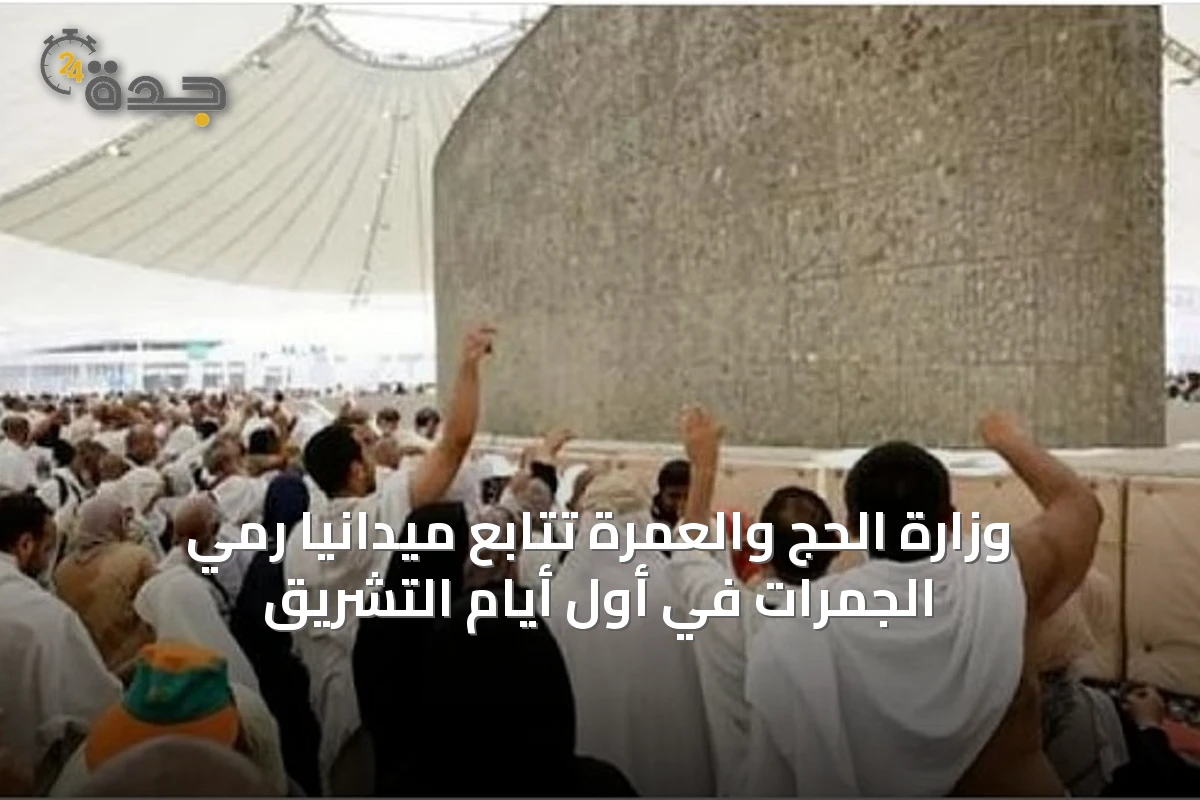
The Ministry of Hajj and Umrah intensified its field and operational efforts on the eleventh day of Dhul Hijjah to monitor the flow of pilgrims for the stoning of the devil during the days of Tashreeq, in cooperation with all relevant authorities. This is part of comprehensive plans aimed at organizing the movement of pilgrims and ensuring smooth access and performance of rituals according to approved schedules and pathways.
Stoning Movement and Density Distribution
The ministry stated that the stoning movement on the first day of Tashreeq saw a balanced distribution throughout the day according to approved operational plans. About 30% of pilgrims performed the stoning ritual between 12:00 AM and 10:00 AM, while about 70% performed it between 2:00 PM and the end of the day.
It reported that the peak period for stoning was between 2:00 PM and 6:00 PM, with the highest density recorded at 5:00 PM during peak hours. This indicates the effectiveness of flow management plans, crowd control, and distribution of movement across designated pathways and times.
Field and Digital Coordination
The ministry, through the Flow and Joint Operations Center and its field teams, monitors the movement of pilgrim groups, aligns transit routes with pilgrim locations and designated transport means, in coordination with security and transport authorities and Hajj companies. This helps distribute densities and organize entry and exit movements at the Jamarat facility.
The digital flow system supports field monitoring efforts by reading compliance indicators with schedules, tracking movement timings, and documenting operational observations. This helps specialized teams address any challenges that may affect the smoothness of the flow early on.
These efforts are integrated with the Monitoring and Control Center, which tracks Hajj operations in the field through dozens of data boards and over 95 operational indicators, in coordination with 42 government and operational entities. Additionally, the Compliance Center and the ministry’s field teams have conducted over 100,000 inspection rounds since Shawwal until today, covering camps, movement and transit routes, and all service delivery sites. This also includes monitoring the readiness of support services, cleanliness and maintenance levels, and the performance of operating entities and Hajj companies, enhancing overall efficiency during one of the most movement-intensive days of Hajj.
Nusk Inaya Field Services
The “Nusk Inaya” centers, affiliated with the Ministry of Hajj and Umrah, continue to provide field services to pilgrims in Mina during the days of Tashreeq. Through support and guidance teams deployed at pilgrim locations, they aim to facilitate access to necessary services and information. Since the first of Dhul Qa’dah until today, the Nusk Inaya centers have provided over 260,000 field services through 38 centers and more than 160 service points, with qualified and trained staff offering services in 11 languages in addition to sign language.
Field teams directed pilgrims to appropriate pathways and services, handled cases requiring direct intervention, and received feedback and reports, contributing to enhancing the comfort of pilgrims during the performance of the major Hajj pillar.
Importance of Adhering to Schedules and Pathways
This stage underscores the importance of adhering to specified schedules and pathways. The days of Tashreeq represent one of the most movement-intensive phases of Hajj within Mina, requiring continuous field coordination to ensure pilgrims perform the stoning ritual with ease and tranquility.
Jamarat facility
Ministry of Hajj and Umrah
Jamarat facility
Mina
Related news

Riyadh University of the Arts opens admission and registration for 4 colleges and 8 academic programs.

After the announcement of Resident Evil for mobile phones.. a look at the game’s details

Trump orders military salaries to be paid during government shutdown.

Attack on the Crescent Defense Line: Focus on Melang Sarr