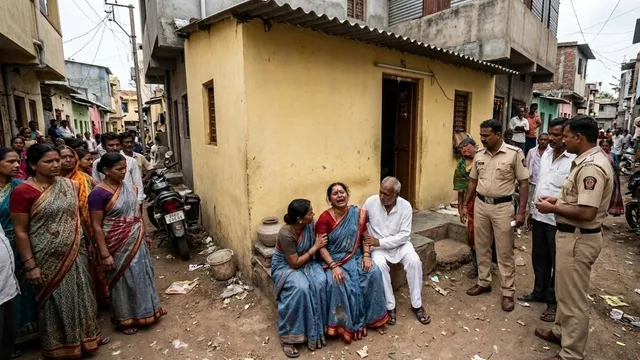
Seven people have died after drinking toxic liquor in the Pune district of Maharashtra. The deaths have caused a stir in the administration.
A tragic incident has emerged in the Pune district of Maharashtra, where seven people died after consuming toxic liquor. Following the incident, police in Pune city and Pimpri-Chinchwad have launched an investigation into the matter.
A police officer in Pune stated that the Pimpri-Chinchwad police have arrested a man named Yogesh Wankhede, who was previously detained by the Pune state excise department. He is accused of supplying the liquor in both locations. Further investigation is ongoing.
Officials reported on Friday that seven people died in Pimpri-Chinchwad after allegedly consuming fake liquor, while a similar angle is being investigated in three deaths in Pune over the past 24 hours.
Eight people in custody
Officials said eight people have been detained in connection with the deaths in Pimpri-Chinchwad, while three others are being treated at a local hospital on suspicion of consuming toxic liquor.
Chief Minister orders investigation
Speaking to the media, Maharashtra Chief Minister Devendra Fadnavis said he has ordered an investigation into the seven deaths allegedly caused by consuming toxic liquor.
Police reported that a total of eight people, including a key liquor smuggler, have been detained in connection with the alleged supply of methanol-laced liquor in the Phugewadi area of Pimpri-Chinchwad.
Deputy Commissioner of Police (Zone 1) Sandip Attole from Pimpri-Chinchwad said, “After several deaths in Phugewadi, we began an investigation. We found that so far, seven people have died allegedly from consuming toxic liquor, and three others are undergoing treatment.” However, test results are still awaited to confirm the exact cause of the deaths.
The official stated that eight people were detained in a joint operation by the state excise department and local police. Meanwhile, another official said that Pune police have launched a focused investigation into the toxic liquor angle after three deaths in the Hadapsar area of the city within 24 hours.
State Excise Commissioner Atul Kanade said, “The department has started an investigation following the deaths. We have detained a man named Yogesh Wankhede, who supplied liquor in both Phugewadi and Hadapsar. He has been handed over to the Pimpri-Chinchwad police, who are taking further action.”
Pune
Maharashtra
Pimpri-Chinchwad
Shaniwar Wada
Aga Khan Palace
Ajanta caves
Ellora caves
Related news
On Trump’s birthday, talk of a ‘Fight Night’ at the White House sparks intense online debate.

After Congress, AAP also accuses the Election Commission.

Mohan Bhagwat said — an organization like the RSS could only have been formed in Nagpur, explained the contribution of the city’s mindset and traditions.
UP Board Result 2026 LIVE: UPMSP 10th and 12th results releasing today at 4 PM; how many marks do students need to pass?