
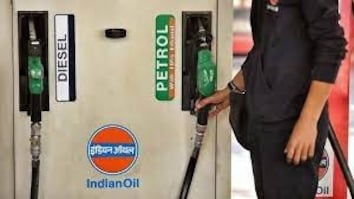
Oil marketing companies set petrol prices daily based on crude oil in the international market. However, despite fluctuations in international crude oil prices, Indian oil companies have kept petrol and diesel prices stable for a long time. There has been no change in fuel prices in major cities across the country, including Delhi, Mumbai, Kolkata, and Chennai.
Indian oil companies update petrol and diesel prices daily at 6 AM, taking into account international oil market rates. In the national capital Delhi, the price of one liter of petrol remains stable at 96.72 rupees on December 13.
Delhi
Delhi, the capital of India, is a historic city with a rich past spanning over a millennium, having served as the seat of power for numerous empires, including the Mughals and the British Raj. Its iconic landmarks, such as the Red Fort, Qutub Minar, and India Gate, reflect layers of architectural and cultural heritage from ancient, medieval, and modern periods. Today, it is a bustling metropolis that blends deep historical roots with rapid urbanization and diverse traditions.
Mumbai
Mumbai, formerly known as Bombay, is India’s financial and entertainment capital, located on the west coast. Originally a collection of seven islands, it was ceded to the British in 1661 as part of Catherine of Braganza’s dowry and grew into a major colonial port and trading hub. Today, it is a bustling metropolis known for Bollywood, historic landmarks like the Gateway of India, and its diverse, resilient population.
Kolkata
Kolkata, the capital of West Bengal, is a vibrant city known for its rich cultural heritage and colonial history. Founded in 1690 by the British East India Company, it served as the capital of British India until 1911 and was a major center for the Indian independence movement. Today, it is famous for its artistic legacy, literary traditions, and landmarks like the Victoria Memorial and Howrah Bridge.
Chennai
Chennai, formerly known as Madras, is a major cultural and economic hub on India’s southeastern coast. Founded in 1639 by the British East India Company around the Fort St. George settlement, it grew from a small fishing village into a bustling city. Today, it is renowned for its classical music and dance traditions, vibrant film industry (Kollywood), and historic landmarks like the Kapaleeshwarar Temple.
Red Fort
The Red Fort is a historic fortification in Delhi, India, built in the mid-17th century by the Mughal Emperor Shah Jahan. It served as the main residence of Mughal emperors for nearly 200 years and is now a UNESCO World Heritage Site, symbolizing India’s rich cultural heritage. The fort also holds national significance as the site where the Prime Minister of India delivers an annual address on Independence Day.
Qutub Minar
The
Red Fort
The Red Fort is a historic Mughal fort in Delhi, India, built between 1638 and 1648 by Emperor Shah Jahan. It served as the main residence of Mughal emperors for nearly 200 years and is now a UNESCO World Heritage Site. The fort is also significant as the site where the Indian Prime Minister hoists the national flag each year on Independence Day.
Qutub Minar
The Qutub Minar is a towering 73-meter-high minaret in Delhi, India, built starting in 1193 by Qutb-ud-din Aibak, the founder of the Delhi Sultanate, to celebrate Muslim dominance after the defeat of the last Hindu kingdom. Its construction was completed by later rulers, and the complex also includes the Quwwat-ul-Islam Mosque, the earliest surviving mosque in India, which was constructed using materials from demolished Hindu and Jain temples. A UNESCO World Heritage Site, the minaret is a masterpiece of Indo-Islamic architecture, featuring intricate carvings and verses from the Quran.
India Gate
India Gate is a prominent war memorial located in New Delhi, India, built to honor the 70,000 Indian soldiers who died in World War I and the Third Anglo-Afghan War. Designed by Sir Edwin Lutyens and completed in 1931, its architecture resembles a triumphal arch and stands as a symbol of national pride and remembrance. Today, it is a popular gathering spot for locals and tourists, surrounded by lush lawns and the nearby Amar Jawan Jyoti flame.
Gateway of India
The Gateway of India is a historic arch monument built in Mumbai (formerly Bombay) in 1924 to commemorate the visit of King George V and Queen Mary to India. It was constructed in the Indo-Saracenic style and later became a symbolic landmark, notably used to bid farewell to British troops as they departed India in 1948, marking the end of colonial rule. Today, it stands as one of Mumbai’s most iconic tourist attractions, overlooking the Arabian Sea.
Victoria Memorial
The Victoria Memorial in Kolkata, India, is a grand marble monument built between 1906 and 1921 in memory of Queen Victoria, who was Empress of India. Designed by Sir William Emerson in an Indo-Saracenic style, it now serves as a museum and tourist attraction, showcasing colonial-era art, artifacts, and the history of British rule in India. The memorial stands as a prominent symbol of Kolkata’s colonial heritage and architectural grandeur.
Howrah Bridge
The Howrah Bridge, officially renamed Rabindra Setu in 1965, is a iconic cantilever bridge spanning the Hooghly River in Kolkata, India. Completed in 1943 during World War II, it was built without any nuts or bolts, using rivets to connect its massive steel structure. It remains one of the busiest bridges in the world, serving as a vital transportation link between the cities of Howrah and Kolkata.
Fort St. George
Fort St. George, located in Chennai, India, was built by the British East India Company in 1644 and is considered the first English fortress in the country. It served as the administrative and commercial hub of British India until the late 18th century, and today houses the Tamil Nadu Legislative Assembly and a museum showcasing colonial artifacts. The fort’s construction marked the beginning of British influence in India, evolving from a trading post into a symbol of imperial power.
Kapaleeshwarar Temple
The Kapaleeshwarar Temple, located in Mylapore, Chennai, India, is a historic Hindu temple dedicated to Lord Shiva. Originally built by the Pallava kings in the 7th century, the current structure dates to the 16th century, rebuilt by the Vijayanagara Empire after Portuguese destruction. It is renowned for its vibrant Dravidian architecture, with a towering gopuram adorned with intricate carvings, and remains a major spiritual and cultural landmark.
Related news
RBI’s major decision: Restrictions on rupee trade removed, global trade to get a boost
New Delhi The Reserve Bank of India (RBI) has take...

Railway’s new rule: E-Aadhaar verification now mandatory for general reservations.
New Delhi - The railway administration has made a ...

Violence erupts again on the Pakistan-Afghanistan border, increasing tensions between the two countries.
Islamabad - The border dispute between Pakistan an...

Shooting near White House, two National Guard members injured: security agencies in uproar
Washington – Two National Guard members were shot ...

A luxurious room, a young woman on the bed, and piles of cash—the story of this missing bride from her in-laws’ home will astonish you.
A newlywed woman had just gotten married. Her fami...