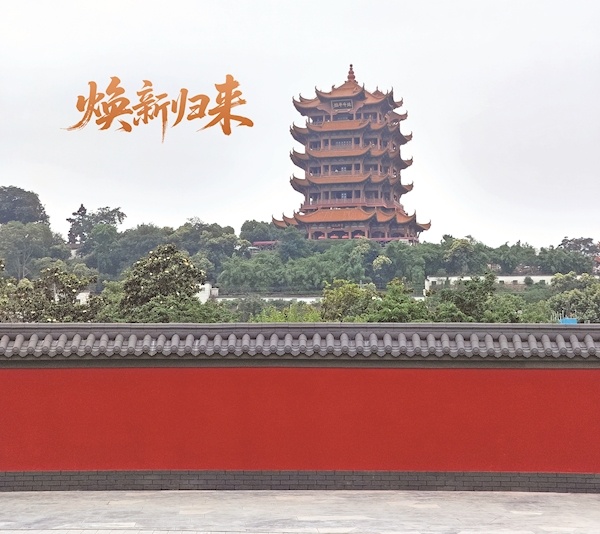
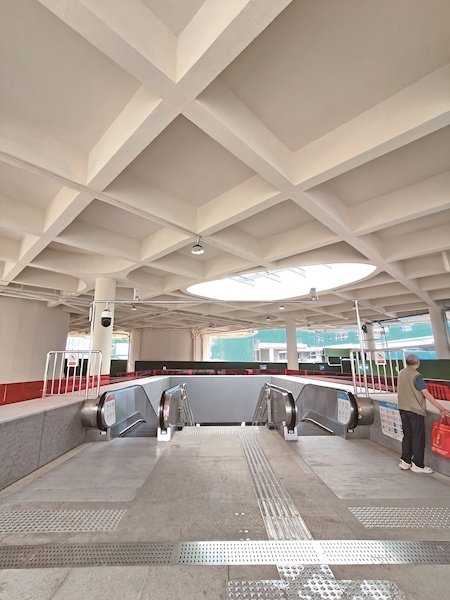
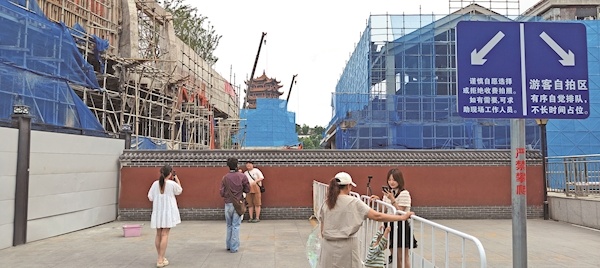
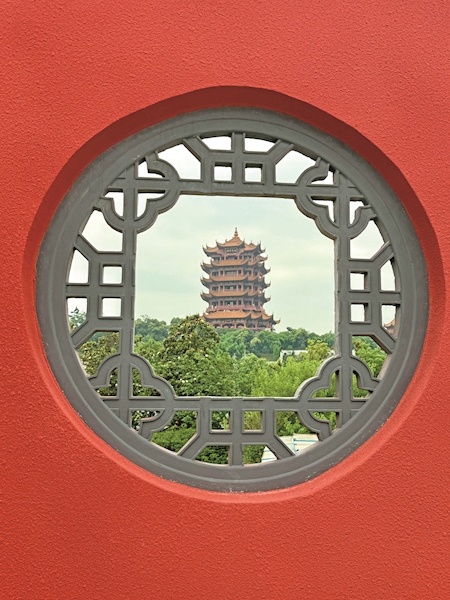
On May 28, a field visit found that the new red wall at the Yellow Crane Tower subway exit near Simentou in Wuchang has been completed and is expected to open to the public at the end of this month. The new red wall is located on the “Yanzhi Floating Island” above the subway station, closer to the Yellow Crane Tower and with a larger photo-taking area. It is understood that the old red wall near the Simentou Yellow Crane Tower station on Metro Line 5 will be partially preserved for visitors to take photos until the new red wall opens, after which the old wall will be demolished.
Yellow Crane Tower
Yellow Crane Tower, located in Wuhan, China, is a historic and culturally iconic structure originally built during the Three Kingdoms period (223 AD) as a military watchtower. Over centuries, it was destroyed and rebuilt numerous times, with the current structure dating from 1985. The tower is celebrated in Chinese literature and poetry, most famously in Cui Hao’s Tang dynasty poem, and offers panoramic views of the Yangtze River.
Simentou
Simentou refers to a collection of four prominent stone pillars or peaks, often associated with the famous Zhangjiajie National Forest Park in China’s Hunan Province. These towering quartz-sandstone formations were shaped over millions of years by erosion, and they have become iconic symbols of the region’s dramatic karst landscape. The area gained international fame after inspiring the floating Hallelujah Mountains in the 2009 film *Avatar*, blending natural history with modern pop culture.
Wuchang
Wuchang is a historic district in Wuhan, China, located on the southern bank of the Yangtze River. It is best known as the birthplace of the Wuchang Uprising in 1911, which sparked the Xinhai Revolution that ended over 2,000 years of imperial rule in China. Today, Wuchang is a vibrant cultural and educational hub, home to numerous universities, historical sites, and the iconic Yellow Crane Tower.
<h3 class="text-lg font-semibold
Yellow Crane Tower
The Yellow Crane Tower, located in Wuhan, China, is a historic landmark with a legacy spanning over 1,700 years. Originally built during the Three Kingdoms period (223 AD) as a military watchtower, it later became a celebrated cultural symbol, inspiring countless poems and artworks, most famously by the Tang dynasty poet Cui Hao. Although it has been destroyed and rebuilt many times due to fires and wars, the current structure, reconstructed in 1985, stands as a majestic tribute to Chinese heritage.
Simentou
Simentou is a scenic area in China known for its unique, towering rock pillars that resemble a “four-sided peak.” Located in the Wulingyuan Scenic Area of Hunan Province, it is part of the Zhangjiajie National Forest Park, a UNESCO World Heritage site. The area was formed over millions of years by quartz sandstone erosion and became a major tourist attraction after the park’s development in the 1980s.
Wuchang
Wuchang is a historic district in Wuhan, China, located on the southern bank of the Yangtze River. It is best known as the birthplace of the 1911 Wuchang Uprising, which sparked the Xinhai Revolution that ended over 2,000 years of imperial rule in China. Today, Wuchang is a vibrant cultural and educational hub, home to landmarks like the Yellow Crane Tower and numerous universities.