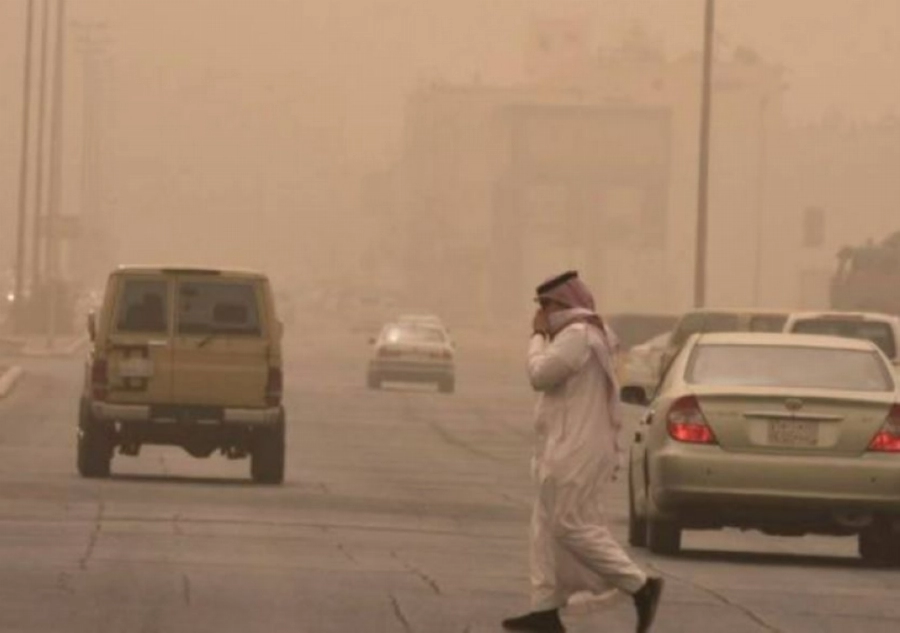
The National Center of Meteorology warned of the continued impact of active winds raising dust and sand, which reduce horizontal visibility in parts of the Riyadh and Eastern regions.
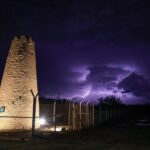
The center noted that the situation extends to the Najran region, as well as parts of the Makkah and Madinah regions, while it does not rule out the formation of rainy thunderclouds over parts of the highlands of the Asir region.
On the other hand, the center predicted that roads leading from Madinah to Makkah and the holy sites will see stable weather today, with hot to extremely hot conditions during daylight hours, coinciding with the arrival of pilgrims to the holy sites.
The center explained that the expected maximum temperature reaches 42 degrees Celsius, while the minimum is 22 degrees Celsius, with relative humidity estimated at about 29%, along with active surface winds in some open areas that may raise light dust.
The center called for following preventive guidelines, preparing vehicles before travel, and drinking plenty of fluids to ensure the safety of pilgrims and travelers on roads leading to the holy sites.
Riyadh
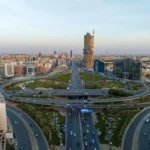
Riyadh is the capital and largest city of Saudi Arabia, evolving from a small, walled desert settlement into a modern global metropolis. Historically, it was a key stronghold for the Al Saud dynasty, and its capture in 1902 by King Abdulaziz Ibn Saud laid the foundation for the unification of the Kingdom of Saudi Arabia. Today, the city blends its rich heritage, seen in sites like the Masmak Fortress, with futuristic development such as the King Abdullah Financial District.
Eastern region
The “Eastern region” often refers to the eastern part of a country or continent, such as the Eastern United States or Eastern Europe, each with distinct cultural and historical significance. In a broad sense, these areas typically have deep roots in ancient civilizations, colonial histories, or industrial development, shaping their unique traditions and landmarks. For example, the Eastern United States was a key site of early American settlement and the Industrial Revolution, while Eastern Europe has been shaped by empires, religious diversity, and Cold War divisions.
Najran region
The Najran region, located in southwestern Saudi Arabia near the Yemeni border, is one of the country’s oldest inhabited areas, with a history dating back to ancient times as a key stop on the frankincense trade route. It is renowned for its distinctive mud-brick architecture, such as the historic fortress of Al-Ukhdood, which also holds significance as the site of a pre-Islamic massacre of Christians mentioned in the Quran. Today, the region blends its rich cultural heritage with modern development, showcasing traditional crafts, agriculture, and a unique local dialect and customs.
Makkah
Makkah, also spelled Mecca, is the holiest city in Islam, located in western Saudi Arabia. It is the birthplace of the Prophet Muhammad and the site of the Kaaba, the sacred structure within the Al-Masjid al-Haram mosque that Muslims face during prayer. Historically a key trading hub, Makkah has been a center of pilgrimage for centuries, with the annual Hajj drawing millions of Muslims from around the world.
Madinah</
Makkah
Makkah, also spelled Mecca, is the holiest city in Islam, located in western Saudi Arabia. It is the birthplace of the Prophet Muhammad and the site of the Kaaba, the sacred structure within the Masjid al-Haram mosque that Muslims face during prayer. Historically, Makkah has been a major religious and trade center for centuries, and today it draws millions of pilgrims annually for the Hajj and Umrah pilgrimages.
Madinah
Madinah, also known as Medina, is the second holiest city in Islam, located in western Saudi Arabia. It holds profound significance as the city where Prophet Muhammad migrated in 622 CE (the Hijra) and established the first Muslim community, and it is home to the Prophet’s Mosque (Al-Masjid an-Nabawi), which contains his tomb. The city served as the capital of the early Islamic caliphate and remains a major pilgrimage destination for Muslims visiting from Mecca.
Riyadh
Riyadh, the capital of Saudi Arabia, has transformed from a small, walled desert settlement in the 18th century into a sprawling, modern metropolis. It was the stronghold of the Al Saud dynasty and became the nation’s capital after the unification of Saudi Arabia in 1932. Today, it serves as the country’s political, financial, and administrative hub, blending ancient heritage with futuristic skyscrapers.
Najran region
The Najran region, located in southwestern Saudi Arabia near the Yemeni border, is one of the country’s oldest inhabited areas, with a history dating back thousands of years. It was a key stop on the ancient incense trade route and is known for its distinctive mud-brick architecture, such as the Al-Ukhdood archaeological site, which features ancient inscriptions and remnants of a pre-Islamic civilization. Today, Najran blends its rich cultural heritage with modern development, offering visitors a glimpse into its historical significance through forts, markets, and the traditional Yemeni-influenced building styles.
Eastern region
The Eastern Region of Iceland is known for its dramatic fjords, rugged landscapes, and charming fishing villages. Historically, it was a key area for Norwegian settlement during the Viking Age, with sites like Reyðarfjörður serving as important trading posts. Today, it remains a hub for natural beauty and outdoor activities, including hiking near the Vatnajökull glacier.
Al-Ukhdood
Al-Ukhdood is an ancient archaeological site in southwestern Saudi Arabia, believed to date back to the 1st century BCE. It is historically significant as the location of a tragic massacre of Christians, as described in the Quranic story of the “People of the Ditch” (Surah Al-Buruj). The site features ruins of a fortified city, rock inscriptions, and remnants of a pre-Islamic civilization.
Kaaba
The Kaaba is a sacred cube-shaped structure located in the center of the Grand Mosque in Mecca, Saudi Arabia, and is the holiest site in Islam. According to Islamic tradition, it was originally built by the Prophet Abraham and his son Ishmael as a monotheistic house of worship, and it has been a focal point for pilgrimage and prayer for centuries. Today, Muslims around the world face the Kaaba during their daily prayers, and it is the central destination of the Hajj pilgrimage, which every able-bodied Muslim is required to undertake at least once in their lifetime.
Al-Masjid al-Haram
Al-Masjid al-Haram, also known as the Grand Mosque, is the holiest site in Islam, located in Mecca, Saudi Arabia. Its history dates back to the time of Prophet Abraham and his son Ishmael, who are believed to have built the Kaaba at its center, and it has undergone numerous expansions over centuries. The mosque surrounds the Kaaba, the direction of prayer for Muslims worldwide, and hosts millions of pilgrims annually for the Hajj and Umrah rituals.