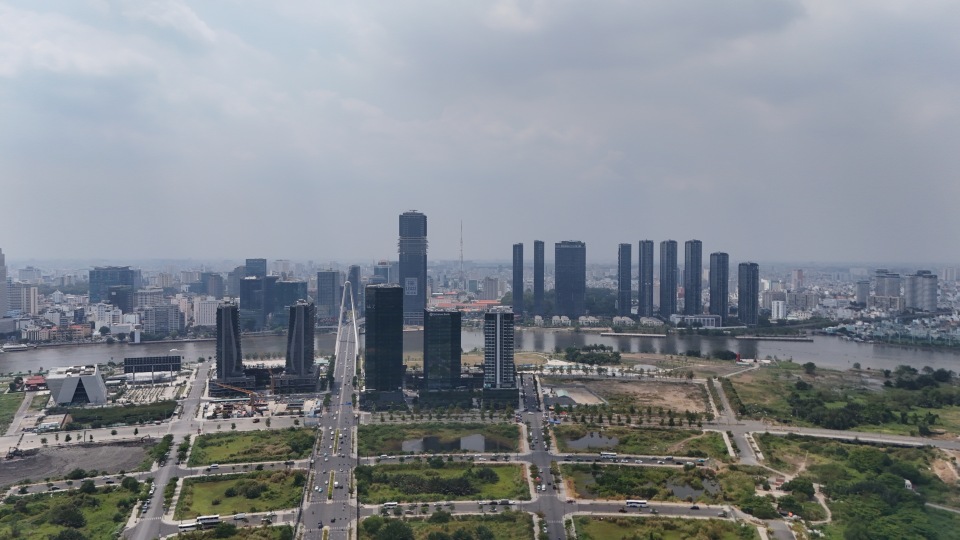
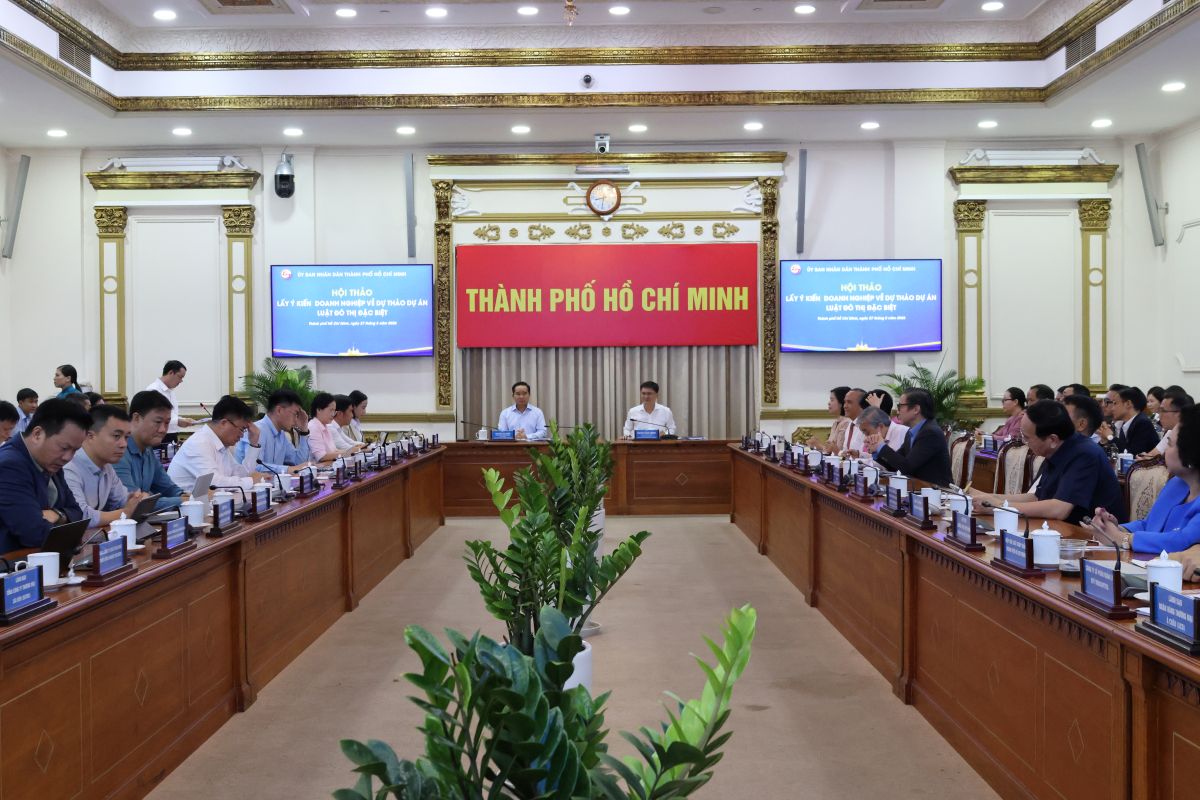
HCMC – Business executives and experts have proposed a series of breakthrough mechanisms, including megacity governance reforms, a regulatory sandbox, expanded transit-oriented development (TOD), and stronger decentralization in infrastructure investment to help refine a draft Special Urban Law.
The proposals were presented at a consultation workshop held on May 27.
Addressing infrastructure and logistics bottlenecks, representatives proposed that the draft law incorporate stronger incentives for inland waterway transport to reduce logistics costs and ease pressure on road networks. The company also recommended establishing a roadmap to relocate ports out of the urban core.
For projects involving overlapping marine space – such as undersea tunnels, sea bridges, and offshore wind farms – the drafting committee was urged to ensure compatibility with seaport planning while introducing dedicated mechanisms for security, safety, and search-and-rescue operations for a future port and logistics hub.
From the perspective of mobilizing strategic State-owned enterprises (SOEs), a proposal was made to grant these firms greater operational autonomy paired with accountability and stronger post-audit oversight. It was said that SOEs could serve as lead investors in infrastructure, industrial parks, urban development, energy and innovation projects.
Another proposal called for expanding the transit-oriented development model beyond metro stations to include national and international railway stations, seaports and logistics centers. The broader TOD approach could support urban regeneration and create new revenue streams to reinvest in infrastructure.
Supporting this direction, a proposal was made to develop multi-functional land reserves within TOD projects to increase budget revenue. It was also suggested to introduce a “space transfer” mechanism to adjust planning indicators across different areas and apply a land-use fee coefficient below one to help control housing prices.
To improve competitiveness in attracting large-scale investment, a proposal was made to grant the city’s People’s Council authority to approve planning and architectural criteria that differ from national standards for strategic investment projects. The proposal also called for special mechanisms on compensation and site clearance, longer visa and temporary residence periods for foreign experts, and faster administrative responses when legal frameworks have yet to be updated.
On legal frameworks for emerging industries, a proposal was made to create a dedicated chapter in the law for a regulatory sandbox. The framework would include five policy groups, covering geographic sandbox zones, such as Thu Thiem, Can Gio, Cai Mep Ha or a model TOD station, as well as sector-based testing for fintech, digital assets, paperless logistics and autonomous vehicles.
It was also proposed to include controlled legal exemptions and a principle allowing failed experiments without criminal liability, supported by governance tools based on real-time digital data and artificial intelligence.
Representing the local business community, a proposal was made to digitize and integrate administrative data systems to shorten processing times. It also called for legal protections for public officials participating in pilot programs to reduce concerns over decision-making risks.
At the forum, a speaker described the current period as a “special opportunity” for HCMC to establish a dedicated legal framework suited to a megacity. It was said that the draft should further decentralize authority, introduce administrative reforms beyond national standards and shift governance from pre-approval controls to post-audit supervision to reduce compliance costs for investors.
Concluding the workshop, it was stated that the city would continue broad consultations with ministries, experts and neighboring provinces in southeastern and southwestern Vietnam to ensure regional connectivity before submitting the draft law to competent authorities and the National Assembly for approval.
Thu Thiem
Thu Thiem
Can Gio
Cai Mep Ha
Related news

Court rejects Coca-Cola Vietnam’s lawsuit against Tax Department, upholds decision to collect 821 billion VND in back taxes and fines.
A disabled woman who stole money from a billiard hall and used part of it to pay for her sibling’s school fees received a suspended sentence.
Prime Minister Hun Sen urges citizens to remain calm and stop burning Thai goods.
The Democratic Construction Site roundabout frequently experiences traffic jams, and residents hope for the early removal of the ‘barricades’.