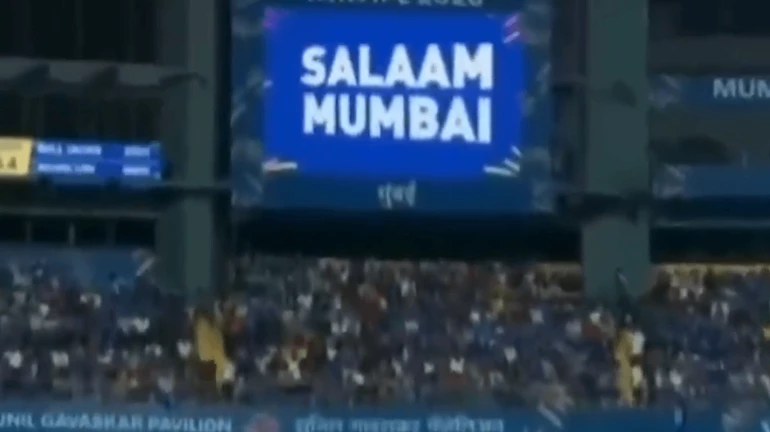
The Bharatiya Janata Yuva Morcha (BJYM) has urged the Cricket Association (MCA) to replace the phrase “Salaam Mumbai” with “Namaskar Mumbai” at Mumbai’s iconic Wankhede Stadium during IPL matches.
BJYM Mumbai President Deepak Singh has written to MCA President Ajinkya Naik demanding the change, stating that “Namaskar Mumbai” better reflects Marathi culture and the linguistic identity of Maharashtra. According to Singh, the greeting “Namaskar” is deeply rooted in local traditions and should be prominently used at one of Mumbai’s most recognised sporting venues.
In his appeal, Singh said that cricket is closely connected with the emotions of Mumbai residents and that the IPL serves as a global platform showcasing the city’s culture. He argued that using “Namaskar Mumbai” instead of “Salaam Mumbai” would strengthen the representation of Marathi language and heritage before both national and international audiences.
The demand has sparked discussion on social media, with supporters calling it a move to promote regional identity, while others view it as an unnecessary controversy over language usage. The Mumbai Cricket Association has not yet issued an official response to the request.
Bharatiya Janata Yuva Morcha leaders have said they hope the MCA will consider the proposal ahead of upcoming IPL fixtures at Wankhede Stadium.
Wankhede Stadium
Wankhede Stadium is a renowned cricket ground located in Mumbai, India, named after the former president of the Mumbai Cricket Association, Sheshrao Wankhede. Inaugurated in 1974, it replaced the Brabourne Stadium as the city’s primary cricket venue and has since hosted numerous historic matches, including the 2011 ICC Cricket World Cup final, where India won its second World Cup title. The stadium has undergone major renovations, notably for the 2011 World Cup, and remains an iconic symbol of Indian cricket culture.
Mumbai
Mumbai, formerly known as Bombay, is India’s largest city and a major financial and entertainment hub, located on the west coast. Originally a collection of seven islands inhabited by fishing communities, it was ceded to the British East India Company in 1661 as part of Catherine of Braganza’s dowry. Over centuries, it grew into a bustling port city, shaped by colonial rule, migration, and its iconic film industry, Bollywood.
Wankhede Stadium
Wankhede Stadium is a prominent cricket ground located in Mumbai, India, with a seating capacity of over 33,000. Opened in 1974 to replace the Brabourne Stadium, it was named after the former president of the Mumbai Cricket Association, Sheshrao Wankhede. The stadium gained global fame for hosting the 2011 Cricket World Cup final, where India defeated Sri Lanka to win the championship.
Brabourne Stadium
Brabourne Stadium is a historic cricket ground located in Mumbai, India, established in 1937 as the home of the Cricket Club of India. It was the first permanent cricket stadium in the country and hosted its first Test match in 1948 between India and the West Indies. The stadium has since been a key venue for domestic and international cricket, known for its intimate atmosphere and iconic Art Deco pavilion.
<div class="my
Wankhede Stadium
Wankhede Stadium is a prominent cricket ground located in Mumbai, India. It was built in 1974 to replace the Brabourne Stadium as the city’s primary cricket venue, and it has since hosted numerous historic matches, including the 2011 Cricket World Cup final where India won. The stadium is also known for its passionate crowds and is the home ground of the Mumbai Indians franchise in the Indian Premier League.
Mumbai
Mumbai, formerly known as Bombay, is a major port city on the west coast of India and serves as the country’s financial, commercial, and entertainment capital. Its history dates back to the 2nd century BCE, but it gained prominence under Portuguese and later British rule, evolving from a group of islands into a bustling metropolis. Today, Mumbai is famous for its iconic landmarks like the Gateway of India, Bollywood film industry, and its vibrant, diverse culture.
Brabourne Stadium
Brabourne Stadium is a historic cricket ground located in Mumbai, India, established in 1937 by the Cricket Club of India. It was the venue for India’s first home Test match victory in 1952 and has hosted numerous iconic cricket events, including the early seasons of the Indian Premier League. The stadium is also known for its distinctive art deco architecture and its role as a hub for Indian cricket before the Wankhede Stadium was built.