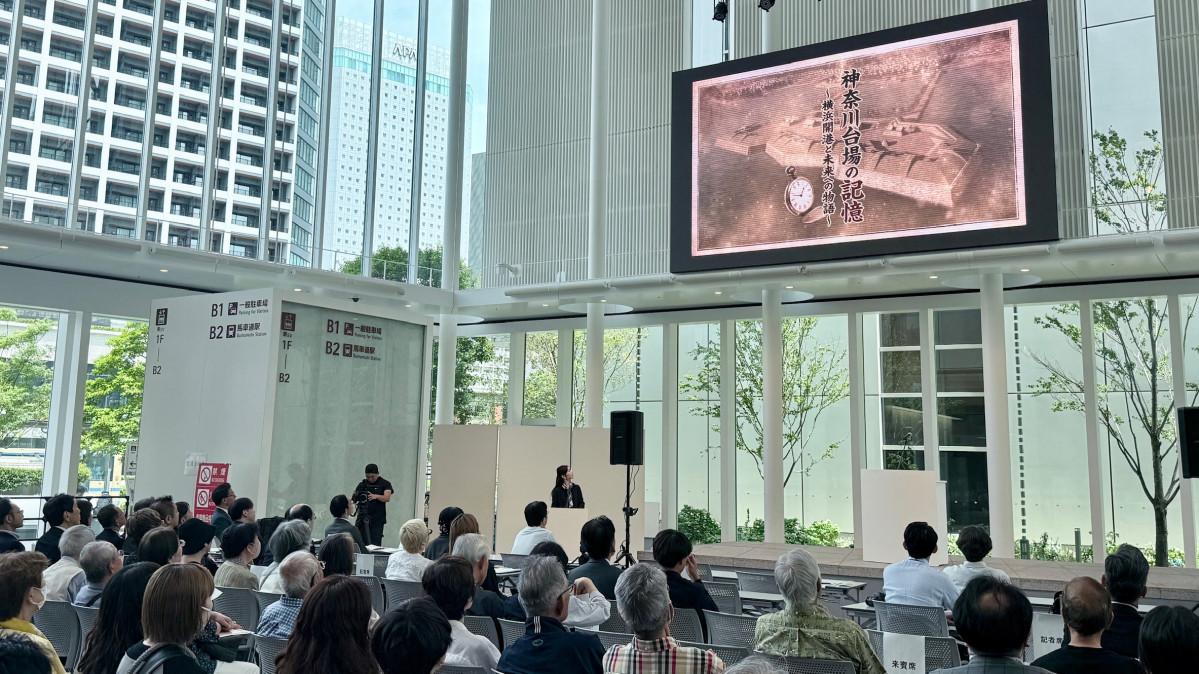
The city of Yokohama and the Kanagawa Daiba Regional Revitalization Promotion Association have created digital content to convey the charm and historical value of “Kanagawa Daiba,” a symbol of the opening of Yokohama Port. A public ceremony was held on May 26 in the atrium on the first floor of the Yokohama City Hall.
Kanagawa Daiba, located near the current Yokohama Central Wholesale Market, was a battery designed by Kaishu Katsu for the defense of Yokohama Port and built by the Matsuyama Domain. It was completed about a year after construction began in 1860, the year following the opening of Yokohama Port. Covering a total area of about 8,000 tsubo, it was never used in actual combat until its decommissioning in 1899. Instead, it was used to fire ceremonial salutes and honorific cannon shots as part of diplomatic protocol for the international port.
The digital content visualizes Kanagawa Daiba at the time of the port’s opening as high-definition 3DCG based on academic evidence. Three types of content were produced: an “experiential VR (virtual reality)” that allows users to explore a recreated Kanagawa Daiba using a game controller, an “AR (augmented reality)” smartphone guide usable at four coastal spots in the city, and a “local history learning video” (about 10 minutes) designed for use in school education. These materials introduce the history of Kanagawa Daiba and the opening of the port.
At the public ceremony, the chairman of the association spoke, introducing TOPPAN Edge, which handled production, the Yokohama Archives of History, which supervised the content, and various Yokohama city departments collaborating on its use. He stated, “We aim not only to produce this content but also to actively utilize it.”
Following greetings from the Kanagawa Ward mayor and a vice chairman of the Yokohama Chamber of Commerce and Industry who donated production funds, a research fellow from the Yokohama Archives of History gave a lecture on “Yokohama Port Opening and Kanagawa Daiba.” He commented, “Kanagawa Daiba is an important facility related to the port opening, and I hope knowledge about it will spread in the future.”
After the ceremony, a VR experience session was held. Another VR experience session will take place on June 6 from 10:00 to 15:00 at Aeon Style Higashi-Kanagawa. The video has been available on the association’s YouTube channel since April 27. The AR is scheduled for release on May 27.
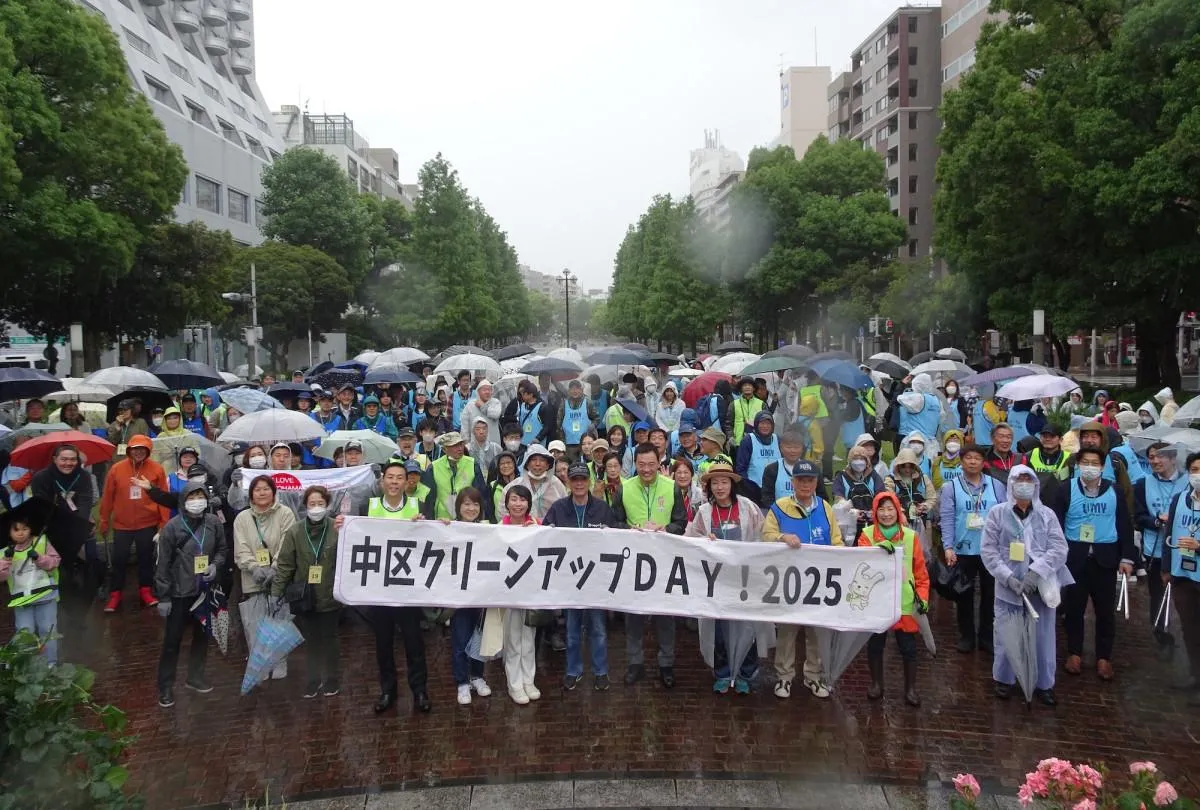
The cleanup event “Naka Ward Cleanup DAY! 2026” will be held on May 30, starting and ending at Odori Park in Naka Ward, Yokohama.
The event is organized by the Naka Ward Office and co-organized by the Yokohama Resource and Waste Recycling Bureau Naka Office. The goal is to make Naka Ward a beautiful and livable town, while also contributing to the global issue of reducing marine plastic waste. Cleanup activities will take place around the Kannai and Sakuragicho Station areas. In the previous event in 2025, about 380 participants collected 183 kilograms of trash.
Along the Ooka River system (including the Ooka River, Nakamura River, Hori River, and Horikiri River), nine waterfront facilities are being developed to enhance the area’s appeal, with plans for water recreation and use as disaster prevention bases. The completion of the “Ishikawacho Felice Pier” on the Nakamura River highlights ongoing waterfront development in the region.
Yokohama City is advancing the “Yokohama Pla 5.3 Plan,” which aims to ensure stable waste processing for the future, achieve a decarbonized society, and transition to a circular economy. This cleanup event aligns with the goal of citizens, businesses, and the government working together to pass on a good environment to future generations, under the motto “Don’t let trash flow from Naka Ward into the sea.”
On the day, participants will gather around the stone stage in Odori Park. After the opening ceremony, they will split into teams and clean designated courses around the Kannai and Sakuragicho Station areas. All necessary cleaning supplies will be provided by the organizers, so participants can join empty-handed. Various groups, including the social media community “I
<div class="my-4