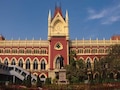
No goat slaughter on Eid: BMC bans sacrifice in Gokuldham Society, orders police to remove goats by morning.
Maharashtra News: A major development has emerged in the ongoing dispute over goat sacrifice in Mumbai. In the Gokuldham Society here, a significant controversy erupted regarding the sacrifice of a goat for Eid-ul-Adha. Amid the protests and tension, the BMC has banned goat sacrifice in the society. Additionally, the BMC has ordered the police to remove the goats from the society by morning.
Brihanmumbai Municipal Corporation (BMC) cancels permission granted for Bakri Eid Qurbani in the premises of Azad Nagar D-3 building, Satellite Garden Phase-2, on Aarey Bhaskar Road, Gokuldham, Goregaon (East)
Sacrifice will not be allowed
An important meeting was held between residents, BMC officers, and police at the Gokuldham Society in Mumbai’s Goregaon. During the meeting, the administration clearly stated that an authorized slaughterhouse is located approximately 1 kilometer away from the society. Therefore, residents were urged to perform the sacrifice there. The BMC explained that they were initially unaware of the situation, and upon learning of it, permission was granted for a shed, but not for the sacrifice itself.
Opposition to BMC’s decision
Following the BMC’s decision, several people began protesting outside the society. Some also demanded an alternative location for the sacrifice in a public ground. However, the administration did not approve this. To maintain control over the situation, police have been deployed in the area and are keeping a constant watch. According to the current situation, the goats will remain in the society, but their sacrifice will not take place there; instead, it will be performed elsewhere the next day.
Dispute over goats
In addition to the Gokuldham Society, a similar protest erupted in another housing society on Mira Road in Mumbai before Eid, regarding goat sacrifice. There, people demolished a temporary shed built to tether the goats. This led to a heated argument between two communities, creating tension in the society. In opposition to the sacrifice, some individuals brought pigs into the society. The police had to intervene to manage the situation.
Gokuldham Society
Gokuldham Society is a well-known residential complex located in Goregaon East, Mumbai, India. It was developed by the renowned spiritual organization, the Brahma Kumaris World Spiritual University, and is famous for being the primary filming location of the popular Indian television sitcom *Taarak Mehta Ka Ooltah Chashmah*. The society reflects a peaceful, community-oriented lifestyle, and its on-screen portrayal has made it a cultural landmark for fans across India.
Brihanmumbai Municipal Corporation (BMC)
The Brihanmumbai Municipal Corporation (BMC) is the civic body responsible for the administration of Mumbai, India. Established in 1888, it is one of the oldest municipal corporations in the country and is known for being the richest in Asia in terms of budget. The BMC manages essential services like water supply, sanitation, and public health, and its headquarters is the iconic Gothic-style building in the Fort area.
Azad Nagar D-3 building
Azad Nagar D-3 building is a notable residential and commercial structure located in the Azad Nagar area of Mumbai, India. The building is part of a neighborhood that developed in the mid-20th century, reflecting the city’s post-independence urban expansion. It stands as a representative example of Mumbai’s dense, mixed-use architecture, housing both local businesses and families.
Satellite Garden Phase-2
The Satellite Garden Phase-2 is a residential or community development project, likely located in a suburban area, designed to provide modern housing and green spaces. While specific historical details are limited, such projects typically emerge from urban expansion plans, aiming to create self-sufficient neighborhoods with parks and amenities. Its name suggests a phased approach to development, emphasizing a connection to nature within a planned satellite town or city extension.
Aarey Bhaskar Road
Aarey Bhaskar Road is a notable thoroughfare located in the Aarey Colony area of Goregaon, Mumbai, India. It is named after the late Bhaskar Rao, a prominent local figure, and runs through the lush, green expanses of Aarey Milk Colony, which was established in the 1950s as a dairy and forested zone. The road is popular among nature enthusiasts and commuters for its scenic route, linking residential areas to the Sanjay Gandhi National Park.
Goregaon (East)
Goregaon (East) is a suburban neighborhood in Mumbai, India, that developed significantly in the late 20th century as the city expanded northward. Historically, the area was part of agricultural and forested land, but rapid urbanization transformed it into a residential and commercial hub. Today, it is known for landmarks like the Film City complex and the Aarey Milk Colony, reflecting a mix of industrial growth and green spaces.
Mira Road
Mira Road is a suburban locality in the Thane district of Maharashtra, India, situated along the Western Line of the Mumbai Suburban Railway. Originally a sparsely populated area of fishing villages and agricultural land, it underwent rapid urbanization in the late 20th century due to the expansion of Mumbai’s suburbs, becoming a major residential hub for commuters. Its growth was significantly driven by the development of housing projects and improved railway connectivity in the 1990s, transforming it into a densely populated, multicultural neighborhood.
Mumbai
Mumbai, formerly known as Bombay, is a bustling port city on India’s west coast and the capital of Maharashtra. Originally a collection of seven islands inhabited by fishing communities, it was ceded to the British in 1661 and grew into a major colonial trading hub. Today, it is India’s financial, commercial, and entertainment capital, home to Bollywood and iconic landmarks like the Gateway of India.

)