)
West Bengal News: As previously reported, after the defeat in the assembly elections, there is a similar stampede within the TMC as seen among infiltrators after the opening of detention centers. The stampede in the TMC is evidence of political opportunism. However, the action being taken against infiltrators is a serious issue related to national security and the plunder of resources.
Decades of infiltration in the country have not only made borders insecure. The threat to internal security and religious imbalance has also increased. The central government is now taking action regarding this threat. For the first time in the country, a high-level committee has been formed to prepare a report on the danger of demographic change caused by infiltration. This is a strike at the root of the anti-national disease of infiltration. Therefore, we will now decode the strongest initiative against infiltration.
Infiltrators fleeing Bengal
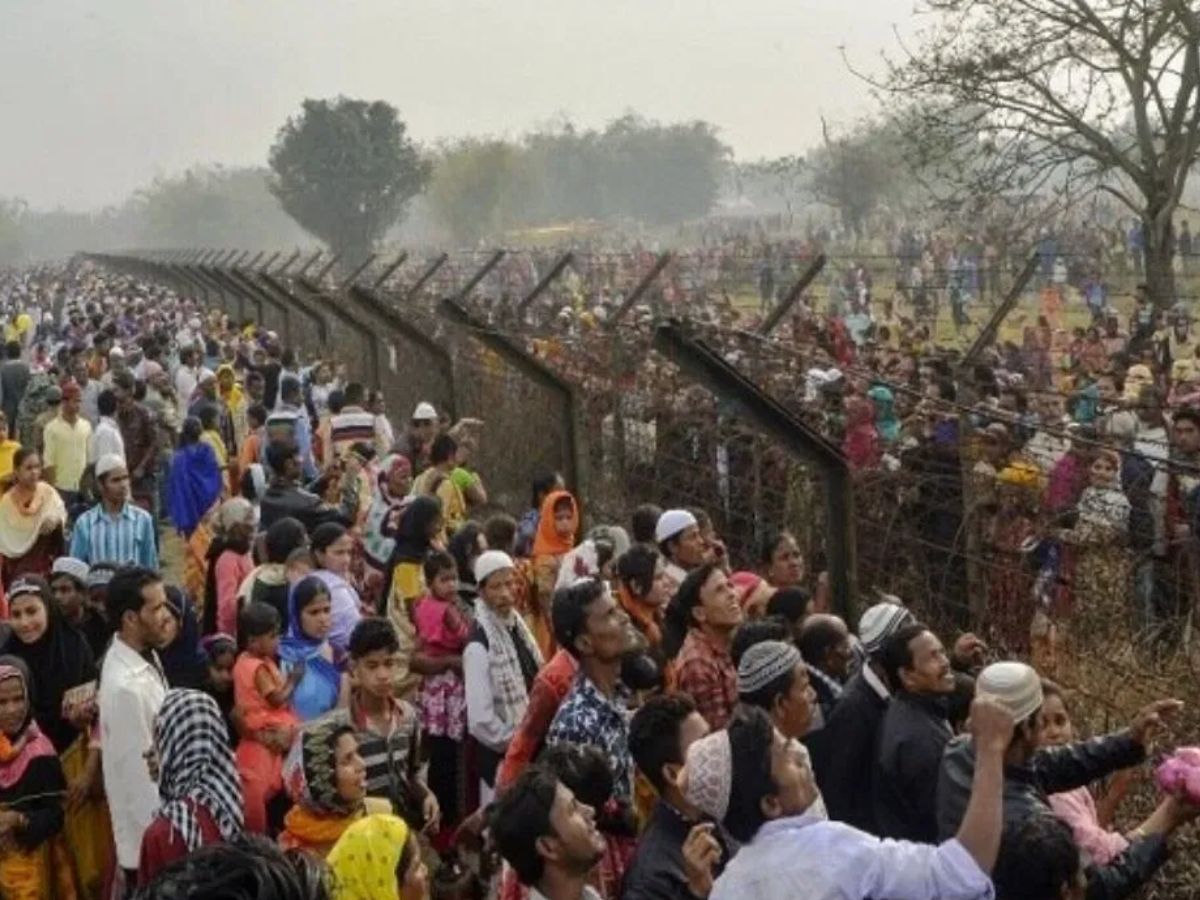
In the last 48 hours, you have seen several videos of infiltrators fleeing West Bengal. These are infiltrators who have been living in West Bengal for many years. Just imagine, only the government changed, and the exodus of thousands of infiltrators from West Bengal began. But the problem is not limited to West Bengal. Many states in the country are facing the problem of infiltration. Therefore, to eradicate the threat of infiltration from Indian soil, the Union Home Ministry has taken a big step.
Home Ministry forms a committee
The Home Ministry has formed a high-level committee to prepare a report on demographic changes. This committee will assess the demographic change occurring in the country due to illegal infiltration and other abnormal causes. It will prepare a report on patterns of abnormal changes at the level of religious and social communities. It will also recommend policy, administrative, and legal measures to deal with the demographic changes caused by infiltration and the resulting threats.
Retired Justice Prakash Prabhakar Naolekar has been made the chairman of this committee. The committee includes Census Commissioner Mrityunjay Kumar Narayan, retired IPS Balaji Srivastava, retired IAS Durga Shankar Mishra, and economist Dr. Shamika Ravi as members.
How big a threat is infiltration to the country’s structure?
In 1998, former Governor of Assam, Lieutenant General (Retd.) S.K. Sinha, submitted a report on illegal infiltration to the President. The report stated that illegal infiltration from Bangladesh has changed the population balance in several districts of Assam bordering the border. In these areas, the native population is becoming a minority. Understand that this is a major threat to the country’s social structure.
In 2003, researchers from the Center for Policy Studies, Dr. J.K. Bajaj and Dr. M.D. Srinivas, presented a report on religious demographic change. In this report, they stated that in 1951, the share of Muslims in West Bengal’s population was 19.5%, which increased to 27% in 2011. In districts like Bankura and Purulia, the rate of increase in the Muslim population was slow, while in districts bordering Bangladesh, the Muslim population grew at two to three times the average rate. This means the Muslim population increased here due to illegal infiltration.
In May 2024, the Prime Minister’s Economic Advisory Council released a research paper. This research paper studied India’s population from 1950 to 2015. The report indicates that between 1950 and 2015, the Hindu population in the country decreased by about 8 percent. Meanwhile, the Muslim population increased by about 10 percent during the same period.
Infiltration is not just a humanitarian crisis
Understand that this crisis of infiltration is not just a humanitarian crisis. It is a social crisis that turns native inhabitants into minorities. It is a crisis that changes the religious identity of the country. Especially in border areas, the changing social and religious balance poses a major threat to national security.
Therefore, to protect the country’s borders and the safety of its citizens from infiltration, the government is now focusing on areas where demographics have changed rapidly and religious imbalance has increased. The Seemanchal region of Bihar is also included in this.