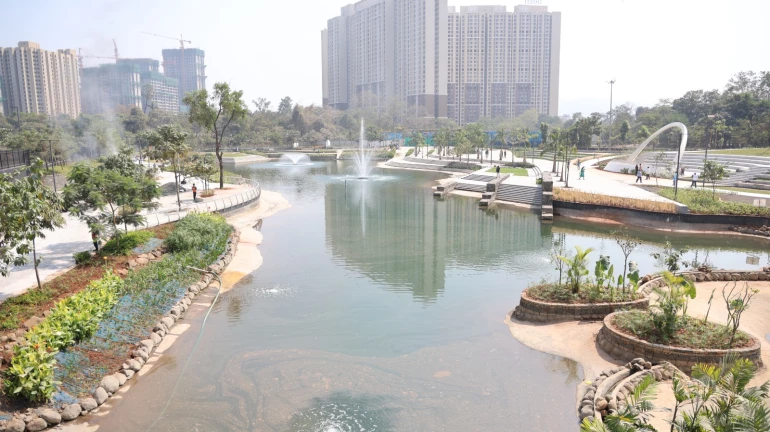
TMC collects ₹1.16 crore from NaMo Grand Central Park in Thane.
More than 485,000 citizens have visited the ‘Namo the Grand Central Park’, which was built on 20.5 acres of land in Kolshet. This visit has generated a revenue of 1.16 crore rupees for the municipal corporation’s treasury. On this occasion, it is evident that the public’s desire to visit Central Park continues.
A 20.5-acre facility plot was made available under the development project in the Parkcity housing project area of the Kolshet area in Thane. The municipal corporation has developed the park ‘Namo the Grand Central Park’ from Kalpataru developer through Construction TDR. This park features over 3,500 plants and flowers of different types.
Mughal Garden, Chinese themed garden, Moroccan themed garden showcasing Moroccan culture, and Japanese Park are the major attractions here. A playground for children, a jogging track for seniors, the country’s largest skating rink, lawn tennis, and volleyball court have been arranged in the park. Separate facilities have also been made here for yoga and meditation. This park was inaugurated by Chief Minister Eknath Shinde on February 9.
Also Read:
After this, the park has been open to all since the second day, and citizens from Thane city and the Mumbai metropolitan area are gathering here. More than 485,000 citizens have visited in twenty-two months. This visit has generated a revenue of 1.16 crore rupees for the municipal treasury.
More than 485,062 citizens have visited ‘Namo the Grand Central Park’ in two and a half months. This includes 382,422 adults, 22,871 senior citizens, and 79,769 children. So far, the municipal corporation has received a revenue of INR 1.16 crore from this park.
Namo the Grand Central Park
Namo the Grand Central Park is a large-scale integrated development project located in Ho Chi Minh City, Vietnam, centered around a 36-hectare central park inspired by New York’s Central Park. The project aims to create a modern, green urban space that combines residential, commercial, and recreational facilities. Its development reflects the city’s rapid urbanization and efforts to enhance quality of life through sustainable design.
Mughal Garden
The Mughal Garden is a style of garden architecture developed by the Mughal Empire in the Indian subcontinent, blending Islamic, Persian, and indigenous Indian elements. Known for their symmetrical layouts, flowing water channels, and lush greenery, these gardens were often attached to palaces, forts, and tombs, such as the famous Shalimar Gardens and the gardens surrounding the Taj Mahal. Historically, they symbolized paradise on Earth and served as spaces for relaxation and royal gatherings, with their design reflecting the Mughal emphasis on harmony with nature.
Chinese themed garden
A Chinese themed garden is a meticulously designed landscape that reflects traditional Chinese aesthetics, philosophy, and harmony between nature and architecture. Originating over 3,000 years ago, these gardens were often created for emperors, scholars, and nobles as spaces for contemplation and artistic expression, incorporating elements like rocks, water, pavilions, and winding paths. They symbolize a microcosm of the natural world, aiming to evoke balance, tranquility, and poetic beauty.
<div class="my-4
Namo the Grand Central Park
Namo the Grand Central Park is a large urban park located in the heart of a major city, designed to serve as a green oasis for residents and visitors. Its history dates back to the early 20th century, when it was originally developed as part of a city beautification project, later undergoing significant renovations to incorporate modern recreational facilities and ecological features. Today, it stands as a popular destination for leisure activities, cultural events, and community gatherings, symbolizing the city’s commitment to preserving green spaces.
Mughal Garden
The Mughal Garden is a distinctive style of garden architecture developed by the Mughal Empire in the Indian subcontinent, blending Persian, Islamic, and Indian elements. Characterized by symmetrical layouts, water channels, fountains, and terraced levels, these gardens often symbolize paradise on Earth, with famous examples including the Shalimar Gardens and the gardens of the Taj Mahal. The tradition was pioneered by Emperor Babur in the 16th century and flourished under later rulers like Akbar, Jahangir, and Shah Jahan.
Chinese themed garden
A Chinese themed garden is a traditional landscape design that originated in ancient China, emphasizing harmony between nature, architecture, and philosophy. These gardens often feature elements like pavilions, rockeries, ponds, and winding paths, reflecting principles of Taoism and Confucianism. Historically, they served as private retreats for scholars and emperors, with famous examples like the classical gardens of Suzhou dating back over 1,000 years.
Moroccan themed garden
A Moroccan-themed garden is a landscape design inspired by the traditional Islamic gardens of Morocco, featuring intricate tilework, fountains, and lush plantings like citrus trees and palms. These gardens often draw from historical concepts such as the *riad*, a courtyard garden designed for privacy and tranquility, which flourished during the Marinid and Saadian dynasties. They aim to recreate the sensory experience of Moroccan culture, blending geometric patterns, water features, and aromatic herbs to evoke a sense of peace and exotic beauty.
Japanese Park
The Japanese Park, often found in cities worldwide, is a landscaped garden inspired by traditional Japanese aesthetics, featuring elements like koi ponds, stone lanterns, and cherry trees. Many such parks were established as symbols of friendship between Japan and other nations, with some dating back to the early 20th century. They serve as peaceful retreats for meditation and cultural exchange, reflecting Japan’s deep appreciation for nature and harmony.