The Next Pandemic: Ebola and Hanta Reveal the World’s Fragility
More than four years after the COVID-19 pandemic, the question the world thought it had moved past is back: Is the global health system better equipped to face epidemics, or has it only changed at the level of rhetoric?
Between the Ebola outbreak in the east and cases of Hantavirus on a tourist flight in the South Atlantic, coverage and analyses from American and British newspapers converge on one conclusion: the world is still operating on a logic of reaction rather than prevention, and on crisis management rather than crisis prevention.
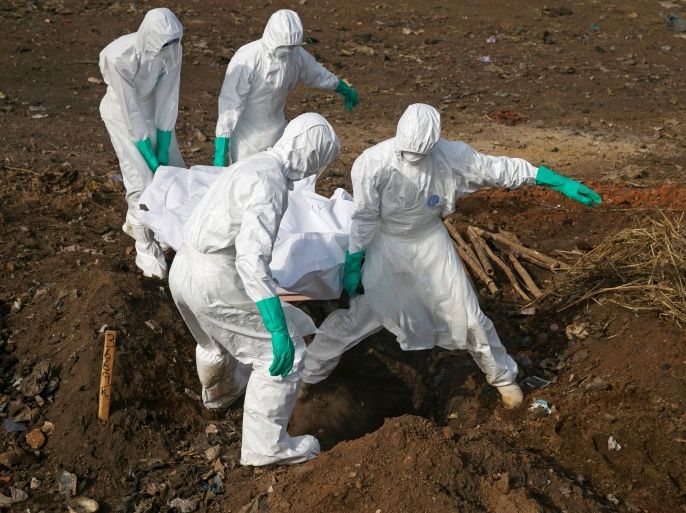
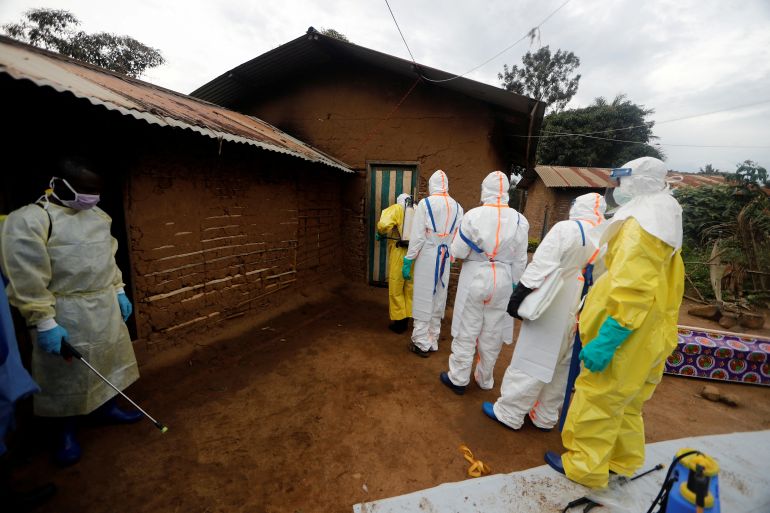
In the African case, reports reveal that the Ebola outbreak in the Republic was not detected until weeks after it began, due to the collapse of health reporting systems in conflict zones in the east of the country.
Lack of Resources and Qualified Infrastructure
The newspaper adds, citing Congolese expert Jean-Jacques Muyembe, that the problem is not a lack of medical expertise, but a lack of resources and infrastructure capable of operating in a collapsed security environment. Even a country considered one of the most experienced globally in dealing with Ebola since its emergence there in 1976 was unable to contain the outbreak in its early stages.
The report explains that local laboratories failed to diagnose the rare “Bundibugyo” strain because they lack multi-strain detection tools, while errors in sample preservation caused additional delays in reaching the correct diagnosis.
But this technical problem, according to converging coverage, is only part of a broader picture: the collapse of early warning systems in war-torn environments, service disruptions, and declining international funding for pandemic preparedness after COVID-19.
A Compound Crisis
An editorial argues that eastern Congo presents a compound model of crisis, where epidemics intertwine with armed conflicts, mass displacement, and mistrust between populations and health authorities, and even the targeting of medical facilities in some areas, making containment of any outbreak extremely difficult.
In the same context, reports indicate that cuts in international aid, particularly from certain sources, have directly impacted health surveillance capabilities by reducing tracking teams, awareness programs, and basic infrastructure such as handwashing stations.
Failure in Proactive Prevention
In contrast, a former prime minister, in an article, offers a different reading of the Hantavirus outbreak on a cruise ship in the South Atlantic, arguing that what happened is no less serious than the African case because it reveals a failure in proactive prevention.
She says the disease should have been anticipated from the start, given that Hantavirus is endemic in the ship’s departure areas in southern Argentina, meaning any acute respiratory symptoms on a ship coming from that region should have been treated as a pandemic emergency from the first moment, not after a delayed diagnosis.
She adds that what connects the Hantavirus and Ebola cases is the absence of what she calls “epidemiological geography” in health decision-making, meaning ignoring the nature of endemic diseases in the areas from which journeys originate or where infections spread, allowing the disease to spread before detection.
Former Prime Minister: What happened with Hantavirus is no less serious than the African case, because it reveals a failure in proactive prevention.
Neglect of African Sacrifices
This assessment aligns with what an editorial proposes about weak global preparedness, but finds a more intense extension in a report focusing on the political and cultural dimension of the crisis.
According to the report, the current Ebola crisis has revived an old debate about how global health discourse is managed, where many Africans feel the continent is only mentioned in epidemics as a source of danger, while the sacrifices of its health workers who actually lead the response on the ground are neglected.
The report quotes a Nigerian molecular biologist rejecting the stereotype that describes African health systems
Freetown
Freetown, the capital of Sierra Leone, was founded in 1787 as a settlement for freed African American, West Indian, and Black Loyalist slaves who had fought for the British during the American Revolutionary War. Its name reflects its origin as a haven for freedom, and it grew into a major port and cultural hub. Today, the city is known for its historic cotton tree, vibrant markets, and the legacy of its diverse Creole (Krio) population.
Sierra Leone
Sierra Leone, located on the southwest coast of West Africa, is a country known for its rich cultural heritage and natural beauty, including pristine beaches and rainforests. Its history includes the establishment of Freetown in 1787 as a settlement for freed slaves, which later became a British colony. After gaining independence in 1961, Sierra Leone endured a devastating civil war (1991–2002) but has since worked towards recovery and peace.
Democratic Republic of Congo
The Democratic Republic of Congo (DRC), located in Central Africa, is a vast country rich in natural resources like cobalt and diamonds, but marked by a turbulent history. Formerly a Belgian colony known as the Congo Free State under King Leopold II’s brutal rule (1885–1908), it gained independence in 1960 and later endured decades of dictatorship under Mobutu Sese Seko and devastating civil wars. Today, the DRC is home to diverse cultures and the Virunga National Park, yet continues to face political instability and humanitarian challenges.
Bundibugyo
Bundibugyo is a town located in the western region of Uganda, near the border with the Democratic Republic of the Congo, nestled in the foothills of the Rwenzori Mountains. Historically, it served as a key administrative and trading center for the Bakonjo and Bamba peoples, and it gained prominence during the colonial era as a site for coffee and cocoa cultivation. Today, Bundibugyo is known for its scenic landscapes, cultural diversity, and as a gateway to the Semuliki National Park.
South Atlantic
The “South Atlantic” refers to the vast ocean region between South America and Africa, a key historical route for European exploration, colonialism, and the transatlantic slave trade. Its cultural significance includes the remote islands of St. Helena, where Napoleon was exiled, and the Falkland Islands, known for the 1982 conflict between Argentina and the United Kingdom. Today, the area is vital for marine biodiversity and international shipping.
Argentina
Argentina is a South American country known for its rich cultural heritage, blending indigenous, European (especially Spanish and Italian), and immigrant influences. Its history includes Spanish colonization starting in the 16th century, a struggle for independence in the early 19th century, and later waves of immigration that shaped its vibrant cities and traditions, such as tango music and dance. Today, Argentina is famous for landmarks like Buenos Aires, the Andes mountains, and the Iguazú Falls, reflecting both its colonial past and natural beauty.
Africa
Africa is the world’s second-largest continent, known as the cradle of humanity, where the earliest hominids and modern humans evolved over 200,000 years ago. Its history includes ancient civilizations like Egypt and Carthage, vast medieval empires such as Mali and Great Zimbabwe, and the profound impacts of European colonization and the transatlantic slave trade. Today, Africa is a diverse continent of 54 countries, rich in cultures, languages, and natural resources, continuing to shape its post-colonial identity.
Nigerian
Nigeria, a country in West Africa, is home to a rich tapestry of cultural sites, including the ancient Nok civilization known for its terracotta sculptures from around 1000 BCE, and the historic city of Benin with its famous bronze artworks. The country’s diverse heritage also features the Sukur Cultural Landscape, a UNESCO World Heritage site that showcases traditional terraced farming and iron smelting practices dating back centuries. These sites reflect Nigeria’s complex history of powerful kingdoms, colonial influences, and vibrant ethnic traditions.