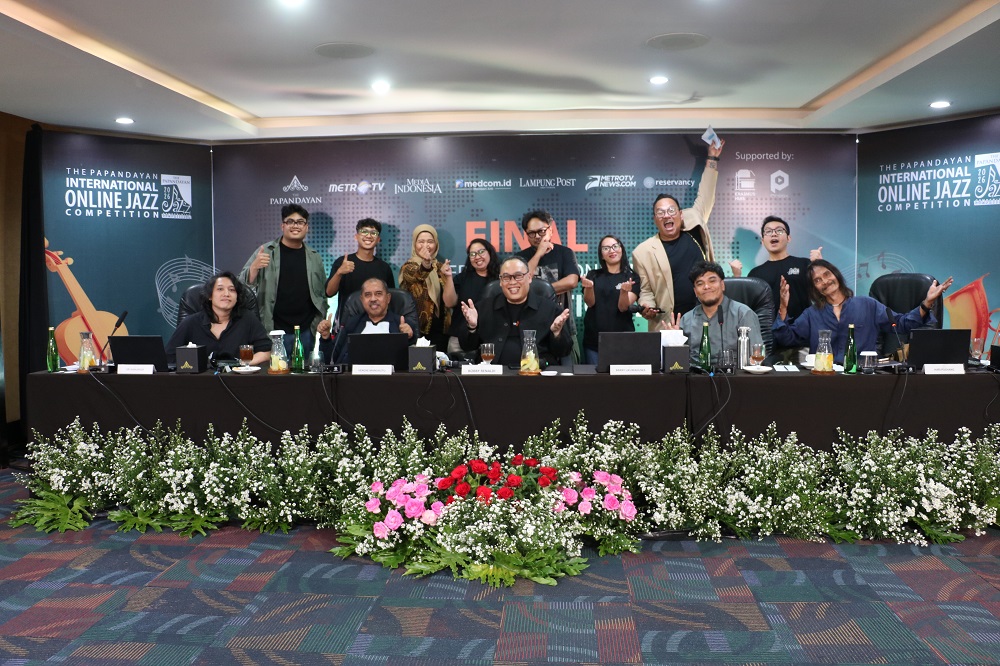
BANDUNG– The Papandayan International Online Jazz Competition (TPJC) 2026 has once again been successfully held as a prestigious jazz competition event that brings together young talents and professional musicians from various regions and countries.
Entering its sixth year, TPJC continues to grow into a competition platform and a space for musical cultural exchange that strengthens the existence of Indonesian jazz on the international stage.
This year, TPJC featured highly competitive contests through two main categories: the Youth Category and the Warrior Category. Participant enthusiasm was evident in the diversity of musical backgrounds, arrangement approaches, and jazz genre explorations presented by each participant.
TPJC 2026 was participated in by dozens of groups and musicians from various cities in Indonesia such as Jakarta, Bandung, Surabaya, Semarang, Yogyakarta, Bekasi, Depok, Malang, Bantul, Kuningan, and Surakarta. Not only that, this year’s competition also included international participants from India, Italy, Kenya, Thailand, and the United States, further strengthening TPJC’s position as a jazz competition with international attention.
The judging atmosphere for the Youth Category was very dynamic and full of enthusiasm. The judges admitted to being amazed by the quality of musicianship of the participants who performed at very young ages. Many new talents showed mature instrumental skills, full of technique, and possessed strong musical characters and courage in improvisation.
Meanwhile, the competition in the Warrior Category was very tight with evenly matched musical quality. The finalists performed with high professionalism and creativity in presenting unique and diverse jazz genres. Each group presented different musical interpretations, ranging from jazz fusion, latin jazz, modern jazz to ethnic jazz explorations that showcased the musical identity of each band.
After going through an intense and thorough judging process, here are the winners of The Papandayan International Online Jazz Competition 2026:
Youth Jazz Category Winners
- 1st Place : SFG (Jakarta, Indonesia)
- 2nd Place : SnD (Jakarta, Indonesia)
- 3rd Place : Sea Dreams (Jakarta, Indonesia)
Jazz Warrior Category Winners
- 1st Place : Smoove (Yogyakarta, Indonesia)
- 2nd Place : Dadaks (Bantul, Indonesia)
In addition to the main categories, the judges also awarded the Best New Talent award to Steven Ryan Priatna, a keyboardist from the SFG group. Barry Likumahuwa, as one of the judges, shared his opinion regarding this, stating that the award was given because his instrumental playing ability was considered very mature at a very young age. The judges see Steven as a young musician with a bright future and great potential to grow in the jazz music industry going forward.
The judging process for TPJC 2026 involved a series of renowned jazz musicians and practitioners, both from Indonesia and internationally, namely Dwiki Dharmawan, Barry Likumahuwa, Sri Hanuraga, Hari Pochang, Venche Manuhutu, and Carolina Brusse from the Netherlands. The presence of these judges provided a broad musical perspective in assessing the technical quality, creativity, improvisation, and interpretation of the finalists towards the works performed.
In the grand final of TPJC 2026, each finalist performed two compositions consisting of one compulsory song and one original song. The participants’ performances showcased the quality of musicianship, improvisational creativity, and courage in exploring the musical identity of each band.
A representative of the 1st place winner in the Jazz Warrior category expressed their enthusiasm after winning TPJC 2026.
“Winning TPJC 2026 is a surprise and a great honor for us. We also want to express our deepest gratitude to the entire TPJC 2026 committee for this incredible platform and event organization. Thank you also to the jury board for the appreciation, energy, and space for us to express ourselves. Hopefully, the Indonesian Jazz music scene will be more supportive, relaxed, and also healthier & cooler in the future,” said Benz Rio Manurung from Smoove.
Meanwhile, a representative of the