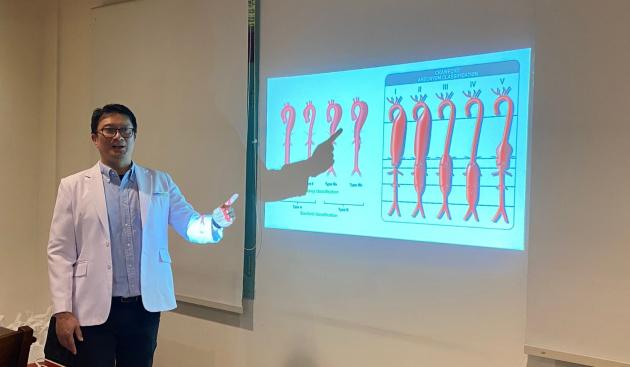
A thoracic, cardiac, and vascular surgeon at Siloam Hospitals Lippo Village explains complex aortic disease.
Complex aortic disease, particularly aortic dissection (tear) and aortic aneurysm (enlargement), is one of the most fatal medical emergencies in the cardiovascular world.
Unfortunately, its symptoms resemble those of minor illnesses, causing many people to seek treatment too late, leading to death within hours.
A thoracic, cardiac, and vascular surgeon at Siloam Hospitals Lippo Village revealed that the biggest challenge in saving aortic patients is the narrow golden period and the lack of understanding of early symptoms.
Typical Symptoms
The aorta is the largest blood vessel that exits directly from the heart to carry blood to all organs, from the brain to the legs.
When the layers of this vessel wall tear (dissection), blood enters between the layers and can block blood flow to vital organs.
The surgeon explained that the main symptom of acute aortic dissection is sudden, extremely severe pain.
“The pain is very distinctive, described as if the chest is being cut, torn, or stabbed with a razor. This pain often radiates to the back and can even move from the upper back downward, following the direction of the tear in the blood vessel,” he explained.
Ironically, because the pain radiates to the back or abdomen, many patients or families mistakenly mistake this deadly condition for common cold symptoms, stomach ulcers, or a typical coronary heart attack.
“This delay in diagnosis is very dangerous because in the acute phase of aortic dissection, the risk of death increases by 1% to 2% every hour within the first 24 to 48 hours if proper medical treatment is not received promptly,” the surgeon added.
Risk Factors
Based on medical data, this complex aortic disease most often threatens people with certain health histories. The main risk factor is uncontrolled high blood pressure or hypertension.
“Chronic and persistently high blood pressure places a very strong impact load on the walls of the aorta. Over time, the wall can weaken, balloon out (aneurysm), or tear directly (dissection),” he added.
Besides hypertension, genetic factors or congenital connective tissue disorders also trigger the condition.
Frozen Elephant Trunk (FET) Surgery as a Solution
Treating complex aortic disease involving the chest (thoracic) to the abdomen (abdominal) area requires high-level surgical expertise and advanced technological support.
In the past, complex aortic surgery had to be performed in multiple stages, requiring a long recovery time and posing high risks for patients.
However, in the modern era, Siloam Hospitals Lippo Village has implemented the Frozen Elephant Trunk (FET) technique, which has become the new gold standard worldwide.
The FET technique is a hybrid surgical method that combines conventional open surgery with the placement of a stent graft component (endovascular), shaped like an elephant’s trunk that is “frozen” inside the blood vessel.
With this method, the damaged part of the aorta in the chest and abdomen can be repaired simultaneously in a single surgical procedure.
“This significantly reduces operation time, minimizes bleeding, and speeds up the patient’s recovery time in the ICU,” the surgeon explained.
Importance of Screening and Early Detection
The surgeon reminded the public, especially those with a history of high blood pressure, not to neglect health check-ups.
“Early detection through routine physical examinations and supporting tests such as Cardiovascular CT Scans or Echocardiography is highly recommended for high-risk groups,” he urged.
If you or a family member experiences sudden, severe chest pain radiating to the back, immediately take them to a hospital with a comprehensive aortic treatment team like Siloam Hospitals Lippo Village, because in cases of aortic disease, every second is precious to save a life.
Siloam Hospitals Lippo Village
Siloam Hospitals Lippo Village
Related news

A 1.15-tonne sacrificial cow named Ambo was purchased in Balaraja.

Business

“Introducing the Coway NEXT STORM, a More Powerful and Quieter Air Purifier”

Cycling Event with Umrah Prizes in Tangerang City, Here’s the Route