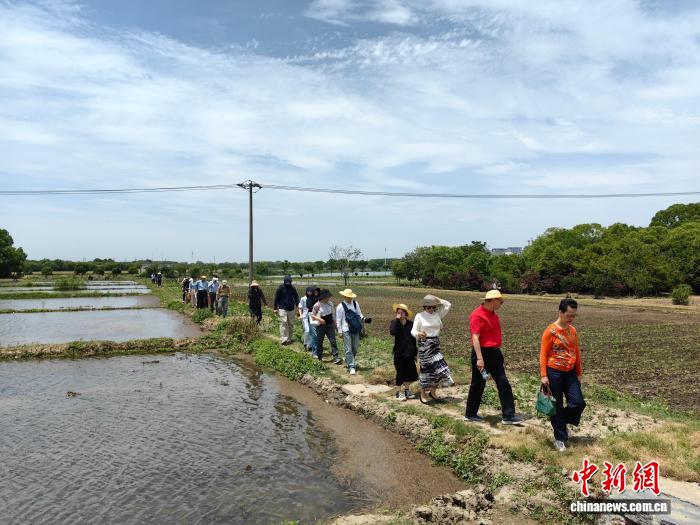
On May 19, in Shanghai, the Shanghai Research Institute of Culture and History organized a field research activity titled “Jiangnan Style in Shanghai: Famous Scholars in the Countryside,” which visited Shanshen Natural Village in Xicen Village, Qingpu District. Researchers from the institute conducted on-site investigations into the achievements of the Jiangnan style in Shanghai, focusing on topics such as the protection of water town landscapes, the preservation of historical heritage, and the integration of cultural tourism. They provided professional insights for the implementation of the Xicen unit plan, the revitalization of rural culture, and the protection of water town landscapes.
During a cultural dialogue session, the party secretary of the Shanghai Urban Planning and Design Research Institute explained the overall construction system of the Jiangnan style in Shanghai, detailing the planning approach, construction progress, and spatial layout of the Xicen pilot unit. Officials from the Qingpu District Planning and Natural Resources Bureau elaborated on the regional advantages, ecological foundation, and water system characteristics of the Xicen unit, analyzing the core values of the area’s development. Officials from the Qingpu District Culture and Tourism Bureau discussed the pathways for exploring local cultural resources and the development strategies for cultural tourism integration and industrial upgrading.
During the research, nine researchers immersed themselves in Shanshen Natural Village, observing the original ecological features of lakes, marshes, and fields, as well as the layout of ancient bridges and streets. They documented the original water town landscape through sketching, photography, and literary creation. In the cultural dialogue session, the researchers identified challenges in village development from perspectives such as cultural tracing, artistic empowerment, industrial upgrading, and enterprise-local cooperation, proposing targeted optimization plans to support the high-quality construction of the Jiangnan style in Shanghai.
It is reported that the Jiangnan style in Shanghai is a key systematic rural revitalization project focused on protecting rural landscapes, ecological restoration, and preserving local culture. It adheres to the development foundation of “the most Jiangnan, the most rural, and the most Shanghai style,” retaining natural ecological spatial patterns and traditional village heritage, aiming to create a distinctive Jiangnan rural style in Shanghai. By 2027, it plans to establish about 20 demonstration models for the protection and inheritance of characteristic village landscapes.
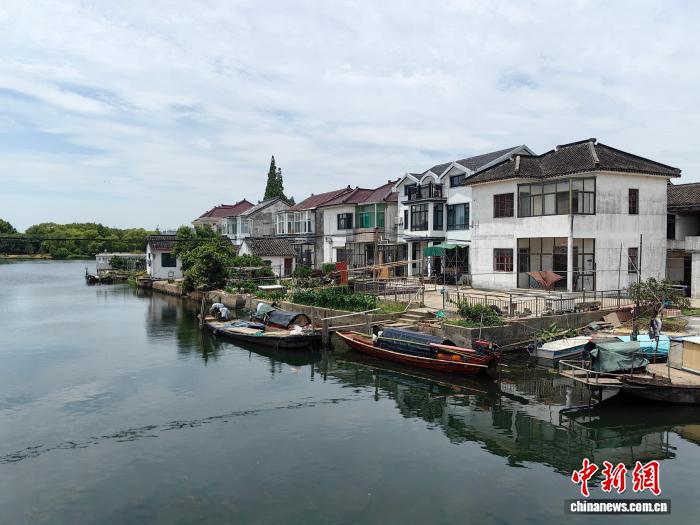
The Xicen unit is an important pilot for the construction of the Jiangnan style in Shanghai. Leveraging the characteristics of a water town with interconnected lakes, it creates a unique spatial form of “water surrounding villages,” systematically protecting and restoring the agricultural cultural heritage of Jiangnan’s polder and wetland farming. The core village of this research, Shanshen Natural Village, features a unique spatial layout of “three waters surrounding three islands, seven bridges, and eleven alleys,” preserving the original charm of a Jiangnan water town where “every household has a dock, and homes line the river.” It is also adjacent to the Huawei Research and Development Center, giving it significant locational advantages.
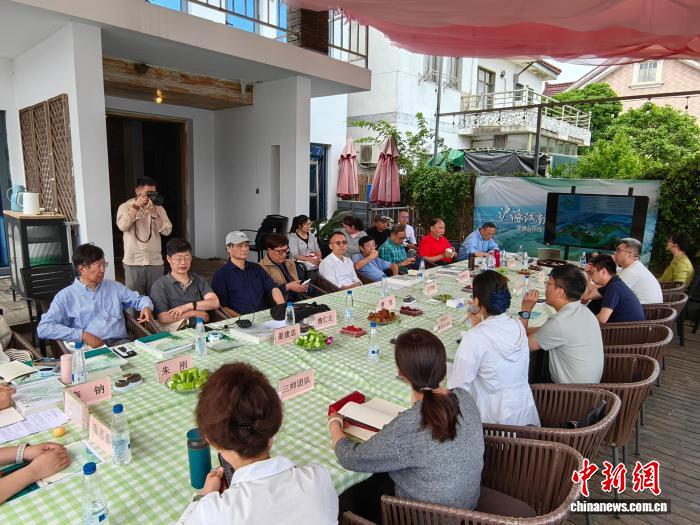
The nine researchers, drawing on their professional expertise, offered suggestions for the development of Shanshen Natural Village. One researcher, starting from cultural tracing, pointed out that the Jiangnan style in Shanghai is the foundation of Shanghai-style culture and needs to rely on local heritage for cultural iteration, planning to combine art forms such as painting and poetry to create exclusive literary and artistic works for Xicen.
Another researcher compared the development models of Jiangnan villages in Zhejiang and Jiangsu, believing that the Jiangnan style in Shanghai is an original and distinctive IP. He suggested implementing long-term cultural projects to shape a unique cultural brand for this style.
A third researcher focused on enterprise-local cooperation, proposing to leverage university resources and collaborate with the Huawei Research and Development Center to organize cultural lectures, art performances, and other activities, establishing a model for enterprise-local cultural collaboration.
Another researcher suggested deepening the cultivation of agricultural culture, drawing on the development model of the Guangfulin site to create activities such as farming experiences and water tours, and planning to build an agricultural museum to enrich cultural tourism offerings and stimulate consumption.
One researcher pointed