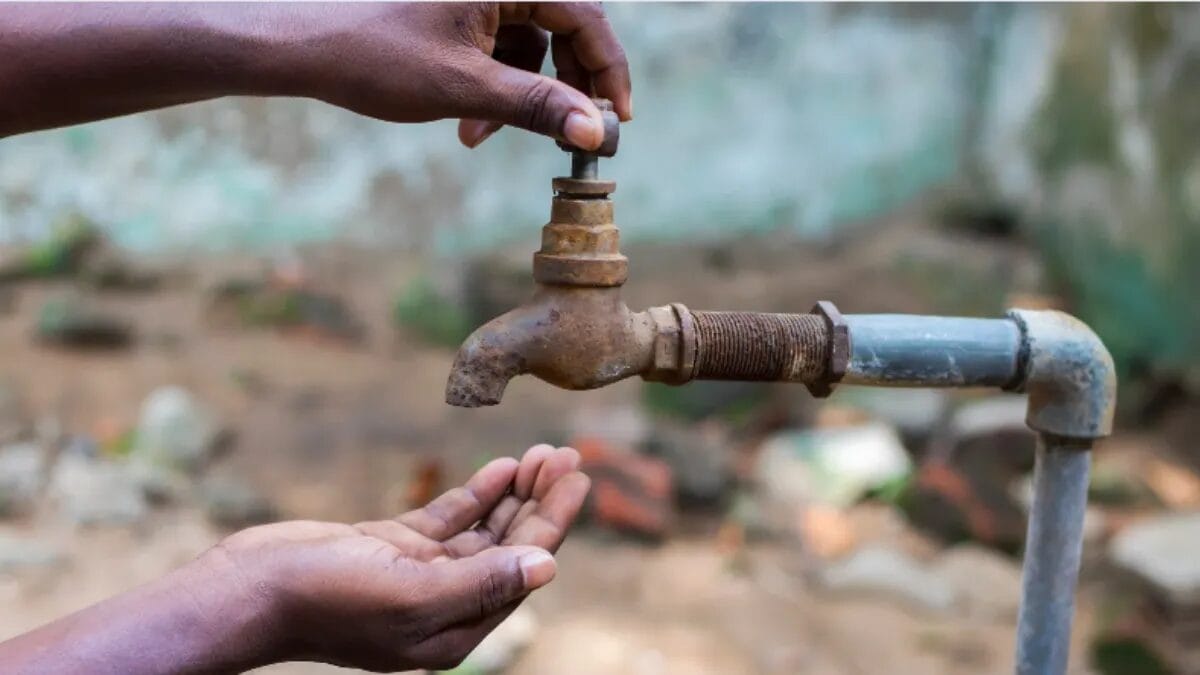
Jodhpur, Amid severe heat in Rajasthan, the Jodhpur district is facing a water crisis, and officials say this situation has arisen due to a delay in releasing water from the Harike Barrage in Punjab into the Indira Gandhi Canal after its annual closure for maintenance work.
The chief engineer of the Public Health Engineering Department (PHED) said that according to the Punjab government’s notification, the canal was to remain closed until May 10, with water release from the Harike Barrage scheduled from May 11. He stated, “However, due to delays in completing repairs and technical work in the Punjab area, the release of sufficient water was delayed.”
He said that from May 14, water was released from the Harike Barrage into the canal in a phased manner. The department expects this water to reach Jodhpur’s Kaylana Lake and Takht Sagar reservoirs, the city’s main water sources, by the night of May 20 or the morning of May 21. He said that currently, both reservoirs have just enough water left to meet the city’s needs until the canal water arrives.
Water crisis deepens in Jodhpur, claim of only two days of water left
The superintendent engineer (city) of PHED said that even after the water reaches the reservoirs, it will take about two weeks to fill them to normal levels. He said, “Only after that can the city’s water supply return to normal. Given this situation, a plan is being made to suspend water supply for one day on May 21, to ensure sufficient supply the following day.”
Former Chief Minister Ashok Gehlot also raised the issue of the water crisis, stating that the drinking water situation in Jodhpur is becoming increasingly worrying. He said, “There is immense hardship across the entire city, and conditions are nearly like a water emergency. Reports indicate that only two days of water remain in Kaylana and Takht Sagar. A city with a population of about 20 lakh is on the brink of a severe water crisis, while the government remains silent.”
Also read:
Gehlot also questioned the PHED’s preparedness. He said, “Doesn’t this reflect a lack of advance preparation? Wasn’t a solid water management plan formulated? Now that the water crisis is upon us, who will take responsibility?”
Harike Barrage
Harike Barrage is a critical water management structure built across the Sutlej River in Punjab, India, completed in 1953. It was constructed to regulate water flow for irrigation and to supply drinking water, while also helping to control floods in the region. The barrage created the Harike Wetland, which is now a vital bird sanctuary and an important ecological site.
Indira Gandhi Canal
The Indira Gandhi Canal, originally known as the Rajasthan Canal, is one of India’s largest irrigation projects, stretching over 650 kilometers through the Thar Desert in Rajasthan. Conceived in the 1940s and initiated in 1958, it was renamed after former Prime Minister Indira Gandhi in 1984. The canal has transformed arid landscapes into agricultural land, significantly boosting crop production and supporting local communities.
Kaylana Lake
<div class="text
Harike Barrage
Harike Barrage is a significant hydraulic structure located at the confluence of the Sutlej and Beas rivers in Punjab, India. Built between 1949 and 1953, it was constructed primarily to divert water for irrigation and to manage flood control in the region. The barrage also created the Harike Wetland, a vital bird sanctuary and ecological hotspot.
Indira Gandhi Canal
The Indira Gandhi Canal, originally known as the Rajasthan Canal, is one of India’s largest irrigation projects, stretching over 650 kilometers through the arid regions of Rajasthan and Punjab. Conceived before India’s independence and initiated in 1958, it was renamed after Prime Minister Indira Gandhi in 1984. The canal has transformed the Thar Desert into fertile agricultural land, significantly boosting crop production and supporting local communities.
Kaylana Lake
Kaylana Lake is a man-made reservoir located in Jodhpur, Rajasthan, India, built in 1872 by Maharaja Pratap Singh. It was constructed by carving out a depression in the local rocky terrain and is surrounded by lush gardens and hills, serving as a popular picnic spot. The lake also features a cenotaph and is part of the region’s historical water conservation efforts.
Takht Sagar
Takht Sagar is a historic fort and temple complex located in Nanded, Maharashtra, India, situated on the banks of the Godavari River. It is best known for being the site of the Takht Sri Hazur Sahib, one of the five most sacred shrines in Sikhism, where Guru Gobind Singh Ji held his final congregation and passed away in 1708. The site also features a small fort built by the Mughals and later renovated by the Marathas, blending Sikh, Hindu, and Islamic architectural influences.