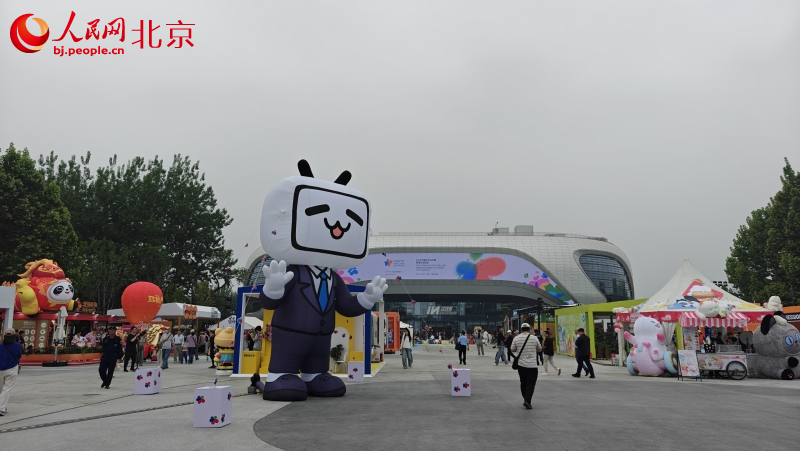
On May 15, the first China New Cultural and Creative Market and Trendy Play Garden Party opened at Beijing Chaoyang Park. The event lasts for 10 days, with the theme “Culture Enriches Life, Creativity Inspires Living, Trends Lead the Future.” It focuses on the cultural depth of Eastern new aesthetics and the trendy vitality of Chinese fashion, adopting a fusion model of “cultural and creative market × trendy play experience × park garden party” to create an open, immersive, and city-level new consumption scene for cultural and creative products that is both shoppable and experiential. It offers a one-stop experience in cultural and creative products, Chinese fashion, intangible cultural heritage projects, and digital technology development.
At the opening ceremony, guests shared discussions around three major directions: revitalizing cultural and creative IPs, integrating the Chinese fashion industry, and modern expression of traditional culture. The “China Cultural and Creative Development Trend Report” was also released on site, summarizing industry dynamics and providing references for high-quality development of the cultural and creative industry. The opening exchange focused on cutting-edge topics in the cultural and creative field, building an important platform for mutual learning and collaborative development, and promoting deep integration of cultural resources, trendy play creativity, and public consumption.
This market event breaks the boundaries of traditional markets, innovatively planning a “three zones, two routes” garden party experience space. It connects three functional areas: cultural and creative, business, and garden, opening up two touring routes—walking and waterway. With Eastern new aesthetics as the cultural foundation and Chinese fashion as the trendsetter, it achieves a one-stop immersive experience of “touring, shopping, viewing, dining, and entertainment,” deeply blending ancient and modern culture with trendy lifestyles.
The cultural and creative zone is the core cultural hub and top photo spot of the entire event, featuring two major thematic sections that balance Eastern aesthetics and trendy subcultures, achieving a two-way convergence of tradition and modernity. The Eastern New Aesthetics section is located at the Planning Art Museum and surrounding outdoor areas, showcasing the modern expression of traditional culture. Here, 46 top domestic cultural and heritage institutions, including the Palace Museum, National Museum of China, and Sanxingdui Museum, come together to bring popular cultural and creative products. Forty-three national and provincial-level intangible cultural heritage techniques, such as Hebei jade carving, Beijing filigree inlay, Xiangxi Miao embroidery, and Shu brocade weaving, are displayed simultaneously. Ten national-level intangible cultural heritage inheritors demonstrate craftsmanship like horsetail embroidery and filigree inlay on site, allowing visitors to feel the warmth of traditional skills up close. Outside the museum, a large art installation made of bamboo weaving creates an immersive Eastern aesthetic scene; inside, a phoenix kite made of intangible cultural heritage bamboo weaving soars in the T-space, paired with the Taozhu New Creation Bureau robot technology experience zone, showcasing the elegance and depth of Eastern aesthetics. The Chinese Fashion New Power section is located at the Weibo IN venue and surrounding areas in Chaoyang Park, creating a digital pixel-style trendy play block full of youthful energy. Leading trendy play companies such as POP MART, Qimeng Island, 52TOYS, and miHoYo create top IP scenes like MOLLY Castle, Panda Roll Park, and WAKUKU pop-up store. In coordination with over 50 e-sports and anime merchants in the venue, they offer young-oriented products like game merchandise, anime figurines, and digital cultural creations, highlighting the vitality of Chinese fashion culture.
The business zone is located at the Planning Art Museum T-space and Prince Jun’s Mansion, serving as a platform for displaying IP industry achievements and conveying value. During the event, three core business activities will be held here: themed launch events, high-level closed-door meetings, and supply-demand matchmaking actions. The garden zone is supported by five key points: POP MART City Park, Apailang Creativity Planet, Shell Theater, Ark Lake Lawn, and Ten Thousand People Square, connected with the Liangma River International Waterfront to create an all-day open garden space covering the needs of visitors of all ages.
The event also features both walking and waterway routes, connecting a full experience of beauty. The walking garden route links seven key points: Planning Art Museum (Eastern New Aesthetics), Weibo IN (Chinese Fashion New Power), Apailang Park, Shell Theater, POP MART City Park, Ark