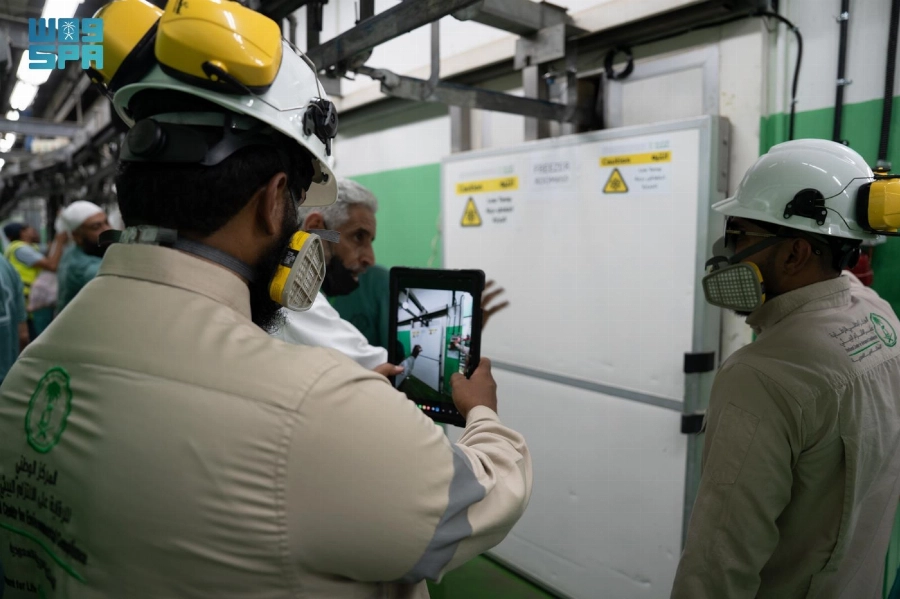
The National Center for Environmental Compliance Oversight issued more than 4,300 environmental permits for facilities with environmental impact in development sectors across all regions, recording an increase of about 6% compared to the same quarter last year.
Riyadh leads with 1,700 permits for facilities
The Riyadh region topped the permit issuance map with more than 1,700 permits, followed by facilities in the Makkah region with 918 permits, then the Eastern Province with 811 permits, while about 800 permits were distributed across the rest of the Kingdom’s regions, according to the growth of development activities in each region.
The center also issued more than 35 licenses for environmental service providers, raising the number of licensed offices to 760 institutions and companies providing services to more than 50,000 facilities, such as issuing periodic reports, preparing environmental impact studies, correction plans, and other services.
This increase came as a result of rising demand from the transport and logistics sector by 71% for the same period, an indicator reflecting the growing level of environmental compliance and the increasing efficiency of adherence to approved requirements and standards in the sector.
The rise in the pace of permit issuance is an indicator reflecting the commitment of facilities with environmental impact to the standards and requirements that protect environmental media—water, air, and soil—and avoid the cost of negative impact from the activity, as well as resulting financial violations or rehabilitation of sites affected by the activity.
Riyadh
Riyadh is the capital and largest city of Saudi Arabia, located in the heart of the Arabian Peninsula. Originally a small walled settlement known as Hajr, it grew in importance after it was captured by the Al Saud family in 1823, becoming the center of the First Saudi State. Today, it has transformed into a modern metropolis, blending its historical roots with futuristic skyscrapers, and serves as the political and administrative hub of the kingdom.
Makkah
Makkah, located in western Saudi Arabia, is the holiest city in Islam and the birthplace of the Prophet Muhammad. It is home to the Masjid al-Haram, which contains the Kaaba, the direction of prayer for Muslims worldwide. For centuries, Makkah has been the destination of the Hajj pilgrimage, a religious duty for Muslims, with its history deeply tied to the life of Abraham and the establishment of monotheism.
Eastern Province
The Eastern Province is the largest province of Saudi Arabia, located along the Arabian Gulf. Historically, it was a key region for the ancient Dilmun civilization and later became vital for the discovery of oil in the 1930s, transforming the kingdom’s economy. Today, it is known for its rich cultural heritage, modern cities like Dammam and Al Khobar, and major oil industry operations.
Riyadh
Riyadh, the capital of Saudi Arabia, is a modern metropolis that grew from a small, walled desert settlement into a global hub. Historically, it was the stronghold of the Al Saud dynasty and was captured by King Abdulaziz in 1902, marking the start of the unification of modern Saudi Arabia. Today, it blends its deep cultural heritage with futuristic skyscrapers and ambitious development projects like the King Abdullah Financial District.
<div class="my-4 p-4 rounded-lg shadow-md bg-blue-50 border-l-
Riyadh
Riyadh is the capital and largest city of Saudi Arabia, located in the heart of the Arabian Peninsula. Originally a small, walled desert settlement known for its date palm oases, it grew in prominence after the House of Saud captured it in 1902, eventually becoming the kingdom’s political and financial center. Today, Riyadh is a modern metropolis that blends its historical roots with rapid urban development, featuring landmarks like the Masmak Fortress and the futuristic Kingdom Centre.
Makkah
Makkah, located in modern-day Saudi Arabia, is the holiest city in Islam and the birthplace of the Prophet Muhammad. Its history dates back to pre-Islamic times as a trading hub and religious center, centered around the Kaaba, which Muslims believe was built by Abraham and his son Ishmael. Today, it is the destination of the annual Hajj pilgrimage, which millions of Muslims undertake as a key religious duty.
Eastern Province
The Eastern Province is the largest province in Saudi Arabia, known for its vast oil reserves and the city of Dhahran, where the country’s first oil was discovered in 1938. Historically, the region was a key part of the ancient trade routes and the home of the historic Al-Ahsa Oasis, a UNESCO World Heritage site. Today, it remains a vital economic hub, blending modern industry with rich cultural heritage.
Masjid al-Haram
Masjid al-Haram, located in Mecca, Saudi Arabia, is the holiest mosque in Islam and the site of the Kaaba, towards which Muslims around the world pray. Its history dates back to the time of Prophet Ibrahim and his son Ismail, who are believed to have built the Kaaba, and it has been expanded numerous times over centuries, most notably by Islamic caliphs and modern Saudi rulers. The mosque is the focal point of the Hajj pilgrimage, one of the Five Pillars of Islam, which draws millions of worshippers annually.
Kaaba
The Kaaba is a cube-shaped building located in the center of the Grand Mosque in Mecca, Saudi Arabia, and is considered the most sacred site in Islam. According to Islamic tradition, it was originally built by the Prophet Abraham and his son Ishmael as a house of monotheistic worship, and it has been a focal point for pilgrimage long before the advent of Islam. Today, Muslims around the world face the Kaaba during their daily prayers, and it is the destination of the Hajj pilgrimage, which every able-bodied Muslim is expected to undertake at least once in their lifetime.
Dammam
Dammam is the capital of Saudi Arabia’s Eastern Province and a major port city on the Arabian Gulf. Its modern history began in the 20th century with the discovery of oil, transforming it from a small fishing village into a key industrial and commercial hub. Today, it is an integral part of the Dammam Metropolitan Area, known for its thriving economy and landmarks like the King Fahd Park and the Dammam Corniche.
Al Khobar
Al Khobar is a major city in the Eastern Province of Saudi Arabia, located on the Persian Gulf coast. Originally a small fishing village, it grew rapidly in the 20th century following the discovery of oil and became a key commercial and residential hub, partly due to its proximity to the King Fahd Causeway linking Saudi Arabia to Bahrain. Today, it is known for its modern waterfront, vibrant corniche, and role as a center for business and expatriate life.
King Abdullah Financial District
The King Abdullah Financial District (KAFD) is a major business hub in Riyadh, Saudi Arabia, designed to become the nation’s premier center for finance and commerce. Construction began in the early 2010s as part of the country’s economic diversification plans, and it features modern skyscrapers, a monorail system, and spaces for multinational companies and financial institutions. The district reflects Saudi Arabia’s Vision 2030 initiative to reduce its reliance on oil by fostering a vibrant, knowledge-based economy.