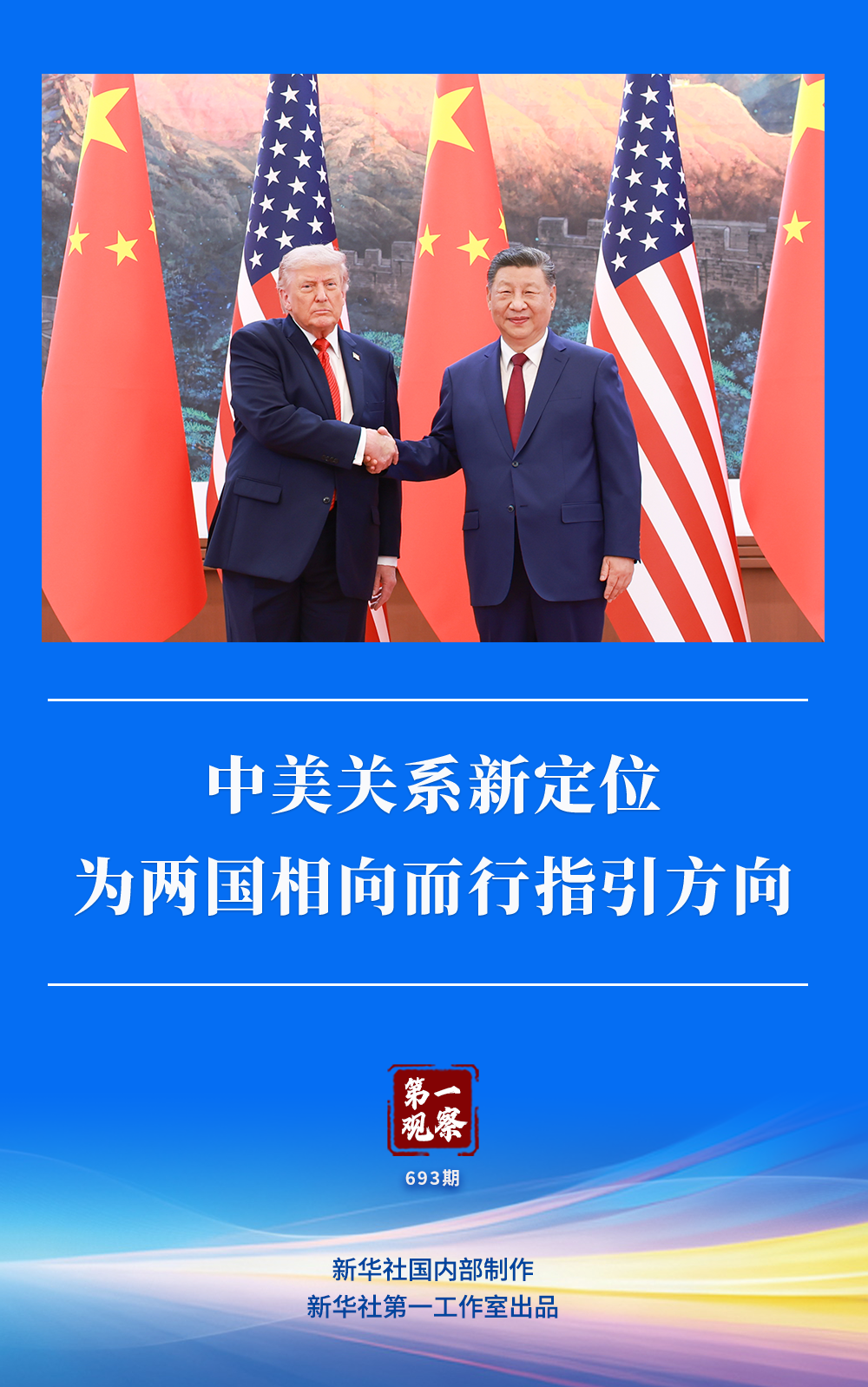
On the morning of May 14, President Xi Jinping held talks with U.S. President Donald Trump, who was on a state visit to China, at the Great Hall of the People in Beijing. The two heads of state agreed to establish a “China-U.S. constructive strategic stability relationship” as the new orientation for bilateral ties.
This year marks the beginning of China’s 15th Five-Year Plan, with over 1.4 billion Chinese people advancing Chinese-style modernization through high-quality development. It is also the 250th anniversary of U.S. independence, as more than 300 million Americans drive the country toward a new journey. At this critical juncture, President Xi has provided visionary and timely guidance for China-U.S. relations.
As the world’s two largest economies, maintaining stable China-U.S. relations and forging a correct path of mutual respect, peaceful coexistence, and win-win cooperation is crucial for both countries and the world.
President Xi profoundly elaborated on the core meaning of “constructive strategic stability” through four dimensions: “positive stability centered on cooperation,” “benign stability with measured competition,” “normal stability with manageable differences,” and “enduring stability with achievable peace.” This provides strategic guidance for China-U.S. relations over the next three years and beyond.
Under the new circumstances, President Xi and President Trump have held multiple meetings and phone calls, helping to maintain overall stability in bilateral ties. This time, both sides reached consensus on establishing the new orientation of a “China-U.S. constructive strategic stability relationship,” sending a positive signal to both nations and the world.
Cooperation as the priority indicates that China-U.S. cooperation should focus on the bigger picture and the mainstream. The two countries can accomplish many important things together that benefit both nations and the world. By lengthening the list of cooperation and expanding the pie of collaboration, they can contribute to strategic stability.
Measured competition means that competition should not be a zero-sum game of win-lose, but should help mutual promotion and joint improvement. Competition should be fair, reasonable, benign, and rule-based.
Manageable differences first acknowledge that China and the U.S. have different national conditions and cultures, making differences inevitable. However, differences should not become an excuse for confrontation. Historical experience shows that China and the U.S. can enhance trust and dispel doubts through candid dialogue, manage risks through pragmatic consultation, and keep differences under control.
Peace is achievable. As major countries, China and the U.S. have the responsibility and obligation to serve as a ballast for world peace and stability. As President Xi stated, peaceful coexistence is a basic norm of international relations and a bottom line that both major powers must uphold.
The road is long and arduous, but with action, it will be reached; if we do not stop, the future is bright.
President Xi emphasized that the “China-U.S. constructive strategic stability relationship” is not just a slogan but a call for action in the same direction. Only by insisting that no good deed is too small to do, and no evil deed is too small to avoid, by doing things one by one and continuously accumulating mutual trust, can the two sides steer China-U.S. relations steadily along the right course.
During the talks, President Xi pointed out: “Both sides should implement the important consensus we have reached, further utilize political and diplomatic channels as well as military communication channels, and expand exchanges and cooperation in areas such as economy and trade, health, agriculture, tourism, people-to-people exchanges, and law enforcement.” This charts the path for the next steps of bilateral cooperation.
From pointing out at the Busan meeting that the two heads of state “should grasp the direction and steer the overall situation,” to elaborating the profound meaning of the new orientation of “China-U.S. constructive strategic stability relationship,” President Xi has consistently sent a clear signal to the international community with strategic resolve and historical responsibility: China adheres to mutual respect, peaceful coexistence, and win-win cooperation, committed to injecting stability and certainty into a world of turmoil and change.
The new orientation sets a new direction. Standing at a new historical starting point, people look forward to China and