
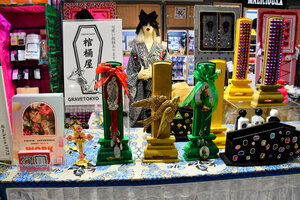
Green and yellow memorial tablets, coffins covered with floral patterns or soft, plush fabric like stuffed animals. A female designer who develops these seemingly unconventional “cute funeral items” has a desire for the journey’s attire to be stylish as well.
Mikako Fuse (50), who runs the funeral brand “GRAVE TOKYO,” regularly holds product exhibitions at places like Laforet Harajuku.
After working as a designer for an apparel brand, she moved to a major toy manufacturer, where she designed apparel items for anime characters. In 2015, she proposed an “urn brand” as a new in-house project. It is said that the death of a friend who was a fellow designer was the catalyst.
“She was a very stylish person in life…”
GRAVE TOKYO
“Grave Tokyo” is not a specific cultural site but rather a term that can refer to various cemeteries or memorial spaces in Tokyo, Japan, such as the historic Yanaka Cemetery or the iconic Aoyama Cemetery. These sites date back to the Edo period or later, serving as final resting places for notable figures, samurai, and ordinary citizens, reflecting Tokyo’s layered history from feudal times to modernity. They offer a serene contrast to the city’s bustling streets, preserving cultural heritage through traditional tombstone designs and seasonal cherry blossoms.
Laforet Harajuku
Laforet Harajuku is a iconic fashion boutique building in Tokyo’s Harajuku district, opened in 1978, known for setting trends in youth and street fashion. Its unique sloped architecture and rotating selection of avant-garde brands have made it a landmark of Harajuku’s “kawaii” culture and a must-visit for fashion enthusiasts. Over the decades, it has played a key role in shaping Tokyo’s vibrant street style scene.
Yanaka Cemetery
Yanaka Cemetery is a historic and serene burial ground located in Tokyo’s Yanaka district, known for its cherry blossoms and peaceful atmosphere. Established in 1874 during the Meiji period, it is the final resting place of many notable figures, including the last shogun, Tokugawa Yoshinobu. The cemetery survived the bombings of World War II and the 1923 Great Kanto Earthquake, preserving its old-world charm and making it a popular spot for reflective walks.
Aoyama Cemetery
Aoyama Cemetery is one of Tokyo’s most prestigious and historic burial grounds, established in 1872 during the Meiji era as one of the first public cemeteries in Japan. It serves as the final resting place for many notable figures, including writers, politicians, and artists, such as the famous novelist Natsume Sōseki. The cemetery is also renowned for its serene, park-like atmosphere, featuring cherry blossom trees that make it a popular spot for hanami (flower viewing) in spring.
Laforet Harajuku
Laforet Harajuku is a landmark fashion boutique building in Tokyo’s Harajuku district, opened in 1978. Known as a trendsetting hub for youth culture and avant-garde street fashion, it became famous for its iconic “Laforet Grand
GRAVE TOKYO
“GRAVE TOKYO” is a conceptual art project and exhibition that explores the hidden history and cultural memory of Tokyo through the lens of death and burial sites. It investigates how graves and memorials throughout the city—from ancient samurai resting places to modern cemetery architecture—reflect Tokyo’s evolution from the Edo period to the present day. The project aims to reveal the often-overlooked narratives of urban development, social change, and collective remembrance embedded in these sacred spaces.
Laforet Harajuku
Laforet Harajuku is a iconic fashion boutique building in Tokyo’s Harajuku district, known as a trendsetting hub for youth culture and street fashion since its opening in 1978. Designed by architect Kiyonori Kikutake, it became a symbol of the area’s transformation into a global center for avant-garde and subcultural styles. The building has hosted numerous influential brands and events, cementing its role in shaping Harajuku’s vibrant fashion scene over the decades.
Yanaka Cemetery
Yanaka Cemetery is a historic and serene burial ground located in Tokyo’s Yanaka district, one of the few areas to survive the bombings of World War II. Established in 1874, it is the final resting place of many notable Japanese figures, including the last shogun, Tokugawa Yoshinobu. The cemetery is renowned for its cherry blossom trees and tranquil atmosphere, offering a peaceful glimpse into Tokyo’s past.
Aoyama Cemetery
Aoyama Cemetery is one of Tokyo’s largest and most historic burial grounds, established in 1872 during the Meiji era. It is the final resting place for many notable Japanese figures, including writers, politicians, and military leaders, reflecting the country’s modernization period. The site is also famous for its serene, tree-lined paths and beautiful cherry blossoms, making it a popular spot for both remembrance and quiet strolls.
Related news
Man rearrested for allegedly beating woman to death, denies involvement
Tokyo Metropolitan Police arrested suspect Keisuke...

Lawson adds raised seating areas, Seven-Eleven introduces powder spaces: convenience stores are changing.
Major convenience store chains, often seen as unif...
Replacement of Nerima Art Museum: Proceed or Scrap? Costs Double, No Start Date in Sight.
The upcoming mayoral election on the 12th has made...

Nerima Ward election: Tokyo Governor’s protégé suffers a crushing defeat; inside story of the campaign.
In the Ward Mayor election held on the 12th, Kenic...
The happiness of having your way of life accepted: Hiramitsu stars in “Haha-ki’s Amulet”
What becomes visible after passing the midpoint of...