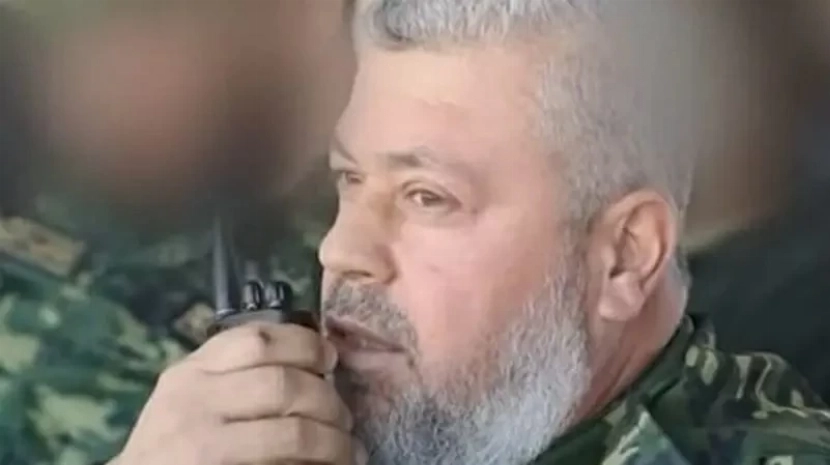
Funeral ceremonies began in Gaza City on Saturday for Izz al-Din al-Haddad, the general commander of the Al-Qassam Brigades, the military wing of Hamas, after he was killed in an Israeli airstrike on Friday evening.
Local sources reported that the funeral procession started from the Al-Aqsa Martyrs Mosque in Gaza City, where the funeral prayer was held before the body was taken to its final resting place. The burial included al-Haddad’s wife and daughter, who were also killed in the same airstrike.
The Israeli military confirmed the elimination of the senior Al-Qassam Brigades commander in what it described as a “precise” strike, stating he was the last of the senior leaders from the October 7 attack. Mosques in northern Gaza reported al-Haddad’s death following airstrikes targeting him.
A senior Hamas official confirmed the news of al-Haddad’s death. According to three Hamas sources, the identification of his body was carried out by his family and close associates, noting that it was only remains.
A Hamas official alluded to al-Haddad’s death in a post, adding that the movement “continues to offer more” martyrs.
According to Israeli estimates, al-Haddad was one of the last remaining prominent military leaders of Hamas in Gaza from the October 7 era, while it is believed that Muhammad Ouda is still among the surviving leaders.
Israel announced on Friday that it had carried out an airstrike in Gaza targeting Izz al-Din al-Haddad, describing him as the commander of Hamas’s military wing and “one of the chief architects” of the October 7 attack.
Hamas has not yet issued any comment on al-Haddad’s fate. He assumed the military leadership of the movement in the Gaza Strip after Israel killed commander Muhammad al-Sinwar in May 2025.
Al-Haddad is the most senior Hamas official targeted by Israel in an airstrike since the October agreement brokered by the United States to halt fighting in Gaza. This attack comes amid continued deadlock in negotiations to advance President Donald Trump’s post-war plan for Gaza.
Israel has intensified its attacks on Gaza over the past five weeks since it halted its joint bombing campaign with the United States on Iran, turning its firepower towards the devastated Palestinian territory.