The NEET-UG examination was cancelled after allegations of a paper leak. The examination will be held again next month.
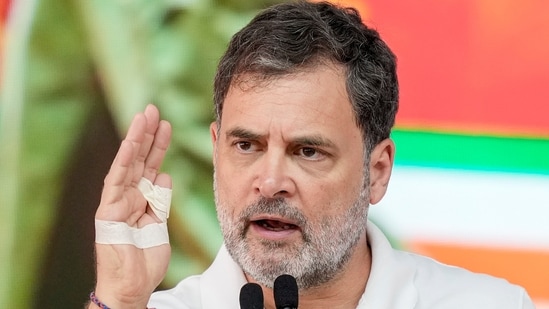
A political leader on Sunday demanded the resignation of the Union education minister over the NEET-UG 2026 paper leak case. He accused the Centre of failing to stop repeated examination leaks and questioned the Prime Minister’s silence on the issue.
The leader compared the government’s handling of the NEET-UG 2024 and NEET-UG 2026 controversies and said the same pattern was being repeated despite earlier investigations and committees.
“NEET 2024: Paper leaked. Exam not cancelled. Minister did not resign. An investigative agency set up an investigation. A committee was formed. NEET 2026: Paper leaked. Exam cancelled. Minister still did not resign. The investigative agency is investigating again. Another committee will be formed,” the leader wrote.
He asked the Prime Minister why accountability had not been fixed despite repeated paper leak cases. “Mr. Prime Minister, the country is asking you some questions – answer them! Why are paper leaks happening repeatedly? Why are you silent time and again on this ‘exam paper discussion’? Why aren’t you dismissing the education minister who keeps failing repeatedly?” the leader wrote on a social media platform.
“Sack the education minister,” he wrote.
The remarks came amid an investigative agency probe into the NEET-UG 2026 leak case, which has led to multiple arrests across several states.
NEET-UG examination
The NEET-UG (National Eligibility cum Entrance Test for Undergraduate) examination is a highly competitive medical entrance exam in India, conducted by the National Testing Agency (NTA) for admission to MBBS, BDS, and other undergraduate medical courses. Introduced in 2013 to replace multiple state-level exams, it aims to standardize medical admissions across the country. The exam has faced controversies, including allegations of paper leaks and legal challenges, but remains the primary gateway for aspiring medical students in India.
Central Bureau of Investigation (CBI)
The Central Bureau of Investigation (CBI) is India’s premier investigative agency, established in 1941 as the Special Police Establishment to investigate corruption in wartime procurements. It later evolved into the CBI in 1963, gaining jurisdiction over a wide range of criminal cases, including economic offenses and special crimes. Headquartered in New Delhi, the CBI operates under the jurisdiction of the Ministry of Personnel, Public Grievances and Pensions, and is often referred to as the “Federal Bureau of Investigation” of India.
NEET-UG
NEET-UG (National Eligibility cum Entrance Test for Undergraduate) is a highly competitive medical entrance examination in India, administered by the National Testing Agency (NTA) since 2019. It was introduced to replace multiple state and national-level exams, ensuring a single, standardized admission process for MBBS, BDS, and other undergraduate medical courses across the country. The exam has a history of legal and policy debates, including controversies over syllabus changes, language biases, and allegations of paper leaks, which have shaped its evolution since its inception in 2013 under the Medical Council of India.
<div class="my-4 p-4 rounded-lg shadow-md bg-blue-50 border-l-
NEET-UG examination
The NEET-UG (National Eligibility cum Entrance Test for Undergraduate) is a standardized medical entrance exam in India, conducted by the National Testing Agency (NTA) since 2013. It replaced multiple state and national-level exams to streamline admissions into MBBS, BDS, and other medical courses. The exam’s history includes controversies over paper leaks and legal challenges, leading to ongoing reforms to ensure fairness and transparency.
National Testing Agency (NTA)
The National Testing Agency (NTA) is an autonomous organization in India established in 2017 by the Ministry of Education to conduct efficient, transparent, and standardized entrance examinations for higher education. It was created to replace multiple examination bodies and reduce the burden on students, administering major tests like the JEE Main, NEET-UG, and UGC NET. Despite its goal of streamlining testing, the NTA has faced controversies over alleged paper leaks and logistical issues in recent years.
Central Bureau of Investigation (CBI)
The Central Bureau of Investigation (CBI) is India’s premier federal law enforcement agency, responsible for investigating major crimes, corruption, and national security cases. Established in 1941 as the Special Police Establishment, it was renamed the CBI in 1963 and operates under the jurisdiction of the Ministry of Personnel, Public Grievances and Pensions. Over the decades, it has played a key role in high-profile investigations, including economic offenses and cases involving public officials.
New Delhi
New Delhi is the capital of India, officially inaugurated in 1931 as the administrative center of British India, designed by British architects Edwin Lutyens and Herbert Baker. It features wide boulevards and iconic landmarks like the India Gate and Rashtrapati Bhavan, blending colonial and Indian architectural styles. Today, it stands as a vibrant metropolis and the seat of India’s national government, reflecting the country’s rich history and modern aspirations.
Medical Council of India
The Medical Council of India (MCI) was a statutory body established in 1934 under the Indian Medical Council Act to regulate medical education and practice across the country. Its primary role was to maintain uniform standards for medical qualifications, accredit medical colleges, and oversee the registration of doctors. In 2020, the MCI was replaced by the National Medical Commission (NMC) following widespread criticism over corruption and inefficiency, marking a major reform in India’s healthcare governance.