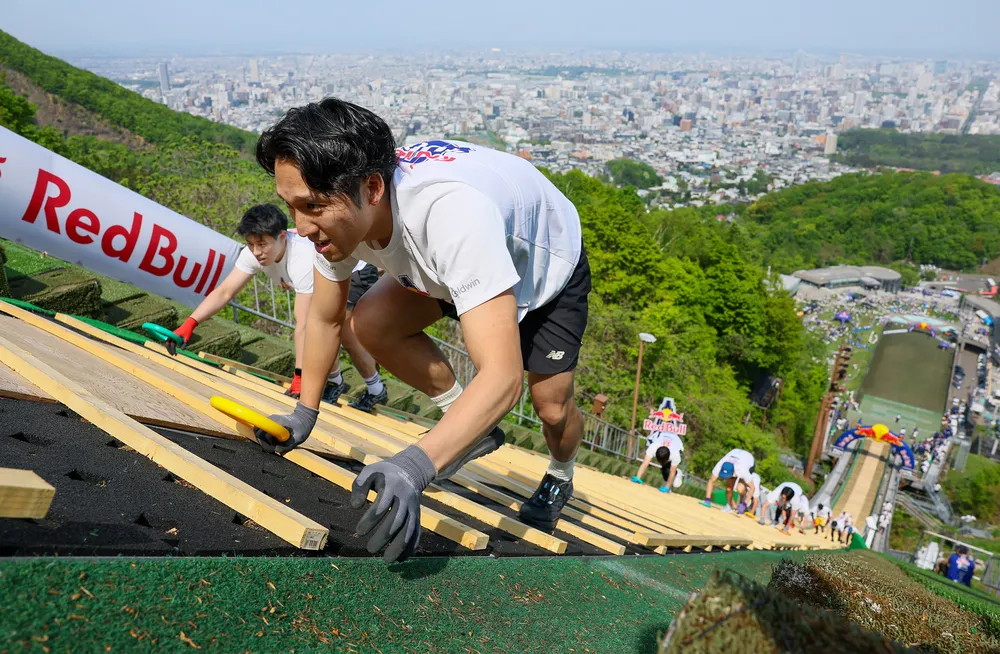
At the Okurayama Ski Jump Stadium in Sapporo’s Chuo Ward on the 16th, the “Red Bull 400” competition was held, where participants race up a 400-meter slope with a maximum incline of 37 degrees. The event has been held since 2017, but this was the last edition due to renovations at the stadium. About 2,000 participants climbed the wall-like steep slope, sometimes on all fours, aiming for the “summit.”
Okurayama Ski Jump Stadium
Okurayama Ski Jump Stadium, located in Sapporo, Japan, is a renowned ski jumping venue originally built for the 1972 Winter Olympics. It has since hosted numerous World Cup events and is known for its large hill, which offers a panoramic view of the city. The stadium remains a symbol of winter sports in Japan and a popular tourist attraction.
Chuo Ward
Chuo Ward is a historic and commercial heart of cities like Tokyo and Osaka, often known as the central business district. In Tokyo, it includes the famous Ginza shopping district and the Tsukiji fish market, evolving from a merchant hub during the Edo period. The ward has long been a center of trade, finance, and culture, blending traditional landmarks with modern skyscrapers.
Okurayama Ski Jump Stadium
Okurayama Ski Jump Stadium, located in Sapporo, Japan, is a renowned ski jumping venue built for the 1972 Winter Olympics. It features a large hill (HS137) that has hosted numerous World Cup events and remains a symbol of winter sports in Hokkaido. The stadium offers panoramic views of Sapporo and operates as a popular tourist attraction, with an observation deck at the top of the jump.
Chuo Ward
Chuo Ward is a central special ward in Tokyo, Japan, known historically as the city’s commercial heart. It includes the famous Ginza district, a luxury shopping area that developed after a major fire in the 1870s, and the historic Nihonbashi neighborhood, which was the starting point of Japan’s five major roads during the Edo period. Today, Chuo Ward blends its rich mercantile past with modern business and tourism.
1972 Winter Olympics
The 1972 Winter Olympics, officially known as the XI Olympic Winter Games, were held in Sapporo, Japan, marking the first time the Winter Games were hosted in Asia. The event took place from February 3 to 13, 1972, and featured 35 nations competing in 35 events across 6 sports. Notably, the Games are remembered for the dominant performance of Dutch speed skater Ard Schenk, who won three gold medals, and the controversial disqualification of Austrian skier Karl Schranz for violating amateurism rules.
Ginza
Ginza is a famous upscale shopping district in Tokyo, Japan, known for its luxury boutiques, department stores, and high-end dining. Its history dates back to the early 17th century when it was established as a silver coin mint (the name “Ginza” literally means “silver mint”), and it later became a center of Western influence and modernization during the Meiji era. Today, Ginza blends historic charm with contemporary elegance, attracting visitors from around the world.
Tsukiji fish market
Tsukiji Fish Market, located in Tokyo, Japan, was one of the world’s largest wholesale fish and seafood markets until its relocation in 2018. Originally established in 1935, it operated for over 80 years as a bustling hub for tuna auctions and fresh seafood, drawing tourists and chefs alike. Today, the outer market area remains open, offering a vibrant mix of food stalls, shops, and restaurants that continue to celebrate Tokyo’s culinary heritage.
Edo period
The Edo period (1603–1868) was a time of peace, stability, and cultural flourishing in Japan under the rule of the Tokugawa shogunate. It saw the rise of a vibrant urban culture in Edo (modern-day Tokyo), including kabuki theater, ukiyo-e woodblock prints, and the development of the samurai class’s bushido code. This era also enforced national isolation, limiting foreign influence and allowing unique Japanese traditions to thrive until the Meiji Restoration.