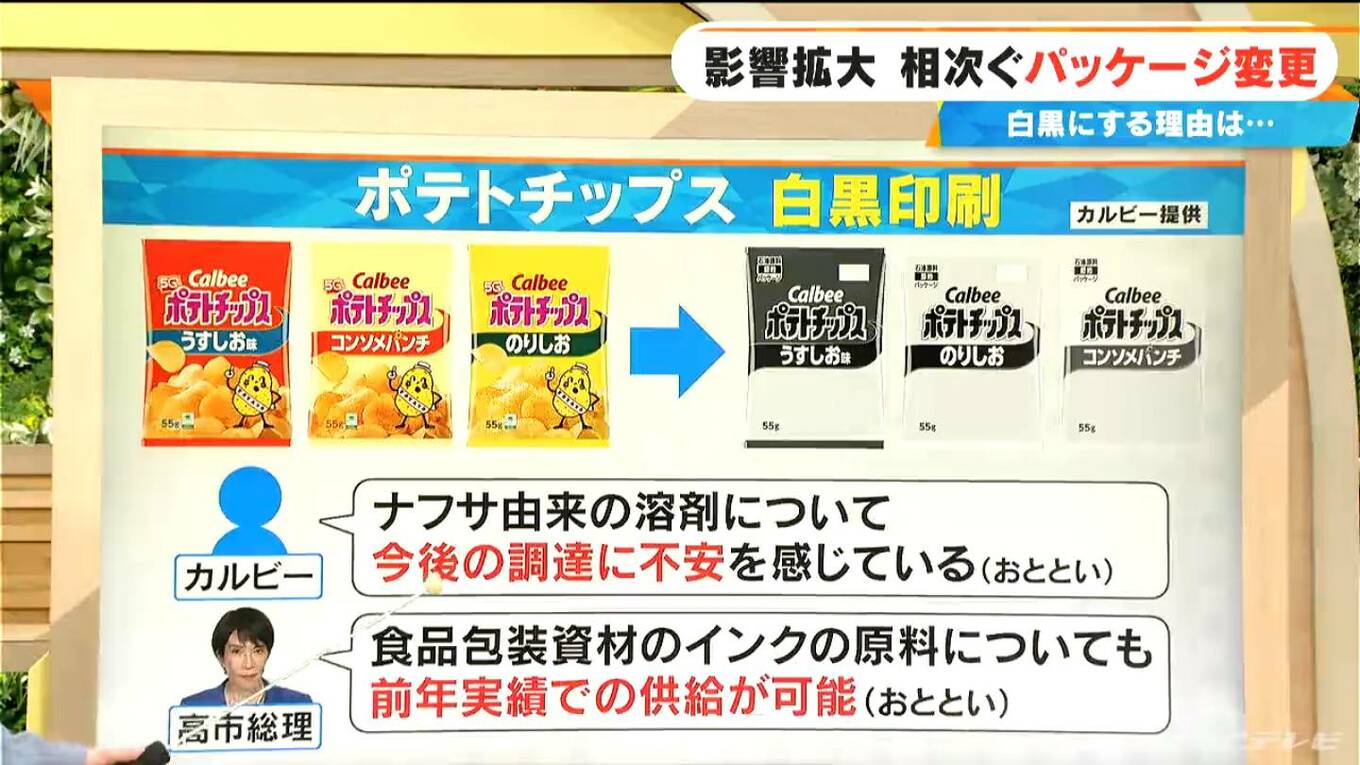
A series of package changes turning black and white: What is the reason?
Products derived from naphtha are deeply and widely integrated into our daily lives. This is precisely why the impact is so extensive and is causing a serious blow to society.
Recently, Calbee announced that it would change the packaging of its potato chips to a two-color black-and-white print. When asked, a convenience store manager said, ‘Up until now, many people distinguished products by the color of the packaging, so initially some customers might mistakenly buy the wrong items with the black-and-white design.’
Calbee stated the reason for the packaging change is ‘concerns about future procurement of solvents derived from naphtha.’ However, on May 12, when this announcement was made, the Prime Minister commented, ‘Regarding the raw materials for inks used in food packaging materials, it is possible to supply based on the previous year’s performance.’
This comment came after Calbee’s announcement, raising questions of whether it was a coincidence or intentional. It indicates that the government was also aware of the ink issue.
Calbee
Calbee is a major Japanese snack food company, best known for its popular potato chips and shrimp crackers. Founded in 1949 in Hiroshima, the company quickly grew into a household name in Japan, becoming famous for innovative products like “Jagabee” and “Kappa Ebisen.” Today, Calbee is a global brand, with its snacks enjoyed worldwide, and it even operates a visitor center in Hiroshima where guests can learn about its history and production process.
Potato chips packaging
Potato chip packaging has evolved from simple wax paper bags in the early 20th century to modern airtight, resealable pouches and cans, designed to preserve freshness and prevent breakage. The shift to foil-lined and nitrogen-flushed packaging in the mid-1900s dramatically extended shelf life, while iconic designs, such as Pringles’ uniform stackable can, revolutionized the industry. Today, packaging often highlights branding, nutritional information, and sustainability efforts, reflecting changing consumer habits and manufacturing innovations.
Hiroshima
Hiroshima is a city in Japan best known for being the target of the first atomic bomb attack on August 6, 1945, during World War II, which caused massive destruction and loss of life. After the war, the city was rebuilt as a symbol of peace and resilience, now hosting the Hiroshima Peace Memorial Park and the Atomic Bomb Dome, a UNESCO World Heritage site. Today, Hiroshima is a thriving modern city that promotes global peace and nuclear disarmament while honoring its tragic history.