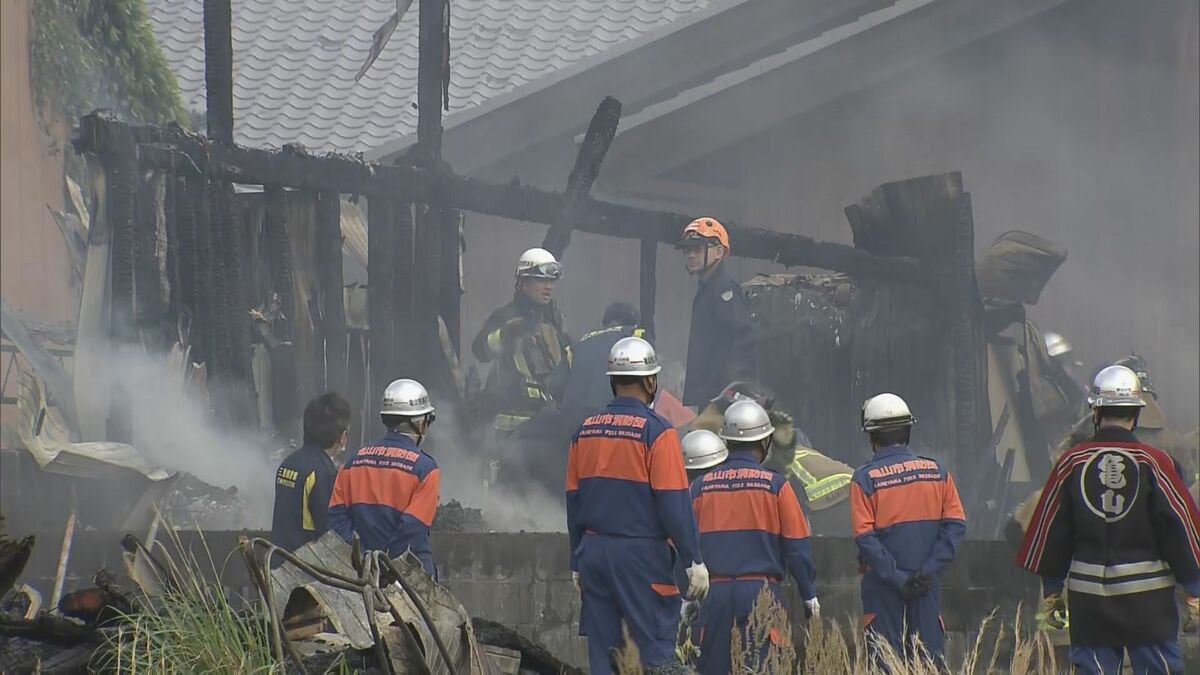
On the morning of the 26th, a fire broke out in Kameyama City, Mie Prefecture, burning two residential buildings, and two people remain unaccounted for.
According to police and firefighters, around 6:40 a.m. on the 26th, a resident living near Seki-cho Kisaki in Kameyama City called 119 to report that a two-story building was on fire.
Eleven fire engines have been dispatched to extinguish the blaze, and the fire has burned two adjacent two-story wooden houses.
One of these houses is home to a family of three, but two women, aged 53 and 19, have not been contacted since the fire.
The scene is in a residential area just north of JR Kansai Line’s Seki Station, and police and firefighters are investigating the cause of the fire.
Seki-cho Kisaki
Seki-cho Kisaki is a historic district in the town of Seki, Gifu Prefecture, Japan, renowned as the heart of the country’s traditional sword-making industry. For centuries, Seki has been celebrated for producing some of Japan’s finest blades, with the Kisaki area specifically preserving the atmosphere of a medieval swordsmith community, featuring old workshops and storehouses. Today, it remains a cultural site where visitors can learn about the craft’s history and even watch artisans at work.
JR Kansai Line
The JR Kansai Line is a major railway line in Japan connecting Osaka and Nara, with some services extending to Wakayama and the Kansai International Airport. Originally opened in the late 19th century as part of Japan’s expanding rail network, it played a key role in regional development and now serves as an important commuter and tourist route. The line passes through historic areas like Horyuji Temple, offering passengers a glimpse into Japan’s ancient capital region.
Seki Station
Seki Station is a historic rest stop located on the old Nakasendo Road, one of the five major routes of the Edo period in Japan. It served as a post town where travelers could rest, change horses, and resupply during their journeys between Kyoto and Edo (modern-day Tokyo). Today, it is preserved as a cultural site, offering visitors a glimpse into Japan’s feudal-era travel and trade history.
Seki-cho Kisaki
Seki-cho Kisaki is a historic district in the former Seki town of Gifu Prefecture, Japan, renowned for its centuries-old tradition of sword-making. The area has been a center for Japanese cutlery and blade craftsmanship since the Kamakura period (1185–1333), when swordsmiths settled there to produce high-quality swords for samurai. Today, it preserves that heritage with numerous workshops and museums where visitors can observe the meticulous art of forging blades.
JR Kansai Line
The JR Kansai Line is a major railway line in Japan connecting Osaka to the Kii Peninsula and the city of Wakayama. Originally opened in stages from the late 19th century, it played a key role in the industrial and economic development of the Kansai region. Today, it serves both commuters and tourists, providing access to historic sites like the temples of Nara and the scenic coastline of Wakayama.
<div class="my-4 p-4
Seki-cho Kisaki
Seki-cho Kisaki is a historic district in the former post town of Seki, located in Mie Prefecture, Japan. It was a key station on the Tokaido road during the Edo period, known for its well-preserved traditional architecture and the famous “Seki no To” (Seki’s barrier) checkpoint. Today, the area offers visitors a glimpse into Japan’s feudal past with its charming streets, historic buildings, and cultural landmarks.
JR Kansai Line
The JR Kansai Line is a major railway line in Japan that connects Kyoto to Osaka and Nara, serving as a vital transportation artery in the Kansai region. It was originally opened in the 1890s as the Kansai Railway, later becoming part of the Japanese Government Railways, and today it facilitates regional commuter and express services. The line passes through historic areas, including the ancient capital of Nara, and offers connections to cultural landmarks such as Fushimi Inari Shrine.
Seki Station
Seki Station is a historic checkpoint and former post station located in Seki, Gifu Prefecture, Japan. Established during the Edo period as one of the 69 stations of the Nakasendo highway, it served as a key transit point for travelers and samurai. Today, the area preserves traditional architecture and offers insight into Japan’s feudal-era travel culture.
Nakasendo Road
The Nakasendo Road was one of the five major routes of the Edo period in Japan, connecting Kyoto and Edo (modern-day Tokyo) through the central mountains. Built in the early 17th century, it served as a vital travel and trade route for samurai, merchants, and pilgrims, featuring 69 post stations where travelers could rest. Today, well-preserved sections, particularly the Magome and Tsumago areas, offer a glimpse into Japan’s historic travel culture and traditional architecture.
Horyuji Temple
Horyuji Temple, located in Nara, Japan, is one of the country’s oldest Buddhist temples, founded by Prince Shotoku in 607 CE. It is renowned for housing some of the world’s oldest surviving wooden structures, which have withstood centuries of natural disasters and wars. The temple’s architecture and priceless Buddhist artworks reflect the profound influence of early Japanese Buddhism and the Asuka period.
Nara
Nara, located in Japan’s Kansai region, was the country’s first permanent capital from 710 to 794 CE, a period known as the Nara period. The city is renowned for its historic Buddhist temples, such as Todai-ji, which houses a giant bronze statue of Buddha, and the Kasuga Taisha shrine. Today, Nara is a UNESCO World Heritage site, celebrated for its well-preserved ancient architecture and the tame deer that roam freely in Nara Park.
Kii Peninsula
The Kii Peninsula is a mountainous region in Japan, home to three sacred sites—Yoshino and Omine, Kumano Sanzan, and Koyasan—which are linked by ancient pilgrimage routes. These routes, known as the “Kumano Kodo,” have been traveled for over a thousand years as part of Shinto and Buddhist traditions. The peninsula’s cultural landscape reflects a unique blend of nature worship and religious practice, earning it UNESCO World Heritage status in 2004.
Wakayama
Wakayama is a city and prefecture in Japan, located on the Kii Peninsula south of Osaka. Historically, it was the site of Wakayama Castle, built in 1585 by the warlord Toyotomi Hidenaga, and later served as a key domain during the Edo period under the Tokugawa shogunate. Today, Wakayama is known for its cultural landmarks, including the castle ruins and nearby sacred sites like Mount Koya, a center of Shingon Buddhism.