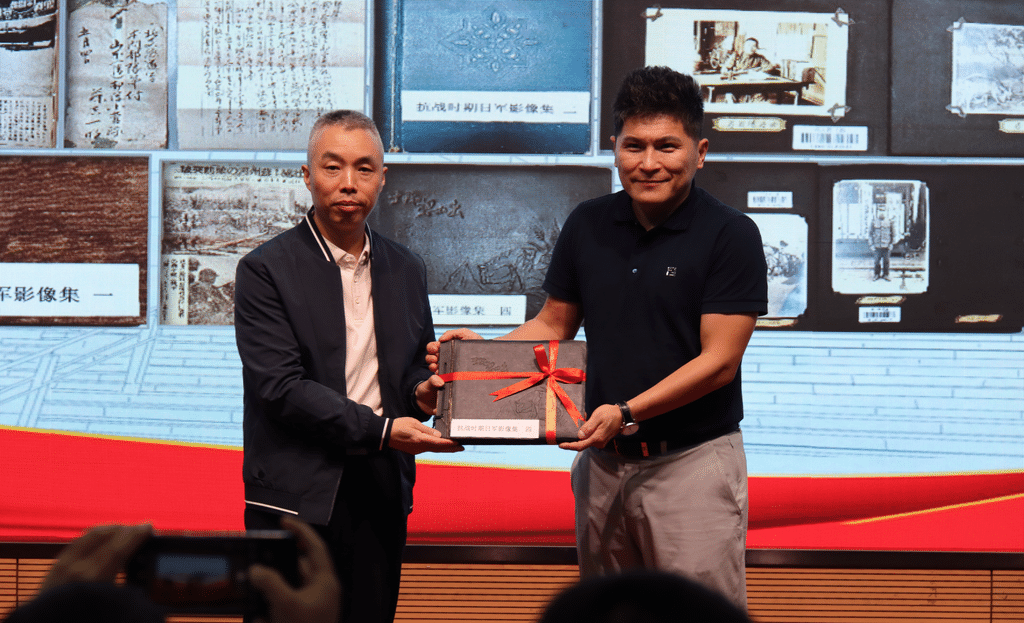
Objects serve as evidence of history, preserving the memory of those turbulent years. On April 24, multiple original Japanese documents related to the Japanese invasion of China were donated to the Chongqing Library. This donation effectively supplements and improves the historical material system of the War of Resistance against Japan, injecting important strength into the construction of the library’s special collections on the war.
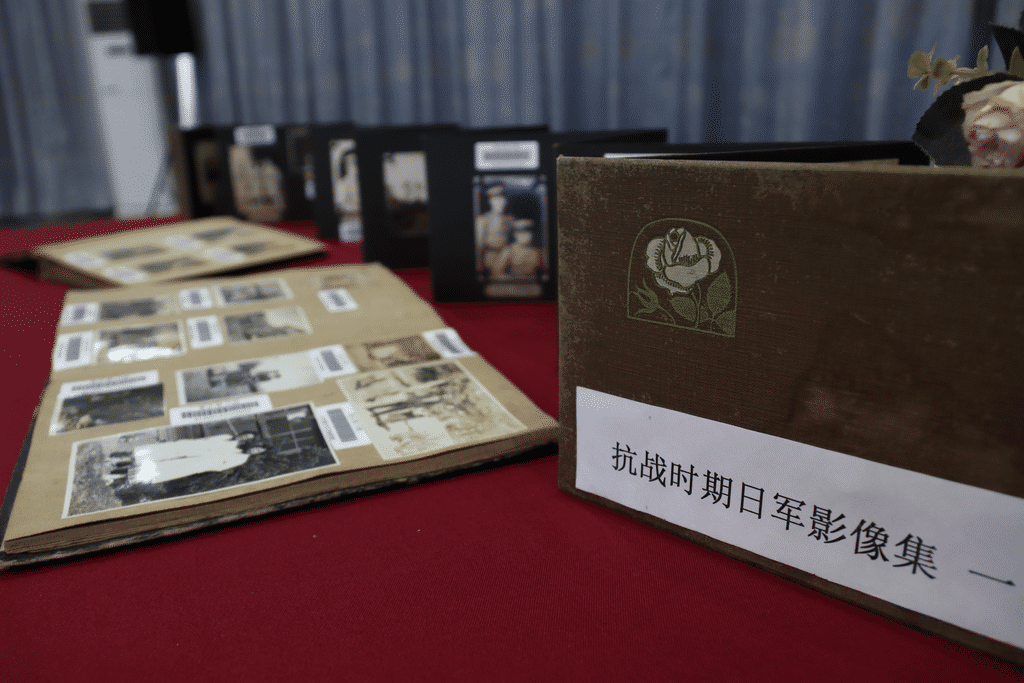
The donated documents are all original Japanese-language materials, rich in variety and diverse in format. They include first-hand historical records such as photo collections of the Japanese invasion of China, battlefield photographs, military maps, wartime news reports, and personal letters from soldiers, truly preserving various original records from the period of the invasion and holding extremely high historical value.
At the donation ceremony, the origin of the collection and the journey of acquiring these documents were shared. These photographs, letters, and other physical items are direct evidence of Japanese militarist aggression against China. One personal photo album fully records the growth trajectory of a Japanese soldier, clearly showing his entire process of coming to China to fight and harm civilians. The documents capture key moments, such as Japanese warplanes taking off from Wuhan to bomb Chongqing, and also preserve precious images of the Chinese Communist Party leading the military and civilians in the anti-Japanese base areas to rise up and resist the invaders, restoring the full historical picture of the War of Resistance from multiple angles.
The Chongqing Library, as a core institution for collecting historical documents of China’s wartime capital in Chongqing during the War of Resistance, has rich collections and profound research foundations. It is one of the most concentrated and well-established document collection units for the War of Resistance in China. The hope is that these precious documents will enrich the library’s resources, assist in the historical research of the War of Resistance, and provide new reference materials for academic research.
A deputy director of the Chongqing Library attended the ceremony and expressed gratitude. The deputy director stated that since its establishment, the Chongqing Library has always focused on collecting and organizing documents related to the War of Resistance and World War II as its core collection development direction. After years of accumulation, the library now holds over 70,000 volumes of documents related to the War of Resistance, forming a unique special collection system nationwide. In recent years, the library has continuously expanded its acquisition channels and deepened its work in collecting documents from home and abroad. It has successively gathered and integrated a large number of archives and original documents from places such as Taiwan, the United States, Russia, and the United Kingdom, and has published major academic achievements such as the “Archival Documents of the British Embassy in China during the War of Resistance,” filling many gaps in historical research.
The deputy director pointed out that the Japanese-language documents donated this time are rare in subject matter and unique in content. They not only further enrich the categories and dimensions of the library’s War of Resistance collection but also supplement and improve the historical material system from the Japanese first-hand perspective, providing irreplaceable original empirical materials for the study of the history of China’s wartime capital and modern history.
Chongqing Library
Chongqing Library
Wuhan
Chongqing
Related news

Gold price suffers largest single-day drop in 12 years with rare flash crash, some investors lose one month’s salary in a day.
The Three Gorges on the Yangtze River feature lush green peaks, presenting a poetic picture of clear waters and verdant mountains.