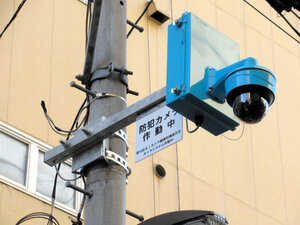
This month, a security network camera equipped with facial recognition AI began a demonstration experiment outdoors. It will be used to search for missing children and elderly individuals. According to the ward, this is the first outdoor installation of its kind in the country.
The cameras were installed by replacing 33 existing units around Nippori Station. The data retention period is seven days. To prevent unauthorized use and protect personal information, security measures include limiting responsible staff to a small team, restricting access terminals with two-factor authentication, encrypting communications, and having a manager conduct regular log checks.
While other local governments, such as Minato Ward, have previously used AI cameras, this is the first attempt at outdoor facial recognition. The ward mayor stated, “When security cameras were first installed, privacy issues were raised, but as the perceived safety worsened, the awareness of residents and the public has changed. We want to verify the recognition capabilities in dark areas.”
Additionally, for confirming situations during large-scale disasters…
Nippori Station
Nippori Station is a major railway station in Tokyo’s Arakawa ward, known as a key transfer point for the Yamanote Line, Keihin-Tohoku Line, and the Joban Line, as well as the Narita Express. Historically, it opened in 1905 and developed as an important gateway to the nearby Yanaka, Nezu, and Sendagi areas, which survived the 1923 Great Kanto Earthquake and WWII bombings, preserving a nostalgic, old-Tokyo atmosphere. Today, it is also famous for its connection to Nippori Fabric Town, a historic shopping district for textiles and sewing supplies.
Nippori Station
Nippori Station is a major railway hub in Tokyo, Japan, known for its role as a gateway to the historic Yanaka district, which survived the bombings of World War II. Originally opened in 1905, the station serves multiple rail lines, including the Yamanote Line and the Keisei Main Line, connecting travelers to both central Tokyo and Narita Airport. Its proximity to Yanaka Ginza shopping street and numerous temples makes it a popular starting point for exploring old Tokyo culture.
Yamanote Line
The Yamanote Line is a circular railway line in Tokyo, Japan, that connects many of the city’s major urban centers, including Shinjuku, Shibuya, and Tokyo Station. First opened in 1885 as a freight line, it evolved into the iconic passenger loop we know today, with electrification completed by the early 20th century. Serving as a vital artery for Tokyo’s transport, it carries millions of passengers daily and is renowned for its distinct green train cars.
Keihin-Tohoku Line
The Keihin-Tohoku Line is a major railway line in Japan operated by JR East, connecting the cities of Tokyo, Kawasaki, Yokohama, and Saitama. It opened in stages between 1905 and 1914, originally serving as a freight and passenger route to link the industrial Keihin region with Tokyo. Today, it is a vital commuter line known for its distinctive orange and green trains, running through central Tokyo and providing efficient access to key stations like Tokyo, Ueno, and Shinagawa.
Joban Line
Nippori Station
Nippori Station is a major railway hub in Tokyo, Japan, known for its connection to Yanaka, a historic neighborhood that survived the bombings of World War II. Opened in 1905, it serves as a key transfer point for JR East lines and the Nippori-Toneri Liner. The station’s surrounding area retains a nostalgic, old-Tokyo atmosphere, with traditional shops and temples.
Yamanote Line
The Yamanote Line is a circular railway line in Tokyo, Japan, that connects many of the city’s major commercial and cultural districts. Originally opened as a steam railway in 1885, it has since evolved into a vital public transit artery, with its iconic green trains carrying millions of passengers daily. The line’s loop shape and frequent service make it a symbol of Tokyo’s efficient transportation network and a convenient way to explore the metropolis.
Keihin-Tohoku Line
The Keihin-Tohoku Line is a major railway line in Japan, operated by East Japan Railway Company (JR East), connecting the cities of Tokyo and Yokohama via the eastern suburbs. Its history dates back to the early 20th century, with the first section opening in 1914 as an electric railway to serve the growing industrial and commuter traffic between the two cities. Today, it forms a vital part of the Tokyo metropolitan rail network, known for its rapid service and distinctive orange-colored trains.
Joban Line
The Joban Line is a major railway line in Japan operated by JR East, connecting Tokyo Station in the capital to Iwanuma Station in Miyagi Prefecture along the Pacific coast. Its history began with the opening of its first section in 1896, and it originally served as a vital route for transporting coal from the Joban coalfields. The line is also known for its scenic coastal views and for being heavily impacted by the 2011 Tōhoku earthquake and tsunami, which caused significant damage and service disruptions.
Narita Express
The Narita Express (N’EX) is a dedicated airport rail service connecting Narita International Airport to major Tokyo hubs, including Tokyo Station, Shinjuku, and Yokohama. Introduced in 1991, it was designed to provide a fast and comfortable alternative to buses and taxis, significantly improving access between the airport and central Tokyo. The service is operated by East Japan Railway Company (JR East) and features sleek, streamlined trains with ample luggage space, becoming a popular choice for both tourists and business travelers.
Yanaka
Yanaka is a historic district in Tokyo, Japan, known for preserving the atmosphere of the Shitamachi (old downtown) culture that survived the bombings of World War II. Its history dates back to the Edo period, and it is home to temples, traditional shops, and Yanaka Cemetery, where many notable figures are buried. Today, it remains a popular spot for visitors seeking a glimpse of old Tokyo’s charm and tranquility.
Nezu
Nezu is a historic district in Tokyo, Japan, known for its traditional atmosphere and the famous Nezu Shrine, which dates back to the 6th century. The shrine, rebuilt in the early 18th century, is renowned for its stunning Azalea Festival and its long, vermilion torii gate tunnel. The area also features charming narrow streets, old-fashioned shops, and the Nezu Museum, which houses a collection of pre-modern Japanese and East Asian art.
Sendagi
Sendagi is a historic neighborhood in Tokyo, part of the “Yanesen” area known for preserving the atmosphere of old Tokyo. During the Edo period, it thrived as a temple town and a popular destination for pilgrims visiting nearby Yushima Tenjin shrine. Today, Sendagi is cherished for its quiet streets, traditional architecture, and local shops that offer a glimpse into Japan’s Shitamachi culture.