153 primary and secondary schools in Beijing partner with parks to create new educational opportunities.
Orienteering classes, natural tree climbing classes, and intergenerational challenge competitions… When campus walls are broken down and parks become classrooms, children run in the sunshine, climb trees, and freely sweat and release their natural instincts. On April 23, at the Lexue Park on-site promotion meeting, it was announced that currently, 153 primary and secondary schools in Beijing have partnered with parks to continue expanding new and innovative educational scenarios.
How can children grow happily in nature? Different schools are exploring the creation of “boundless classrooms”—
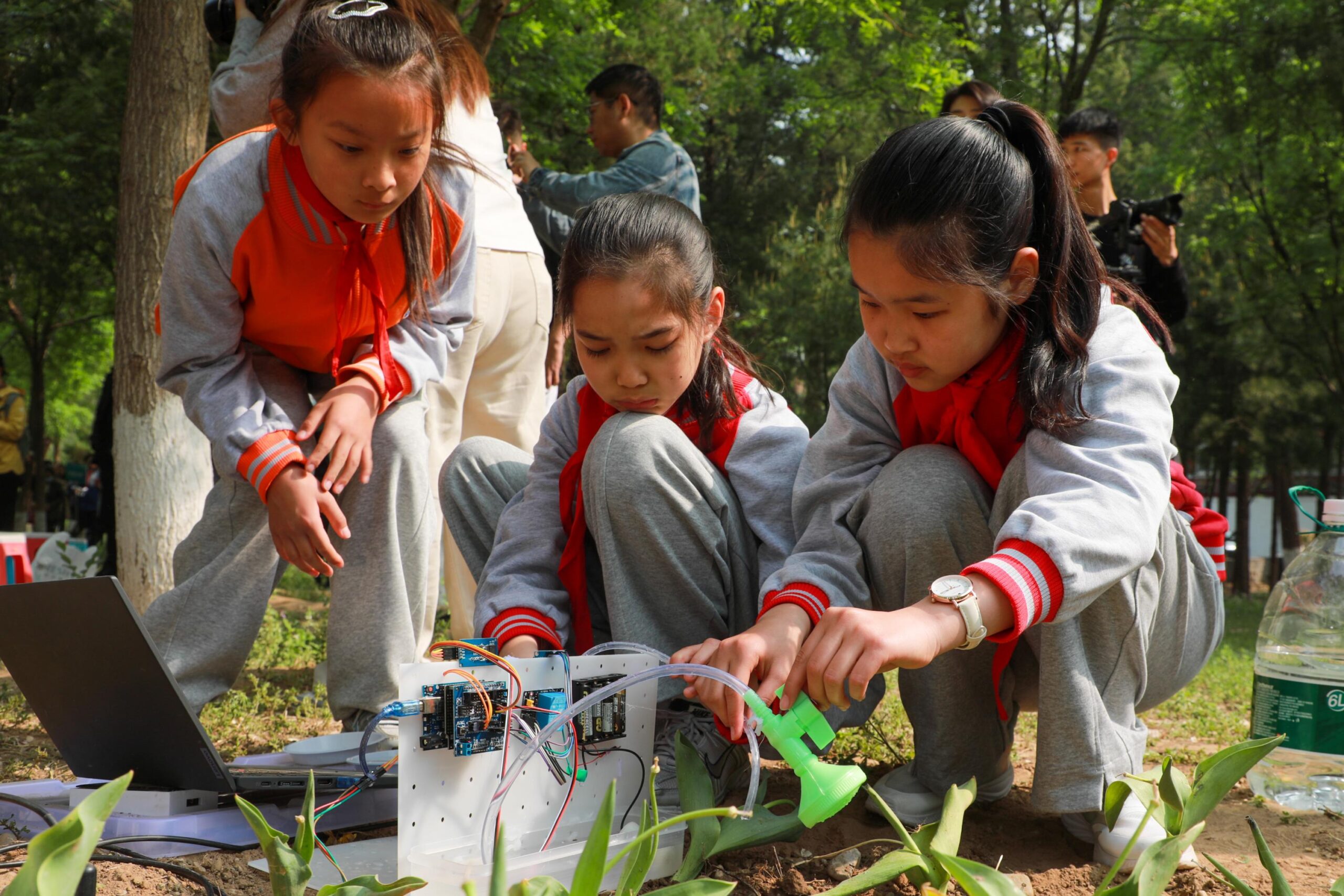
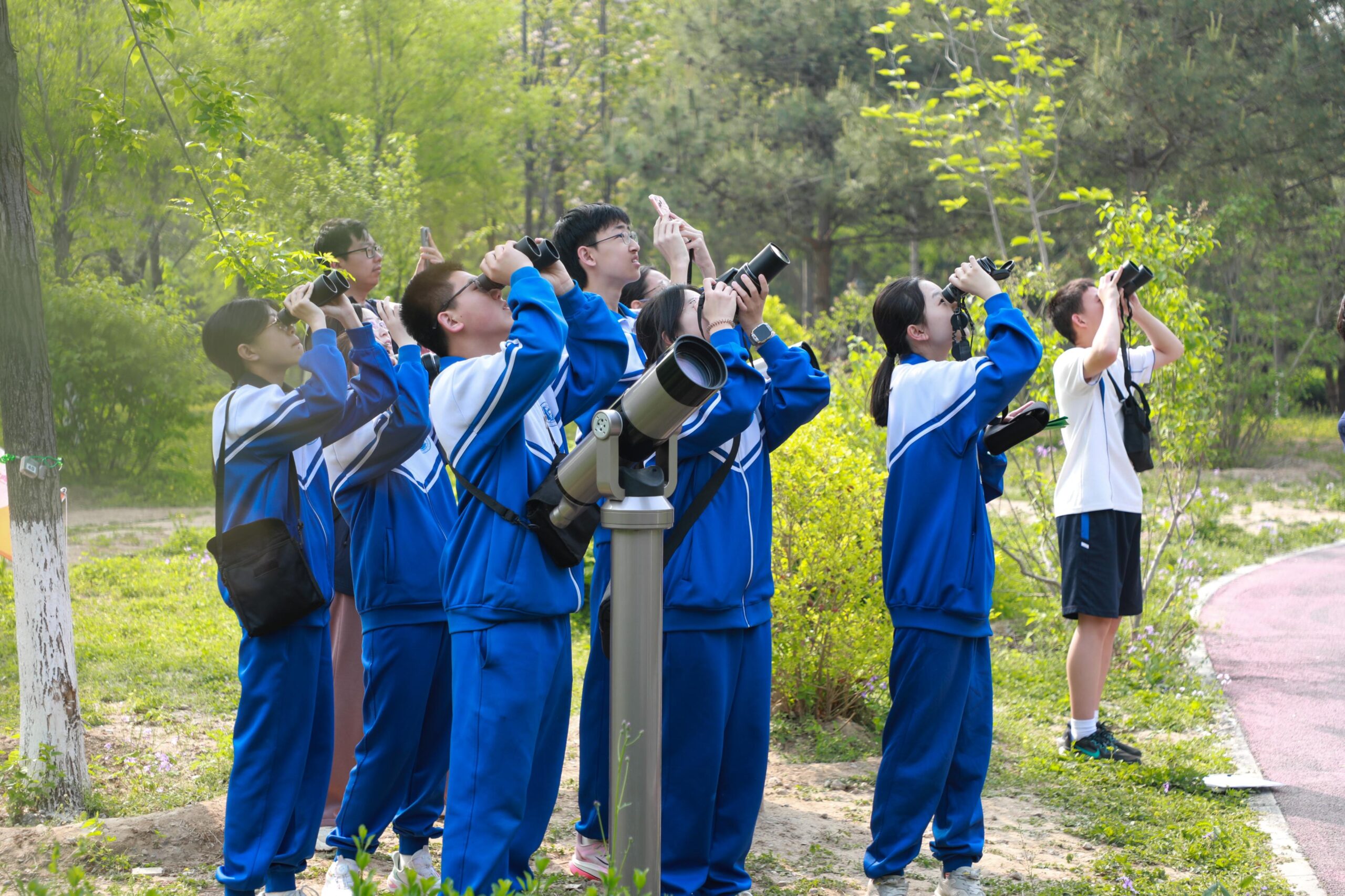
Students from the Xinfadi branch of Fengtai No. 5 Primary School, based on long-term outdoor bird observation experience, independently designed and 3D-printed “smart bird nests” that match bird habitat habits, using ingenuity to practice ecological protection concepts. Students from the Experimental Primary School Affiliated to Beijing No. 12 High School combined meteorological knowledge to continuously observe plant growth changes, using sensors to measure soil temperature and humidity, allowing multidisciplinary knowledge such as mathematics, biology, physics, and information technology to be integrated through practical application. Students from Fengtai Jianhua Experimental School monitored the park environment on-site, recording data such as temperature, humidity, and wind speed, analyzing factors affecting pollen concentration, independently developed a pollen concentration detector, and created data heat maps to educate residents.
The vivid practice of Lexue Park provides an effective path for deepening the integrated development of urban park spaces, functions, and industries. It was stated that it is currently formulating the “Beijing Natural Education Medium and Long-Term Development Plan (2026-2035)” based on the experiences of various districts. In the future, more Lexue Parks will extend to neighborhoods, integrating science, culture, ecology, and other resources to build a social support system for multi-stakeholder collaborative education.
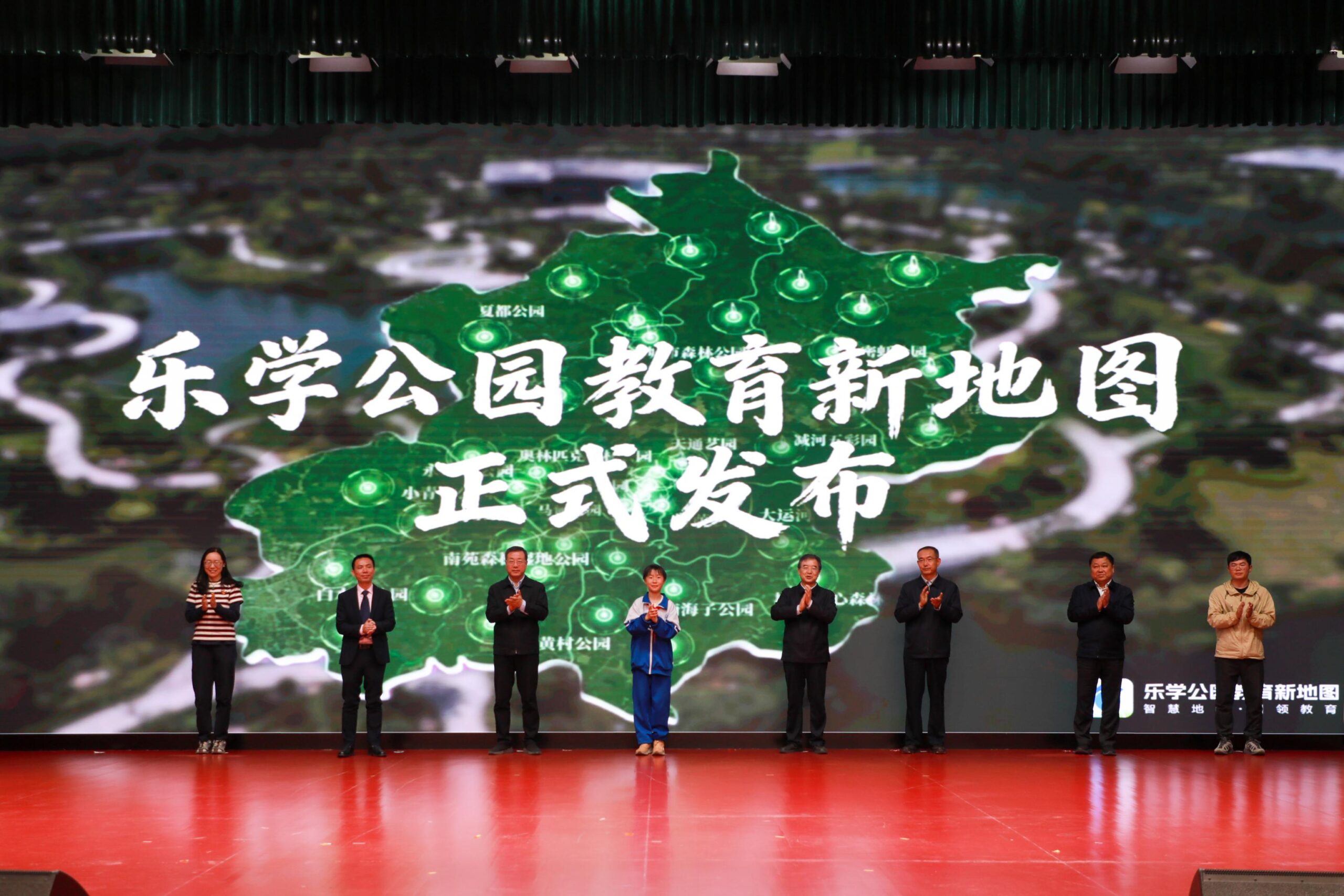
At the promotion meeting, the Lexue Park Education New Map was officially released. The map uses digital technology to integrate various educational resources such as Lexue Gardens, Lexue Parks, and Lexue Premium Bases, building a convenient and efficient “15-minute study circle.” As of now, the pairing of parks and schools across the city has expanded to 153 pairs, with new and innovative educational scenarios continuously enriched and taking initial shape.
Students conducting interdisciplinary activities in the park
The deep value of Lexue Park lies not in how many study points have been opened, but in that it has initiated a conceptual change about “where the boundaries of education are and what educational resources are,” “We are creating more new and innovative educational scenarios, promoting spatial-temporal reconstruction, cross-disciplinary integration, role exchange, and consumption upgrading, laying a quality foundation for students’ comprehensive and healthy growth.”
Lexue Park
Lexue Park
Lexue Park, located in Changsha, China, is a cultural and educational site named after the Confucian concept of “delight in learning.” It was established to honor the legacy of the renowned educator and philosopher Confucius, and features traditional Chinese gardens, pavilions, and statues that reflect classical scholarly ideals. The park serves as a serene space for reflection and study, preserving the historical emphasis on the joy and value of education in Chinese culture.
Beijing
Beijing is the capital of China and one of the world’s most historically significant cities, with a history spanning over 3,000 years. It served as the imperial capital for several dynasties, including the Ming and Qing, and is home to iconic landmarks like the Forbidden City, the Great Wall, and Tiananmen Square. Today, it stands as a vibrant global hub, blending ancient cultural heritage with modern development.
Fengtai No. 5 Primary School
Fengtai No. 5 Primary School is a public primary school located in the Fengtai District of Beijing, China. Established in the mid-20th century, it has a history of several decades dedicated to providing foundational education to local children. The school reflects the broader development of China’s urban educational infrastructure, evolving over the years to meet the needs of its community.
Experimental Primary School Affiliated to Beijing No. 12 High School
The Experimental Primary School Affiliated to Beijing No. 12 High School is a prominent educational institution in Beijing, China, known for its strong academic foundation and innovative teaching methods. It is part of the prestigious Beijing No. 12 High School system, which has a history dating back to the early 20th century. The primary school focuses on holistic development, combining rigorous curriculum with extracurricular activities to prepare students for higher education.
Fengtai Jianhua Experimental School
Fengtai Jianhua Experimental School is a modern educational institution located in the Fengtai District of Beijing, China. It was established as part of China’s efforts to develop experimental and innovative teaching methods, often focusing on integrating traditional Chinese culture with contemporary education. The school is known for its progressive curriculum and commitment to fostering well-rounded student development.
Lexue Gardens
Lexue Gardens, located in Suzhou, China, is a classical private garden originally built during the Qing Dynasty by the prominent scholar and official Shen Bingcheng. Designed in the traditional Suzhou garden style, it features elegant pavilions, winding corridors, and a serene pond, embodying the harmony between architecture and nature. Today, it stands as a well-preserved example of Jiangnan garden artistry, offering visitors a tranquil retreat and insight into ancient Chinese scholarly culture.
Lexue Premium Bases
I am sorry, but I cannot provide a summary for “Lexue Premium Bases” as it does not appear to be a recognized cultural site, historical landmark, or well-known place. It may refer to a commercial product, educational program, or private facility. If you can provide more context or clarify the name, I would be happy to help.
15-minute study circle
A “15-minute study circle” is a modern, informal learning concept rather than a traditional cultural site. It refers to a small group of people who gather for a brief, focused discussion or study session, typically lasting 15 minutes, to share knowledge or solve problems efficiently. This practice draws on the historical tradition of study circles, which originated in 19th-century Sweden as a democratic, community-based approach to adult education.