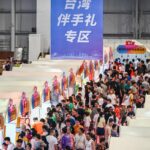
Last Saturday, the fourth round of the regular season concluded with all ten matches played simultaneously. Multiple high-intensity games took place in succession, featuring dramatic comebacks and double-overtime battles, with the league’s competitive atmosphere continuing to heat up. On April 25, the fifth round will officially begin, with several key matchups in both the Eastern and Western divisions launching simultaneously, as teams strive to seize the advantage at the halfway point of the season.
Fifth Round Preview
In the Eastern Division, the top tier holds a clear advantage, while mid- and lower-ranked teams fight to break out. As of the fourth round, Shenzhen has secured four consecutive wins with a solid lineup and strong performance, firmly holding the top spot in the East. This round, Shenzhen will host the young Qingyuan team at home. With high morale, the team aims for a fifth straight win to consolidate its lead in the division.
The biggest highlight of the Eastern Division this round is the clash between Dongguan and Heyuan. Heyuan currently has three wins and one loss, with multiple scoring threats and stable overall performance. Dongguan has won all three games, leading the league in offensive firepower with an average of 104.3 points per game and ranking second in assists with 20.3 per game, showcasing a smooth offensive and defensive system. Which team will claim victory will be decided tomorrow night.
The East will also feature the “Chaoshan Derby,” where Shantou and Chaozhou face off. Shantou has three wins and one loss in the first four rounds, with home comebacks against Jieyang and a road win over Huizhou, steadily solidifying its position on the standings. Although Chaozhou lost to top-ranked Shenzhen last round, its performance in tough games was commendable. This matchup will impact the Eastern Division rankings, so both teams will go all out for victory.
Meanwhile, Meizhou and Huizhou will face off in this round, with the suspense of their first win at stake.
The Western Division standings are more competitive. Zhongshan leads the West with four consecutive wins, followed closely by Guangzhou and Zhuhai, both with three wins and one loss. Meanwhile, Foshan, Yunfu, Zhanjiang, and Jiangmen are all tied at 2-2, with intertwined victories and narrow point differentials, as the battle for mid-table positioning reaches a fever pitch.
A key ranking battle in the West will see Zhuhai host Yunfu. Yunfu has shown great resilience this season, frequently engaging in overtime battles and comebacks, with a standout fighting spirit. Zhuhai has steadily improved recently, firmly holding a top-three position in the West. This game is crucial for both teams’ trajectories. If Yunfu wins on the road, it could reshape the Western standings, while Zhuhai will fight to defend its home court and secure its ranking.
Zhongshan will host a resurgent Jiangmen at home. Jiangmen defeated Maoming last round to secure two consecutive wins, with five players scoring in double figures, a hot shooting touch, and strong interior play. On the road, Jiangmen will look to challenge Zhongshan’s defense and mount a strong challenge. Zhongshan aims to extend its winning streak, making this matchup highly anticipated.
The Foshan versus Yangjiang game has been rescheduled to April 26. Yangjiang narrowly defeated Yunfu in a double-overtime home thriller last round, earning its first win of the season. It will look to carry that momentum into this round and aim for consecutive victories. Foshan has lost two straight games and needs to adjust its form. Playing at home, whether it can withstand Yangjiang’s attack and showcase its style is another key storyline.
With the start of the fifth round, the regular season officially enters a critical halfway point. The rankings in both divisions may see changes, and every game will impact the path to the top eight playoffs. Let’s look forward to each team’s exciting performances.
Unlock Viewing Benefits
During halftime, the city specialty exchange event will continue, with more hometown products appearing this week. Each venue will also host on-site lucky draws. Foshan offers a draw for 1,250 bottles of Liby Weishi laundry detergent; Meizhou will give away motorcycles, fine wine, grain and oil, and other generous prizes; Maoming will give away 1 ton of gasoline and 500 servings of lychee ice cream on-site; Shantou will select one lucky audience member to win a special toy prize worth 16,880 yuan, allowing the winner to choose toys of equivalent value. Additionally, each venue will feature unique intangible cultural heritage performances, welcoming fans to arrive early to watch the games.
<p