Last time, Ashok won. But this time, the saffron camp did not make him a candidate for the assembly elections. Now, in terms of rank, he will be equivalent to a cabinet minister.
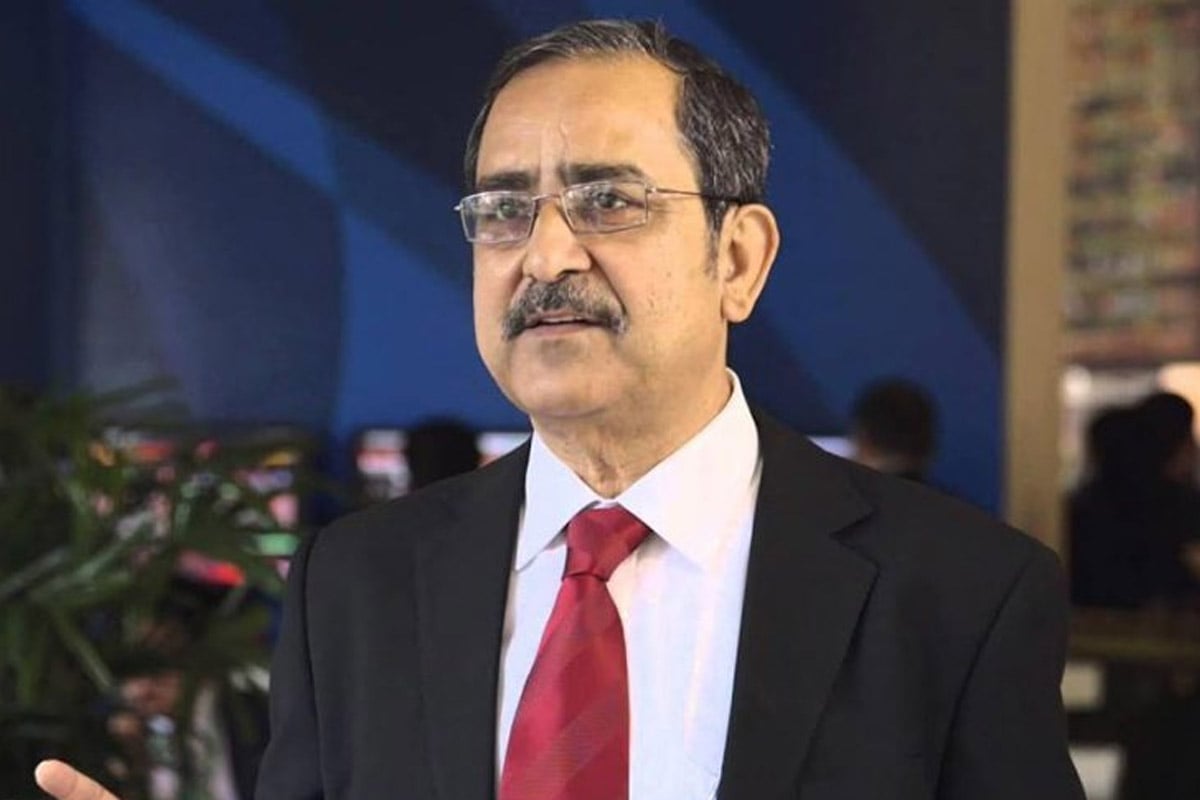
The BJP did not give a ticket for the assembly elections. But the Modi government gave a big ‘reward’ to outgoing MLA Ashok Lahiri! It is learned that this renowned economist is set to become the Vice Chairman of NITI Aayog. Notably, he has previously worked as an economic advisor to the Government of India. Last year, he won the assembly election on a BJP ticket. Now he is set to take up a major central position.
NITI Aayog is headed by Prime Minister Narendra Modi himself. Ashok will work as his deputy. Before him, Suman Berry was the Vice Chairman of NITI Aayog. Notably, in terms of rank, the Vice Chairman of NITI Aayog is equivalent to a cabinet minister. That is, even though Ashok was not given a ticket in the current assembly elections, the BJP government has given him a major position. Incidentally, Ashok won last time from the Balurghat constituency in South Dinajpur. But the saffron camp did not field him as a candidate in this assembly election.
Also read:
As an economist, Ashok has handled several important responsibilities. He has led the Asian Development Bank. He has also been associated with the World Bank and the IMF.
Not just Ashok, from election-bound Bengal, scientist Gobardhan Das has also been included in NITI Aayog as a member. Last year, in the assembly election, BJP fielded Gobardhan from the Purbasthali Uttar constituency in Purba Bardhaman. But Gobardhan could not win the election. The saffron camp did not give him a ticket this time either. But he is set to become a member of NITI Aayog. In the midst of the two-phase voting in Bengal, many see the shadow of electoral politics in the inclusion of two Bengalis in NITI Aayog.
Incidentally, as an economist, Ashok has handled several important responsibilities. He has led the Asian Development Bank. He has also been associated with the World Bank and the IMF. Additionally, he has worked as a financial advisor to the government. He was also a member of the Fifteenth Finance Commission. Last year, Ashok was one of the key faces of Bengal BJP in the assembly election. Now, this is his new innings at NITI Aayog. On the other hand, Gobardhan Das, a former professor at the School of Molecular Medicine at Jawaharlal Nehru University, is currently the Director of IISc Bhopal. The central government has also included him in NITI Aayog.
NITI Aayog
NITI Aayog, which stands for the National Institution for Transforming India, is a premier policy think tank of the Government of India, established in 2015 to replace the Planning Commission. Its creation aimed to foster a cooperative federalism approach by involving state governments in the economic policy-making process and to promote a bottom-up rather than top-down planning model. The institution focuses on designing strategic, long-term policies and programs for the central and state governments, with an emphasis on innovation, sustainable development, and inclusive growth.
Asian Development Bank
The Asian Development Bank (ADB) is a regional development bank established in 1966 to promote social and economic development in Asia and the Pacific. Headquartered in Manila, Philippines, it was founded with 31 member countries and has since expanded to include 68 members, focusing on reducing poverty through loans, technical assistance, and grants. The ADB plays a key role in financing infrastructure, climate resilience, and regional cooperation projects across the continent.
World Bank
The World Bank is an international financial institution established in 1944 at the Bretton Woods Conference, originally created to help rebuild European economies after World War II. It now focuses on reducing global poverty and supporting development by providing loans, grants, and technical assistance to developing countries. Headquartered in Washington, D.C., it works with governments and private sectors to fund projects in areas like education, infrastructure, and healthcare.
IMF
The International Monetary Fund (IMF) is a global financial institution established in 1944 at the Bretton Woods Conference to promote international monetary cooperation and economic stability. Headquartered in Washington, D.C., it provides loans, policy advice, and technical assistance to member countries facing balance of payments crises, aiming to prevent financial turmoil and foster sustainable growth. Over time, the IMF has evolved to address new challenges, including debt crises in developing nations and global economic shocks.
Fifteenth Finance Commission
The Fifteenth Finance Commission was a constitutional body formed by the Government of India in 2017 to recommend the distribution of tax revenues between the central government and states for the period 2021-2026. It was chaired by N.K. Singh and submitted its final report in 2020, focusing on fiscal consolidation, performance-based incentives, and addressing challenges like the COVID-19 pandemic. The commission’s recommendations significantly influenced India’s federal financial relations, including changes to state shares and grants.
Jawaharlal Nehru University
Jawaharlal Nehru University (JNU) is a prestigious public central university located in New Delhi, India, established in 1969. It was named after Jawaharlal Nehru, India’s first Prime Minister, and was founded with a vision to promote national integration, social justice, and academic excellence. Known for its strong emphasis on research and liberal arts, JNU has a rich history of progressive student activism and has consistently ranked among the top universities in India.
IISc Bhopal
IISc Bhopal is a satellite campus of the Indian Institute of Science (IISc), Bengaluru, established to expand the institute’s research and educational footprint in central India. Located on a sprawling campus in Bhopal, Madhya Pradesh, it was inaugurated in 2016 and focuses on interdisciplinary research in areas such as energy, environment, and sustainable technologies. The campus reflects IISc’s century-old legacy of excellence in science and engineering, while contributing to regional development and innovation.