The war in the Middle East has triggered a global surge in oil prices, threatening to impact Indonesia. In response, the government is implementing various energy efficiency measures. Two policies will soon be introduced: work from home (WFH) and distance learning (PJJ), or online schooling. These policies are expected to reduce fuel consumption and maintain fiscal stability.
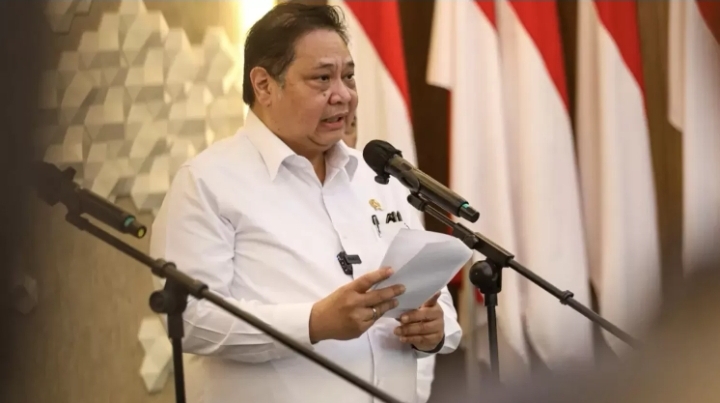
The directive on WFH was announced by the Coordinating Minister for Economic Affairs Airlangga Hartarto yesterday. He stated that the directive resulted from a meeting with the President emphasizing the importance of efficiency across sectors. “With high oil prices, there is a need for work time efficiency, which will allow flexibility for work from home one day out of five working days,” Airlangga said yesterday. He explained that this policy applies not only to state civil servants (ASN) but will also be recommended to the private sector and regional governments, with exceptions for public services. According to him, the technical scheme is still being finalized and is targeted to begin implementation after the 2026 Eid al-Fitr period.
On the other hand, the government maintains fiscal discipline. Through spending efficiency in ministries and institutions (K/L), the state budget deficit is targeted to remain below 3 percent. In addition to efficiency, the government is also responding to rising energy prices by increasing coal production and reviewing potential state revenue from export taxes on this commodity. This step is expected to boost state revenue amid global pressures. The government is also accelerating the conversion of diesel power plants (PLTD) to more efficient energy sources, in line with high global crude oil prices.
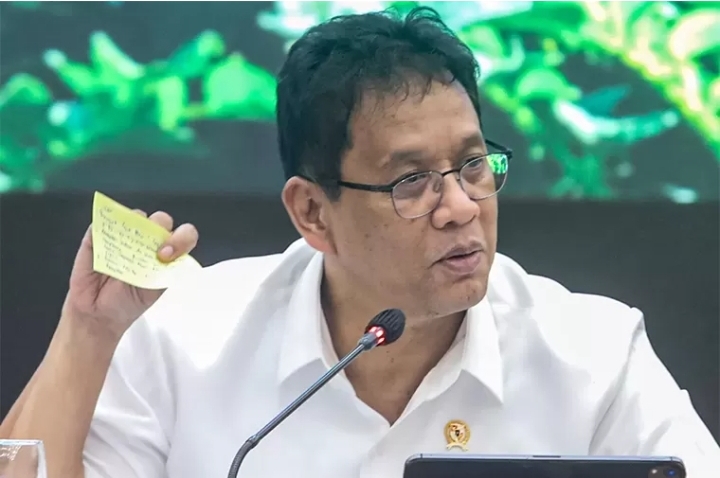
Meanwhile, the Minister of Finance Purbaya Yudhi Sadewa revealed that the WFH policy has the potential to provide significant energy savings. “A rough estimate shows fuel savings could reach about 20 percent if one workday is done from home,” he said. Besides reducing energy consumption, this policy is considered capable of having a multiplier effect on the economy. More flexible community activities are expected to boost household consumption and the domestic tourism sector. “With this flexibility, activities at home increase, and the tourism sector is likely to be encouraged as well,” Purbaya added.
Distance Learning Adjusted to Educational Levels
Meanwhile, the plan for distance learning (PJJ) was announced by the Coordinating Minister for Human Development and Culture Pratikno last week. He also stated that learning methods will be tailored to needs. For theoretical material, schools and universities are encouraged to maximize online learning. Meanwhile, practical activities will continue to be conducted face-to-face to maintain educational quality. “Efficiency measures must be structured in a measurable way based on energy consumption data and mobility levels in each sector,” Pratikno said. The implementation of PJJ is considered capable of reducing daily mobility of students and educators, thereby directly impacting fuel consumption reduction. However, the government emphasizes that this policy will not be applied uniformly, but will be adjusted to the characteristics of educational levels and subjects.
Nevertheless, several challenges remain a concern. One is the readiness of digital infrastructure and internet access for students. The government is currently reviewing alternative financing schemes to support these needs if online learning is widely implemented. Additionally, changes in student attendance patterns could potentially affect the distribution of the Free Nutritious Meals (MBG) program. Technical details are still under further discussion.
The Deputy Chair of Commission X of the House of Representatives, Lalu Hadrian Irfani, appreciated the government’s energy-saving efforts. However, he stressed that educational quality must not be sacrificed. “The government needs to conduct a comprehensive study on the impact of PJJ on learning achievement, access gaps, and the psychosocial conditions of students,” he said. He assessed that Indonesia’s infrastructure, especially digital infrastructure, is not yet adequate to support PJJ. He feared that PJJ could widen educational disparities. “Therefore, PJJ policy should be implemented selectively, not nationally, considering the readiness of each region,” he said. Furthermore, he argued that the government must ensure adequate support, such as internet access, quota subsidies, learning devices, and teacher training. “I emphasize the importance of periodic evaluations so that this policy can be reviewed or stopped if it proves to have a negative impact on the quality of education,” said this PKB politician.
Meanwhile, the Coordinator of the Indonesian Education Monitoring Network (JPPI), Ubaid