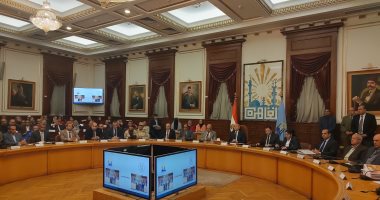
Cairo Governor Dr. Ibrahim Saber won the Best Arab Governor award, and the Al-Asmarat project won the Best Local Community Development Initiative award at the Arab Government Excellence Awards. This was announced during the ongoing executive council meeting of Cairo Governorate at the governorate’s headquarters.
Government Excellence Award
The Cairo Governor received the Best Arab Governor award at the awards ceremony organized by the Arab League in cooperation with the United Arab Emirates. The award was presented by Ahmed Aboul Gheit, Secretary-General of the Arab League, and Mohammed Al Gergawi, Chairman of the Board of Trustees of the Arab Government Excellence Award and Minister of Cabinet Affairs of the UAE. The ceremony was attended by Dr. Sherif El-Sherbiny, Minister of Housing, Utilities and Urban Communities, representing Prime Minister Dr. Mostafa Madbouly; Dr. Rania Al-Mashat, Minister of Planning, Economic Development and International Cooperation; Dr. Ashraf Sobhy, Minister of Youth and Sports; Mohamed Gebran, Minister of Labor; Hamad Obaid Al Zaabi, UAE Ambassador to Cairo; members of the award’s Board of Trustees; representatives of Arab states at the Arab League; several governors and deputy governors; and members of the House of Representatives and the Senate.
Egypt wins 5 awards
The Cairo Governor expressed pride that Egypt won 5 out of 16 awards in the fourth cycle of the Arab Government Excellence Awards 2024-2025. Among these, two awards went to Cairo Governorate: Best Arab Governor and the Al-Asmarat City project winning Best Local Community Development Initiative, which solidified President Abdel Fattah El-Sisi’s wise vision of achieving sustainable human development for both people and place.
Al-Asmarat and eradicating slums
He noted that Al-Asmarat was the cornerstone of a comprehensive plan to eradicate slums. He congratulated the Ministry of Health and Population for winning the Best Arab Initiative for Government Development with its information infrastructure project for the integrated vaccination system in Egypt; the Ministry of Water Resources (Horizontal Expansion and Projects Sector) and the Irrigation Authority for winning the Best Arab Infrastructure Development Project with the South Valley Development project in Toshka; and the Alexandria Drinking Water Company for Lamia Mostafa, head of the Quality Laboratories Sector, winning the Best Arab Government Employee award.