Why Generation Z Failed to Secure Its Victories? The Answer Lies in Madagascar.
Over the past year, the world witnessed a wave of protests led by young people, from Nepal to Madagascar, and from Indonesia to Peru, where tens of thousands of teenagers and young adults in their twenties took to the streets demanding change.
These young people expressed their hopes and ambitions in ways born of their era, using social media to spread their messages and organize their ranks. In Nepal, they used artificial intelligence and the Signal app.
The protesters adopted the skull and crossbones logo inspired by the anime “One Piece,” considering it a symbol of rebellion and freedom.
Past historical experiences, such as the Arab Spring, show that overthrowing regimes does not necessarily guarantee achieving the desired transformations.
But months after these uprisings, a question strongly arises: Have Gen Z youth truly achieved real change? This report reviews the fate of youth protests in several countries, focusing on Nepal and Madagascar.
Nepal
Caution and care must be exercised when evaluating the outcomes of youth demonstrations. Past historical experiences, such as the Arab Spring, show that overthrowing regimes does not necessarily guarantee achieving the desired transformations, as a report states.
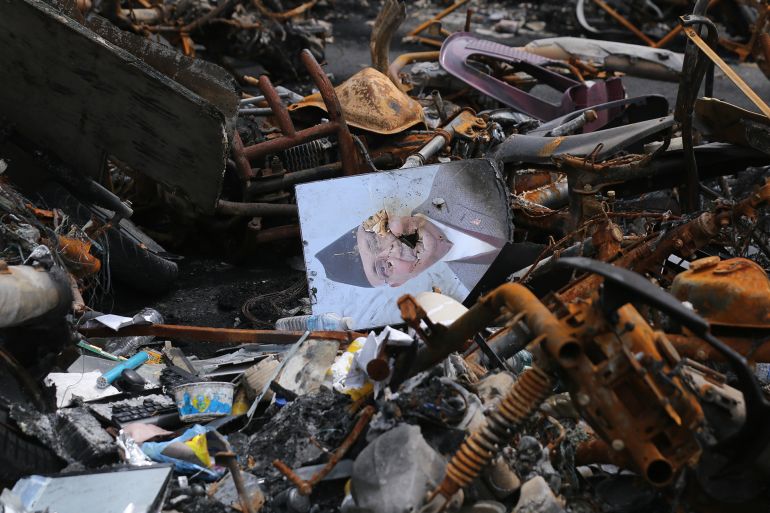
The American newspaper views Nepal as the most positive and successful model. Protests began in September 2025 against the then-existing Nepali government due to rampant corruption, impunity, and a ban on social media. This resulted in the government being overthrown within two days.
About six months later, Balendra Shah (35 years old) was elected Prime Minister of Nepal and took the oath of office in April 2026. Notably, he was the mayor of Kathmandu and also famous as a former rapper who highlighted migration and political corruption issues.
Notable Changes
The newspaper expands its coverage of Nepal in another lengthy report titled “We Will Turn the Trauma into Something Beautiful,” explaining that this transformation came at a high human cost, with dozens of protesters killed during clashes with security forces.
Nevertheless, the currently ruling youth party, “Rastriya Swatantra,” achieved a sweeping majority, and the percentage of parliamentarians under thirty rose to about 10%, compared to less than 2% in the previous parliament.
Additionally, one-third of government ministers are now women, indicating a profound shift in the political mood.
<img alt="KATHMANDU, NEPAL – MARCH 05: Balendra Shah, leader of the Rashtriya Swatantrata Party (RSP), returns after casting his vote in the parliamentary election, at a polling place on March 05, 2026 in Kathmandu, Nepal. The vote is seen as a pivotal test for Nepal's fragile coalition politics and a generation of first-time voters from Generation Z eager for change in the
Singhadurbar
Singhadurbar is the historic administrative center of Nepal, located in Kathmandu. Originally built in the early 20th century as a private palace for Prime Minister Chandra Shamsher Jang Bahadur Rana, it later became the seat of the Nepalese government after the fall of the Rana regime. Today, it houses the Prime Minister’s office and various government ministries, symbolizing Nepal’s political history and governance.
Kathmandu
Kathmandu is the capital and largest city of Nepal, renowned for its rich history as a major hub for trade, art, and culture along the ancient trans-Himalayan routes. The city’s historic Durbar Squares, part of the Kathmandu Valley UNESCO World Heritage Site, feature exquisite temples and palaces built by the Malla and Shah kings from the 12th to 18th centuries. Despite significant damage from the 2015 earthquake, Kathmandu remains a vibrant center of Newar culture and a gateway to the Himalayas.
Nepal
Nepal is a South Asian country renowned for its rich cultural heritage and stunning natural landscapes, including Mount Everest, the world’s highest peak. Its history dates back to ancient kingdoms, with the unification of Nepal occurring in the 18th century under King Prithvi Narayan Shah. The country is also the birthplace of Lord Buddha and features a diverse mix of Hindu and Buddhist traditions, reflected in its many temples, stupas, and festivals.
Madagascar
Madagascar is a large island nation off the southeast coast of Africa, known for its unique biodiversity and distinct culture blending African, Asian, and European influences. Its history began with settlement by Austronesian peoples around 1,500 years ago, followed by the rise of the Merina Kingdom in the 18th century, which unified much of the island before French colonization in 1896. The country gained independence in 1960 and remains famous for its lemurs, baobab trees, and vibrant traditions.
Indonesia
Indonesia is a Southeast Asian archipelago nation with over 17,000 islands, known for its immense cultural and biological diversity. Its history includes powerful Hindu-Buddhist kingdoms like Srivijaya and Majapahit, centuries of Dutch colonial rule, and a declaration of independence in 1945. Today, it is the world’s largest Muslim-majority country, with vibrant traditions such as batik textiles, wayang puppetry, and the iconic Borobudur temple.
Peru
Peru is a South American country renowned for its rich cultural heritage, most notably as the heart of the ancient Inca Empire, which built the iconic mountaintop citadel of Machu Picchu in the 15th century. Its history spans thousands of years, from pre-Inca civilizations like the Moche and Nazca to Spanish colonization in the 16th century, which shaped its diverse blend of indigenous and European traditions. Today, Peru is celebrated for its archaeological sites, vibrant festivals, and contributions to world cuisine.
One Piece
“One Piece” is a Japanese manga and anime series created by Eiichiro Oda, first serialized in 1997. It follows the adventures of Monkey D. Luffy and his pirate crew as they search for the legendary treasure known as “One Piece,” which was left by the Pirate King Gol D. Roger. The series has become a global cultural phenomenon, known for its themes of friendship, freedom, and adventure, and holds the Guinness World Record for the most copies published for a single comic series by a single author.
Arab Spring
The Arab Spring was a series of anti-government protests, uprisings, and armed rebellions that spread across much of the Arab world in the early 2010s. Beginning in Tunisia in December 2010, the movement quickly expanded to countries like Egypt, Libya, Syria, and Yemen, driven by demands for democracy, economic opportunity, and an end to authoritarian rule. While it led to the overthrow of several long-standing dictators, the aftermath in many nations resulted in civil wars, political instability, and a complex legacy of both hope and devastation.